Ronda Rousey Is Changing Our Understanding Of Feminism, Athleticism And Body Image

34 seconds.
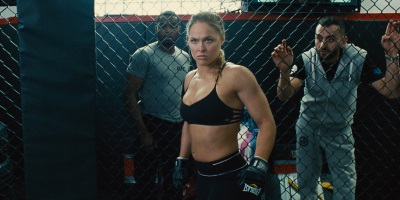
Earlier this month it took only 34 seconds for Ronda Rousey to end one of the most highly anticipated fights of the year. Embroiled in media chaos, the fight had all the vital elements of a great Hollywood epic: two prime athletes and a need for vengeance.
It began with haste and a flurry of punches but ultimately Rousey’s heavy jabs and a hard knee to the midsection left Bethe Correia in pain. Her fate was sealed with a hard right to the temple. Rousey’s brilliance was unquestionable.

"If you are a woman and you don't know who Ronda Rousey is – you should," wrote Gareth A Davies in the Daily Telegraph. However, I say, if you are a sporting fan or a feminist and you don’t know who Ronda Rousey is – you should. Rousey isn’t a UFC publicity stunt nor is she a gimmick. A former Olympic judo bronze medalist, Rousey is igniting discussion on feminine body image issues and smashing female sporting stereotypes.
In the late ‘90s, when a young and athletically built Serena Williams broke onto the tennis scene, media outlets critiqued her “masculine” physique. Over a decade later, Rousey has publicly silenced similar critiques in a video released by the Ultimate Fighting Championship (UFC).
“I think it’s hilarious when people say my body looks masculine,” she says in the clip. “I think its feminist-ly bad-ass as f***, because there’s not a single muscle on my body that isn’t used for a purpose.”
Society has developed a notion that athleticism and beauty are mutually exclusive. However, through an in-depth discussion of her own struggles with body image and beauty, Rousey delivers empowering messages, not just by instructing athletes to go hard.
Talking to Cosmopolitan, Rousey spoke intimately about how the female form has a purpose greater than being checked out. "I grew up as an athlete doing judo, so I didn't really have a conventional, feminine body type," she said. "I grew up thinking that because my body type was uncommon [i.e., athletic], it was a bad thing. Now that I'm older, I've really begun to realise that I'm really proud that my body has developed for a purpose and not just to be looked at.”
So, she's a role-model, Fighter of the Year at the ESPYs and an all-around bad*** but guess what? The most dominant UFC Fighter of the Year gets paid a third of what her male counterparts get. Still, she refuses to become another female statistic (despite the gender pay gap affecting some countries as much as 28 per cent). The rights of women at work, and the promotion of gender equality and women’s economic empowerment are critical issues in today’s society. However, Rousey is a firm believer in the UFC’s ability and believes that with hard work and more fights, she will earn as much as her male counterparts. Basically, on this front, she's not going out without a fight.
Feminism requires representation in all facets of life. Rousey provides a headstrong pillar for athletic women and empowers others to propel forward regardless of others' criticisms. As she’s previously stated, “When I was in school, martial arts made you a dork, and I became self-conscious that I was too masculine. I was a 16-year-old girl with ringworm and cauliflower ears. People made fun of my arms and called me ‘Miss Man.’ It wasn't until I got older that I realised: These people are idiots. I'm fabulous.”
Cheers to Rhonda for reminding us all that we’re all pretty fabulous, cauliflower ears and dorkiness included.
Cassie Ngurah is one of Student Edge’s student contributors. Learn more about our contributors program.
Topics
Ref: cb1dc076-1489-438f-b1c6-a4f40033ab31




Comments & Feedback
Share your opinion
Emoji cheatsheet Formatting Comment guidelines