Sleek, efficient and spunky, Aaron Sorkin’s attempt to distil Steve Jobs’ life into one pocket-sized movie reflects Apple products in all but one way: its ambition is alienating enough to render it user-unfriendly.
Patience is a virtue for anyone who doesn’t want to watch Ashton Kutcher play embattled geniuses.
Cinemagoers who were desperate to see a film about the late CEO of Apple in 2013 had to make do with the annoyingly-typeset
jOBS; the flat, workmanlike biopic starring that other tech genius,
@aplusk.
To Kutcher’s credit, he nailed his subject’s slouch and gait. Physically, Ashton embodied Steve Jobs. Mentally? Well…
If you took a hard pass on that first crack at Apple’s cinematic legacy, congrats. Your reward is Danny Boyle’s energetic
Steve Jobs, scripted, peppily, by Aaron Sorkin and personified by Michael Fassbender.
Once upon a time, the flick was to have been directed by David Fincher and led by Christian Bale (or Leo DiCaprio).
As was made explicit in an addictive series of behind-the-scenes emails - leaked, infamously, during the Sony hack - it’s a miracle
Steve Jobs was made at all, let alone with these runners up. But we should review the feature in front of us, and not the one in our imagination, even if the combative emails slung back and forth in the lead-up to the production mirror the movie’s backstage clashes exactly.
The Social Network’s Sorkin has blown-up the idea of the biopic with
Steve Jobs, zooming-in on three precise moments of his irascible subject’s life, rather than simply ticking off the boxes chronologically. Each moment – the hours preceding an Apple product launch – constitutes one theatrical act, and in each the icon alternately dissolves and evolves in a flurry of dressing room melodramas, big and small.
We open in 1984, as Jobs prepares to premiere the new Macintosh. Next, we see him in 1988 working for, well, NeXT, having been sacked from Apple following the failure of the Mac. Finally, he returns triumphant to Apple circa 1998, about to drop the curtain - and the microphone - on the iMac.
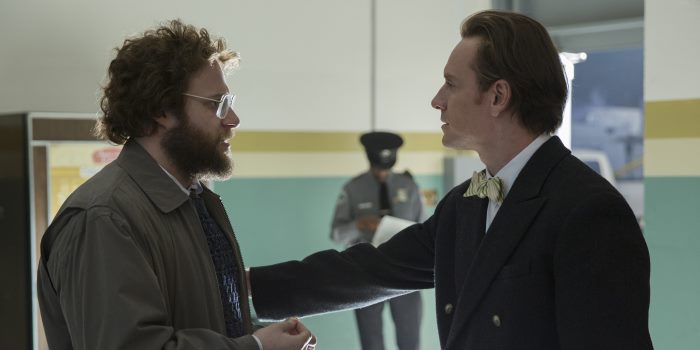
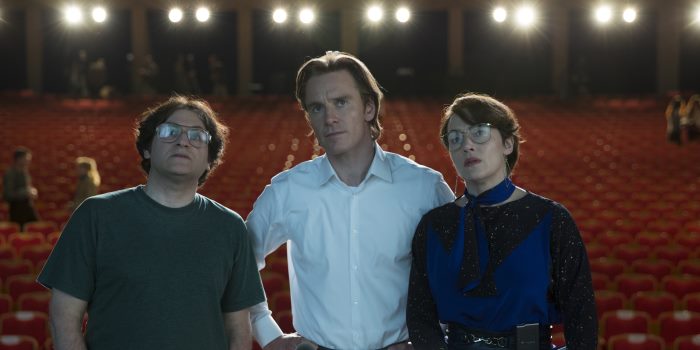
Important figures of Steve’s life all come to confront him, handily, in the minutes leading up to each launch, including Apple co-founder Steve Wozniak (a gentle Seth Rogen); mentor and eventual nemesis John Sculley (Jeff Daniels); Mac technician and masculinity-undercutter Andy Hertzfeld (Michael Stuhlbarg); Chrisann Brennan (Katherine Waterston), mother of his long-denied daughter; and Lisa Brennan-Jobs (played by Makenzie Moss, Ripley Sobo, and Perla Haney-Jardine), the girl he reluctantly accepts as his progeny.
Nobody – besides Lisa - ages perceptibly. Instead, to mark the passing of time, Boyle changes cameras, beginning by shooting on 16mm, before moving on to 35mm and, finally, digital.
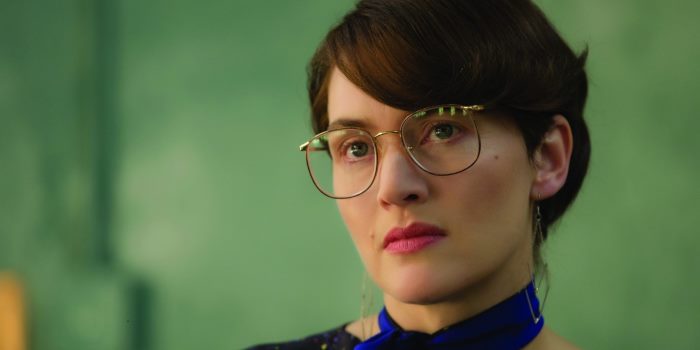
Through it all, marketing exec and work-wife Joanna Hoffman (a pithy Kate Winslet with a wavering Polish accent) keeps the plates spinning. Danny Boyle –
he of the stress-headache montage – does similarly manic yet steady work, breathing hyperreal life into the banal boardrooms and behind-curtain settings while keeping Sorkin’s spiraling screenplay from swallowing his actors and their reality whole.
(At one point, Sorkin makes Steve exclaim surprise that everyone always seems to “get drunk” and confront him 30 minutes before going on stage. He’s just saying what we’re all thinking.)
It’s easy to balk at
Steve Jobs, a biopic that attempts to give audiences an unvarnished glimpse at a famed jerk, but that also affords him the kind of third-act redemption you only get in the movies. It comes from the pen of Sorkin, an uncannily gifted writer with countless, easily-recognisable bad habits, and it’s directed by Boyle, who has a dazzling visual style and, usually, little interest in nuance. Collectively, they’ve mutated the
actual Steve Jobs, as well as his real accomplishments (and fatal flaws) into the arc of a larger-than-life antihero; like your typical
‘difficult-man’ TV protagonist.
Still. This is one damn compelling picture. It has a quartet of invigorating, engaging and emotionally-resonant performances from Fassbender, Winslet, Rogen and Daniels; it moves at a clip and conveys much about each character with grace and ease; and it completely upends the idea of what an artist’s responsibility should be to their deceased subject.
Sorkin, despite adapting Walter Isaacson’s book of the same name, reportedly interviewed Jobs’ friends, frenemies and family while writing the script. No matter. What he’s done is invented a world where everyone is smart and every fight has two (mostly) fair sides and every scathing exchange is absolutely delicious. Does it teach us more about the man? Not especially. What it does is tell a fascinating story about ego and eRevenge with recent tech history as its backdrop.
It’s a dangerous game, letting moviemakers have their way with the past (and certainly, we don’t always want that), though maybe that’s what makes this so exciting.
Steve Jobs is a high-wire act, about a high-wire artist. If you want a biopic that’s by the book, you can a) read the actual book, or b) rent
jOBS. Choose wisely.
Ultimately, you’re watching a series of arguments, made cinematic by Danny Boyle. Each crescendos in sync with Daniel Pemberton’s score, aided by the herculean editing of Elliot Graham. It’s certainly imperfect, for the reasons mentioned above, and viewers hoping for a more straight-and-narrow education on Jobs’ life will be mighty disappointed.
However, if you want to see Aaron Sorkin play fast and loose with reality, history and writerly-responsibility, to fascinating and entertaining effect,
Steve Jobs does the…. you know.
4/5
In cinemas now. Rated M for coarse language and mature themes.




cool