Movie Review: In "Glass", Supervillains Get the Group Therapy They Need
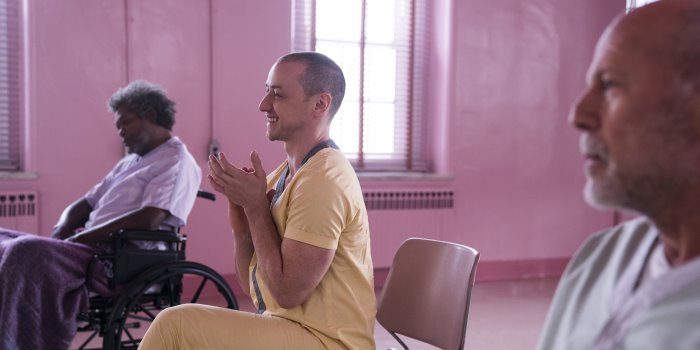
Glass sees M. Night Shyamalan, that scamp, screwing with the very concept of a cinematic superhero universe.
Erratic. Machiavellian. A diabolical egomaniac. M. Night Shyamalan’s been accused of it all.
It’s fitting then that Glass, his trilogy-ender to Unbreakable and its surprise sequel Split, focuses on supervillains of similar repute, and asks audiences to have a little sympathy for the devil(s).
For those playing catch-up: Unbreakable starred Bruce Willis as David Dunn, a softly-spoken security guard who discovered he was, well, unbreakable, and took up the mantle of vigilantism with solemn gravity. It was a tender, melancholy origin story that may have inspired the Dark Knight saga.
That’s why it was so shocking when Split—a trashy, teen-girls-in-peril horror flick that came 16 years later—was revealed to take place in the same Shyamalan-verse (AKA Philadelphia). James McAvoy played Kevin Wendell Crumb, a kidnapper with multiple personalities ranging from nine-year-old Hedwig, to scheming Patricia, to a cannibal called simply 'The Beast'. It ended with kidnappee Casey (Anya Taylor-Joy) escaping his clutches, and the revelation that Dunn was nearby and ready to pounce.
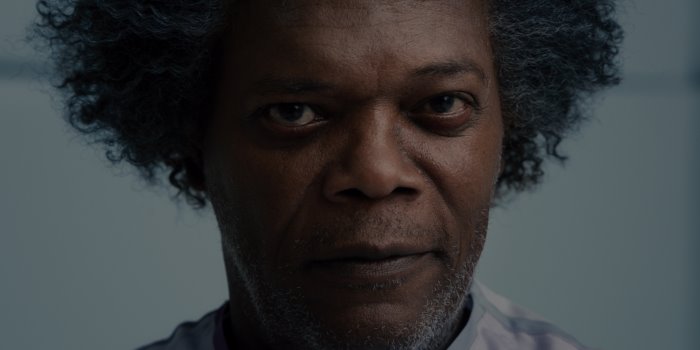
So here we are, with Glass, which takes its title from Dunn’s first nemesis, Elijah Price, who prefers to go by the name Mr. Glass on account of his brittle bones and love of flashy, comic-book villainy. He’s played by a fiercely fro’d Samuel L. Jackson, making up for the sparse scalps of his co-stars.
All his life, Price wanted confirmation that superpowered beings walk among us, and in Glass, Dunn and Crumb are both captured and institionalised alongside him. But just because M. Night is finally fulfilling the two-decade promise to conclude this story doesn’t mean he’s suddenly in the business of fan-service. You could have plotted 20 potential outcomes for an Unbreakable sequel (and that’s precisely what fans have been doing) and you still wouldn’t arrive at what Shyamalan’s concocted here.
It’s hugely entertaining, ideologically muddy and utterly bonkers. Its characters speak reverently of comic books, yet its actions screw with comic book conventions. And it argues that self-perceived 'supervillains' are people too, in need of a little love and humane treatment, before showing one such 'supervillain', umm, eating a person’s face. It’s a spicy take, for sure.
Credit where it’s due, Shyamalan's always zigging when you think (or wish) he’d zag. For its first two thirds, Glass appears to be a wickedly funny troll of its audience, as a psychiatrist played by Sarah Paulson attempts to convince us, and our antiheroes, that they’re merely disturbed and not super-powered at all… through group therapy. It teases explosive action set pieces—the kind you might find in a Marvel movie—and then takes the smaller, stranger and notably cheaper path less travelled.
And that’s why it’s special, despite being absolutely all over the place: Glass is a series finale longer in the making than Avengers: Endgame, and its writer-director is still only interested in following his nutty intuition. You can’t accuse it of having been made by committee. You’d only accuse its maker of needing to be committed.
Glass is the best-looking and most disorienting feature Shyamalan's made since The Sixth Sense, with the signature colours of its characters popping against their sterile hospital cells. One sequence, in a pastel-pink hospital room, is especially striking. And it’s far more empathetic than Split, which didn’t exactly paint a fair portrait of those wrestling with dissociative identity disorder, having conflated mental illness with monstrousness. In Glass, Crumb’s better angels get a fairer shake, and once again, the excellent McAvoy competes in a one-man Acting Olympics as he jumps from personality to personality. He shares most of his scenes with the fantastic Paulson, and I can think of no finer Acting Olympics referee. It’d be unfair if she was competing too, so she spends the picture just being extremely reasonable.
Jackson, meanwhile, gets to go big, scheming in twitchy silence from a wheelchair before monologuing in a velvet knee-length duster. Sure, his Nick Fury has an eyepatch, but Mr. Glass has a monogrammed gold 'MG' on his tie. Name a more iconic duo, I’ll wait.
Willis—and Spencer Treat Clark, returning as David’s son Joseph—are suitably sensitive, while Taylor-Joy once again excels as the kindly, haunted and unexpectedly resilient Casey. And even though no one was wondering, yes, M. Night cameos to explicitly explain that the minor characters he portrayed in Unbreakable and Split were one and the same. This, to Shyamalan, is fan-service, and don’t you kind of love that about him? The man is absolutely diabolical.
3.5/5
In Australian cinemas 17 January 2019. Rated M for mature themes and violence.
Header Image: Walt Disney Studios
Topics
Ref: c68540cd-fc9b-415b-858a-a9d20081b14b

Most Popular



Comments & Feedback
Share your opinion
Emoji cheatsheet Formatting Comment guidelines
I cant wait to see this movie!