Is Binge-Watching Bad For Your Mental Health?
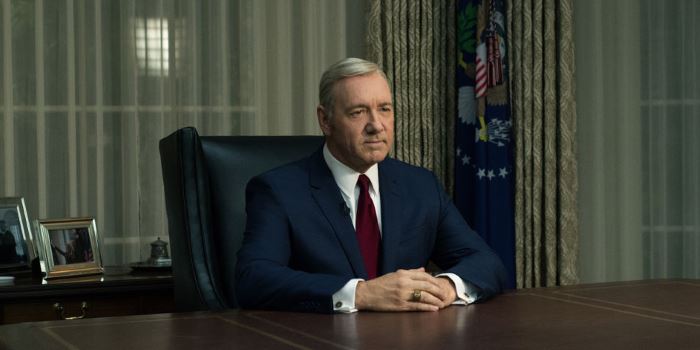
Not sure what to do with yourself now that you've finished House of Cards Season 4? There might be more to your feelings...
Trigger warning. This article discusses mental heath and depression. Picture this. You're innocently browsing Netflix on a Friday night, when a show you've never heard of catches your eye. You click on the first episode, inquisitive to see what it has to offer. Suddenly, it's 4am and you've watched the entire series. The joy you felt whilst watching it has faded. You feel lost and unsure as to where to progress from here. For many of us, this situation sounds all too familiar. However, recent studies have shown that this unsatisfying feeling that follows binge-watching may not just be a temporary glumness; it could in fact signify something more serious. Binge-watching itself is an ambiguous term. Some of us might define it as being two or three consecutive hours of TV watching; others may see it as an entire day spent in the world of soap operas. In a study conducted late last year by the University of Toledo, 408 adults from all over North America were surveyed in regards to the way they watch TV. Seventy-seven per cent of these people were found to watch television for two or more hours consecutively on any given day, and 35 per cent of respondents admitted to being binge-watchers. The study concluded with the finding that those who identified as binge-watchers had a significantly higher instance of poor health, both in the mental and physical sense. The findings of this report have raised many questions on a global level. Are those of us with access to television and streaming services misusing them? Are we neglecting more important aspects of life because of TV's addictive qualities? Most significantly, are we binge-watching because of mental health issues, or are the issues themselves being caused by the sometimes isolating process of binge-watching? All of these queries are yet to be definitively answered, but seeing as I'm not a binge-watcher myself, I decided to ask a friend of mine to weigh in with her own experience. Serena H., 17, has been my close friend for the past four years and is a serious fan of TV, particularly Korean dramas. “After binge-watching I generally feel pretty good because I’ve finished a show, but at the same time I feel upset because I have to find something new to watch,” she said, noting the addictive cycle. "If it’s a good show, it’s easy to get addicted to binge-watching it because you just want to find out what happens, especially when an episode ends on a cliff hanger,” she added. As we know, this is a strategy implemented by almost every production company for this exact purpose. The trick is to recognise when you are being sucked in too deeply. So what can we do to combat this issue? For those who feel as though this topic resonates with them, you're in luck. There are plenty of other ways to spend your time which are equally as satisfying as several hours holed up on Netflix, whilst simultaneously providing more benefits (as fulfilling as a good, artfully-made and entertaining TV show can be). It could be as simple as getting out of the house; whether that be to spend time with friends, or perhaps just taking a solitary walk. A personal favourite activity of mine is the oft-forgotten puzzle book; these can be purchased relatively cheaply from any newsagent and provide hours (if not days) of entertainment and positive brain stimulation. At the same time, we must remember that full-fledged television addiction (like addiction of any kind; yes, even to puzzle books) is a real and serious thing which might require the intervention of professional help at its most severe. It is important to become self-aware when any leisure activity becomes something more sinister.If you or anyone you know needs help, support is available right now. Call Lifeline on 131 114 or Kids Helpline on 1800 551 800.
For more information on counselling and treatment plans you can contact your school’s health services as well as the following organisations:
Eloise Parks is one of Student Edge’s student contributors. Learn more about the contributors program.
Photo: Netflix.Topics
Ref: d7115326-c3b9-4af7-8a94-a5cb0017f6b6


Most Popular



Comments & Feedback
Share your opinion
Emoji cheatsheet Formatting Comment guidelines
duh!
Nah
It wasn't fully her fault. He managers and team member should of checked up on that as well. and as she also states she wasnt aware that the drug had a different nsme