"Inexcusable": Student Unions Speak Out About New University Guidelines On Handling Sexual Violence

Trigger Warning: This article discusses sexual assault.
Last week, tertiary organisation Universities Australia released a set of guidelines to help universities around Australia deal with victims of sexual violence on campus.
In response to the @AusHumanRights landmark #changethecourse report @uniaus has today released new guidelines to help universities to respond to sexual assault and sexual harassment on campus https://t.co/7WzV4bdmsq
— AusHumanRights (@AusHumanRights) July 19, 2018
The guidelines focus on "putting the needs of the person who has experienced sexual assault or sexual harassment at the centre" and outlines the steps universities can undertake accordingly.
These include making sure all front-facing staff have the skills and knowledge to appropriately respond to any disclosures of sexual misconduct, offering a single point of contact for student disclosures, and minimising the number of times a student needs to recount their traumatic experiences.
But the Chief Executive of Universities Australia, Catriona Jackson, admitted in the release that universities do not need to follow these guidelines to a tee; instead, they're offered as a 'best practice' standard.
"Many of these actions and policies are ones that universities already have in place or are actively considering," Jackson said.
"These guidelines are not intended to replace institutional approaches to dealing with these unacceptable behaviours, but rather provide further advice."
The announcement comes one year after the Human Rights Commission released their Change the Course report, which revealed university campuses were facing a serious problem with rates of sexual violence incidences, and provided recommendations on how to deal with them.
Of the 30,000 students who undertook the survey, 51 per cent said they had been sexually harassed on at least one occasion in 2016, with nearly seven per cent admitting they had experienced sexual assault in either 2015 or 2016.
Last month, we reached out to some universities around Australia and their respective women's officers to see what progress had been made since the publication of the report, and while many universities had begun work towards meeting their promises, some still had a long way to go.
A number of universities' women's officers think the proposed efforts by Universities Australia are still not enough.
"I do not think that Universities Australia's Respect Now Always [campaign], or guidelines such as this are even close to enough to inspire change on campuses," Angela Griffin, the Women's Officer of UNSW's Arc, told Student Edge in an email.
"These guidelines are just that: guidelines. And universities that are not already adopting the recommendations of the 'Change the Course' and 'On Safe Ground' reports will not change their processes now."
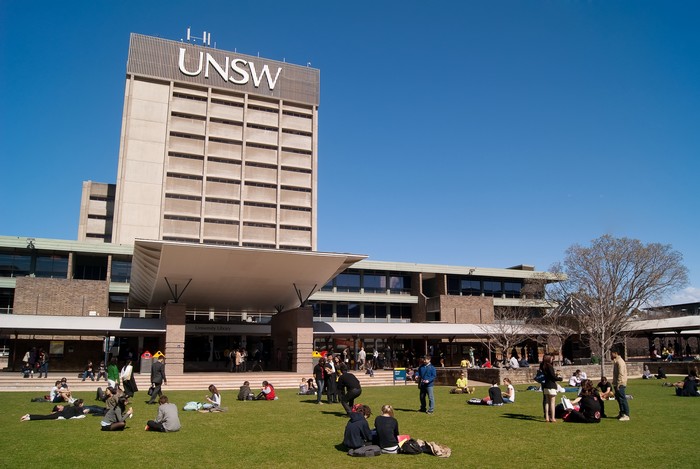
Angela notes, however, that she believes UNSW is doing a great job already.
"I feel that UNSW has been one of the most proactive universities in responding to sexual misconduct," she explains.
"The recommendations that were listed in the 'Change the Course' and 'On Safe Ground' reports have, for the most part, been established.
"The UNSW Women's Collective [has] been heartened by the strong response coming from our university on this issue."
Similarly, the students' association at Australia National University (ANUSA), as well as the Postgraduate and Research Students' Association (PARSA), are not pleased the guidelines took one year to be released.
"These guidelines have been released 353 days after the Australian Human Rights Commission (AHRC) released a report giving undeniable evidence of the national crisis of sexual violence on university campuses," ANUSA and PARSA said in a statement.
"These guidelines... are not binding, and they are not indicative of a year's worth of work.
"Universities have the resources, the ability, and the capacity to fix this. The lack of substantive, effective action we continue to see is inexcusable."
They also note that while they strongly agree in principle that the wellbeing of the affected students should be at the centre, the guidelines clearly omit a very important piece of the story.
"A glaring omission from these guidelines is the lack of emphasis on perpetrators and accountability for their actions and the harm they have caused," ANUSA and PARSA said.
"Universities not only need to provide adequate support services, different ways of reporting incidences, and translation services, but they must ensure that perpetrators face the consequences of their actions.
"Cultural change cannot happen without perpetrator intervention."
If you have experienced sexual harassment, you can make a complaint to the Human Rights Commission. If you have experienced sexual assault, please see here for a list of sexual assault services throughout Australia or call 1800 RESPECT (1800 737 732).
Header Image: iStock.com/kokkai
Topics
Ref: 7900e96b-3af0-4b27-8737-a926003a9104





Comments & Feedback
Share your opinion
Emoji cheatsheet Formatting Comment guidelines