The 2025 Election is Over and We Could Have Had a Hung Parliament

But what does a hung parliament actually mean?
The democracy sausages have been eaten, the ballots marked and the votes counted. It’s official – the Australian 2025 federal election is over and Labor has won the majority of seats (a whopping 83).
Despite strong support for the Greens and Teals, Labor has come out on top and the theory of there being a hung parliament and potentially a minority government is no more. The loss of votes to the Libs meant that the Greens and Teals were fighting even harder to keep their seats as many people opted to vote for Labor.
The way voting works in Australia means that we’re not actually voting directly for who gets to be prime minister but instead voting for candidates in each of the country’s electorates which is around 150 seats.
Most of these candidates are associated with a major party and if they get the majority number of seats (76 seats), the leader of that party will become the prime minister. In this case, it’s Anthony Albanese returning as our PM.

What is a hung parliament?
A hung parliament is a parliament in which no political party has enough seats to secure an overall majority. If no party or coalition of parties wins a majority in the House, the result is called a hung parliament.
When that happens, the crossbench, which is all of the Independents and candidates from minor parties, hold a lot more power.
This is a pretty rare occurrence and the last time this happened was in 2010. And despite some talks that there could be a hung parliament, Labor did shock a lot of people by winning so many seats.
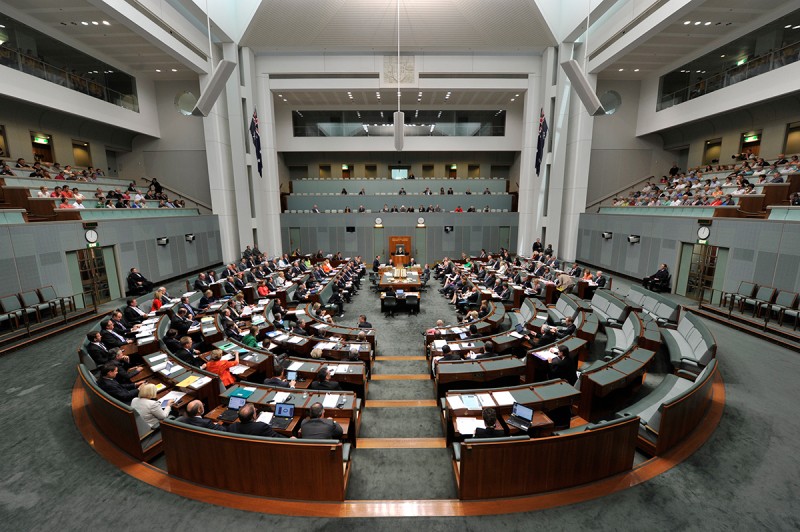
The House of Representativesin Australia. Image: Australian Parliamentary Office
What’s the significance of a hung parliament in Australia?
If this had happened, Labor and the Liberal-National Coalition would have had to spend the next few days or weeks negotiating with the crossbench.
In a hung parliament, they’d be hoping to convince enough individual candidates to ally with their side so they can hit 76 seats.
The major parties would have to potentially make some big policy changes to get the support they need from smaller parties.
Has this happened before?

The last time this happened was in 2010 when Julia Gillard had to win over three Independents and a Greens member. And it took an agonising 17 days for there to be a clear election outcome.
She agreed to form a minority government with the Greens and independents, replacing her “citizens assembly” plan with a climate change panel made up of Labor, Greens and independent members of the Australian parliament.
She also negotiated the use of a carbon tax, introduced poker machine reform legislation, forming specific government committees and more.
The Greens and Independents then promised to pass the budget and help the government stay in power by opposing any motion that the opposition puts forward to dissolve the parliament.
Teaming up with the crossbench like this is called a minority government.
It means that for the next three years, that major party would need to do a lot more negotiating when they want to get their policies enacted.
However, due to Labor winning a staggering number of seats in this federal election it means that there is no hung parliament and it will be a lot easier for Labor to pass different policies with so many seats in power.
Image header: ABC News Australia
Topics
Ref: ce48ac24-bce3-4909-a888-b2d4003d91fd





Comments & Feedback
Share your opinion
Emoji cheatsheet Formatting Comment guidelines