How a Group of Aussie Teens Took World-First Legal Action on Climate Change
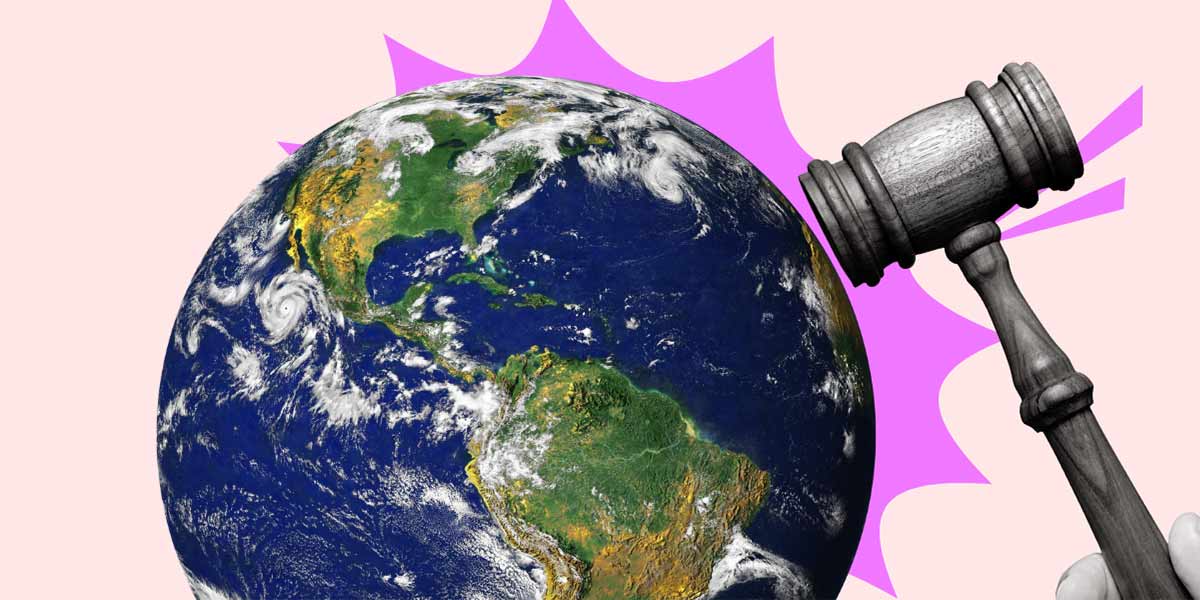
They've been struck down, but their cause stands strong.
In 2020, a case was launched to protect the future of young people in the face of climate change. And the litigators? A group of Aussie teens, aged 13 to 17 years old.
Greta Thunberg congratulated the students on the ruling at the time. It was a huge win for climate activism.
Today, the case was overturned in the Federal Court. It’s a disappointing result, but it’s likely the teens will keep fighting—and their positive action is making waves across the world.
If you’re not cluey on the specs, this is something worth brushing up on. Here’s everything you need to know.
What was the original case launched in 2020?
There’s a lot of legal terms in here, but we’re gonna break it all down.

The OG case was a ‘class action’ that sought an injunction to stop the Australian Government approving an extension to Whitehaven’s Vickery coal mine.
If the extension went ahead, additional coal from the mine would create roughly 100 million tonnes of CO2-equivalent greenhouse gasses. This is roughly equal to the amount created each year in Australia by all forms of domestic transport combined.
Eight teens, many of whom met during the School Strike 4 Climate, took action by asserting that Federal Minister Sussan Ley had a ‘common law duty of care’ for young people. They argued that by approving the mine extension, young people would be harmed in the future.
What is a class action?
A class action is a fancy term for when a group of people take legal action on behalf of a larger group.
The eight teens are claiming to represent every person in the world under the age of 18 who will be negatively affected by climate change.
What is duty of care?
According to Slater and Gordon, “a duty of care is a legal obligation (that we all have) to take reasonable steps to not cause foreseeable harm to another person or their property”.
This concept is enshrined in ‘common law’, which also exists in other countries such as England, the United States and New Zealand. That’s part of what makes this case so monumental.
What is an injunction?
Think of an injunction like an order to do something, or not to do something.
The teens didn’t want to simply persuade the Federal Minister not to approve the extension, as per duty of care. They wanted to legally order it.

What’s happened now?
A lot has happened since the initial case was launched in 2020.
Justice Mordecai Bromberg, the judge on the case, agreed that the duty of care existed. Woohoo! However, he denied the application for an injunction. Meaning, the Federal Minister could still go ahead and approve the extension if she could argue it wasn’t breaching duty of care. Boo (and it kinda gets wose from here).

Four months later, Sussan Ley approved the coal mine, arguing that it would not contribute to the heating of the world.
And today, a full bench in the Federal Court dismissed the government’s ‘duty of care’.
Just because the full court of the Federal Court of Australia has ruled the government owes no 'duty of care' to protect young people from climate change does not remove our own personal, moral obligation to wake up and act
— Asher Wolf (@Asher_Wolf) March 15, 2022
But, these teens don’t look set to back down, and they’ve ignited support everywhere. Experts say the teens are likely to appeal against the decision in the High Court.
In 2020, 13-year old of the group, Izzy Raj-Seppings, told ABC “I definitely have hope because if you look around, you can see all the incredible climate activists, young and old, all these people fighting for what’s right. And we are making change.”
Somehow, it feels like change isn’t too far off at all. Even if we have to fight for it.
Header image: Canva.
Topics
Ref: d30e2533-bbe8-44dd-a18e-ae59004bfdc4






Comments & Feedback
Share your opinion
Emoji cheatsheet Formatting Comment guidelines