Here's Why the Internet as We Know It May Have Died on Dec 14
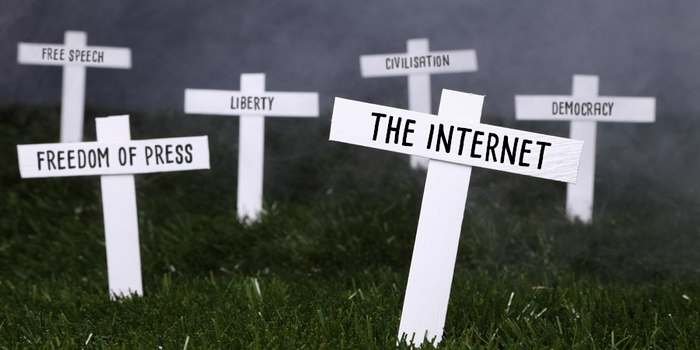
Who's afraid of the big, dark internet?
UPDATE (Friday, 15 December): The Federal Communications Commission (FCC) has voted to repeal the net neutrality laws of the Obama era in a 3 - 2 victory. The White House has backed the decision with Press Secretary Sarah Sanders stating that Trump's government supports a "free and fair internet."
The repeal will likely take a few months to come into effect and American ISPs have said that there will be no major changes in the immediate future.
The original story, published on 24 November, continues below.
The internet has been many things to billions of people. It's been a resource, refuge, teacher, time-waster, entertainer, and hang-out spot.
It's also seen as a digital space intended for the exchange of information and ideas with equal access. While governments in many countries have tried to impede this freedom by restricting sites that criticise their leadership or allow anonymous communication, all sites (aside from blocked ones) were considered equal in terms of how we accessed them through our internet service provider (ISP). This means that our ISPs weren't allowed to prioritise data quotas for certain sites over others.
But on December 14—the date the U.S. will make a decision on 'net neutrality'—everything that the internet has been for the last 34 years could change.

We'll explain to you what's happening in America and how it could affect Australia.
What is net neutrality?
Net neutrality is a bit of a tough one to explain, but in simple terms, it means that all sites can be accessed equally. We're not talking (specifically) about censorship; rather, net neutrality involves how the internet actually connects us to our fave sites.
Essentially, net neutrality ensures ISPs give all their customers equal speeds to all sites, without charging more for access to certain sites.
In 2015, former President Barack Obama put the concept of net neutrality into law in the U.S., which meant ISPs couldn't slow down your access to certain sites or make us pay more for it (outside of the usual structuring of internet plans).
Otherwise, content service producers (like Netflix and Google) could pay ISPs to let their internet users access their sites faster, or even charge them to access their site. No, thanks.

Many companies like Netflix and Google, many of which began as startups, are fighting to keep net neutrality.
Jon Oliver actually explained how it worked three years ago, so, if it's still not sinking in, give him a watch.
The issue now is that President Donald Trump and the FCC want to repeal Obama's ISP net neutrality law, leaving the internet vulnerable to a system that would favour big businesses and rich customers.
President Trump has long shown his opposition to net neutrality. In 2014, he Tweeted that net neutrality is similar to the "Fairness Doctrine", a rule that required broadcasters to air a dedicated amount of airtime to controversial issues.
The FCC is set to vote on repealing the law on December 14, and with three Republicans in favour of dumping the law over the two Democrats who want to keep it, the odds are not in the internet's favour.
Do we have net neutrality in Australia?
In Australia, the idea of net neutrality barely exists, but that's not necessarily a bad thing.
In an article written for The Conversation, Karl
He explains that given the amount of strong competition among ISPs as well as strong consumer laws in Australia, it's unlikely that the concerns raised by removing net neutrality laws in the U.S. will apply here.
In saying that, it's not unusual for some ISPs to offer access to sites such as ABC's iView or Spotify for free. This obviously works in the consumer's favour because they're winners, but others warn that this is against the spirit of net neutrality because an ISP favours one content provider (Netflix) over another (Stan or Presto).
Hmm, what does the U.S. repeal mean for Australians?
Since this is all going on in the U.S., surely Australia will be spared? Well, as we all know, a lot of our favourite websites are based in the United States. Think Google, Netflix, Facebook, Snapchat, Instagram, YouTube... basically, 99 per cent of your browsing history.

But this doesn't necessarily mean Australians will be greatly affected by America's changes.
What could happen is that if sites like Netflix and Google have to pay American ISPs for faster speeds, they may decide to transfer the costs to their U.S. customers and possibly their Australian ones too.
Lifehacker suggests that in terms of gaming, gamers who want to connect to U.S. servers might have to endure slow speeds or pay an hourly fee.
It's also important to note that it's still not entirely clear how these changes will affect international users of U.S. sites.
Okay, but what can I actually do about it?
While this could potentially be the world's problem, it's really up to the FCC and their vote on December 14. It never hurts to inform your friends and family about the implications and keep up to date with any changes in Australia's net laws.
Some Americans are taking to creative ways to convince FCC Chairman Ajit Pai.
Until December 14, we can only wait and hope for that the protests will be loud enough for someone to change their mind.

This story was originally published on 24 November 2017 under the title "Here's Why the Internet as We Know It May Die on Dec 14".
Photo: iStock.com/Sadeugra
Topics
Ref: 51da5b3b-d2e3-4dcd-86be-a83300197b91






Comments & Feedback
Share your opinion
Emoji cheatsheet Formatting Comment guidelines