Here’s Why Adele’s Latest Instagram Post is So Controversial
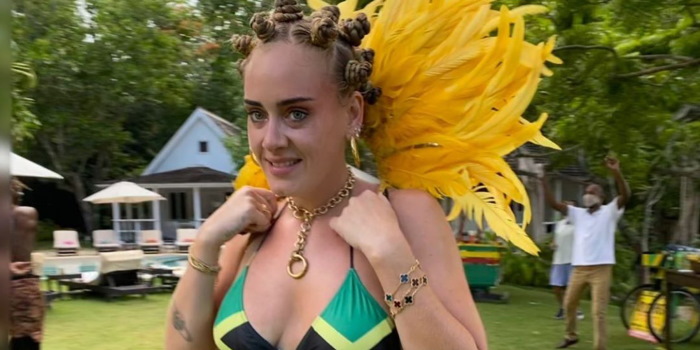
Appreciation or appropriation?
Singer-songwriter Adele has just landed in some hot water online due to her latest Instagram post.
In the image she posted on Monday, she is seen wearing a Jamaican flag bikini top and Bantu knots as a tribute to London's Notting Hill Carnival, which was moved online due to the pandemic.
The image immediately got a lot of attention both on Twitter and on the original Insta post due to Adele’s choice to wear Bantu braids, traditionally a Jamaican hairstyle, as a white woman.
What is wrong with the photo?
The main issue here is with Adele’s hairstyle. As Bantu braids are a traditional Jamaican hairstyle, the singer quickly was accused of appropriating Jamaican culture.
While the photo shows Adele attending a carnival that celebrates Jamaican culture, the reason she has been accused of appropriation is because she isn’t Jamaican, despite having grown up in the area where the carnival takes place.
Adele’s intentions with this hairstyle and this photo may not have been malicious but the problem stems from Adele’s privilege as a white woman to wear the cultural hairstyle without experiencing the racism that Black people historically have when while wearing similar hairstyles.
People online have pointed out the double standard that exists and how white celebrities are often praised for trying out elements of Black culture.
Many others were also quick to defend Adele and stated that she was appreciating Jamaican culture, not appropriating it.
What is cultural appropriation?
Cultural appropriation refers to trying on or adopting an element or elements of an identity or culture by members of another identity or culture.
This is usually controversial when members of a dominant culture appropriate disadvantaged groups or minority cultures.
But how can you tell the difference between appropriation and appreciation?
Here in America, Black hair is a liability. A girl could be sent home from school or a woman 'talked to' about professionalism for this style and others. If they do *anything* but relax and straighten their hair or wear wigs they can face criticism and be denied opportunity.
— Catherine of Pisgah (@sacredheartcat) August 31, 2020
In general, cultural appreciation looks like someone seeking to understand another culture to learn, broaden their perspective and connect with other people cross-culturally.
However, appropriation looks more like 'cherry picking', in which a person selects certain parts of a culture to wear or try as if it were their own, often for the purposes of dressing up, belittling or following a trend.
The biggest problem with cultural appropriation is that culture is often taken from groups that have historically been disadvantaged or discriminated against because of their culture or race.
A very common example of this is the common use of African culture in the United States despite their historical and ongoing treatment of African Americans and other people of colour (POC).
If you’re unsure and want to avoid accidently misrepresenting someone else’s culture or causing someone distress, here are a few things to consider:
- Make sure you research culture and understand it.
- Avoid using sacred symbols or terms.
- Dismiss stereotypes as they are often negative.
- Promote diversity and sharing believes.
Why it's an issue right now.
This isn’t exactly a new problem; we have seen celebrity after celebrity take traditional or cultural dress and use it to their advantage to either make money or 'dress up'.
We all remember when Kim Kardashian tried to name her shapewear brand 'Kimono'.
With the Black Lives Matter movement promoting so much significant global change for most of 2020, it makes sense that we are seeing more of this on social media.
Calling out celebrities for cultural appropriation is going to come up, and it is integral part in defeating stereotypes and racism into the future.
Header Image: adele via Instagram




Comments & Feedback
Share your opinion
Emoji cheatsheet Formatting Comment guidelines