Do You Share A Bed With Your Dog? You're Far From Alone

This post is presented in partnership with CQUniversity.
Worried you’re a little too attached to your pet dog? A recent study reveals you’re not alone.
According to a survey of 1,328 dog owners, more than 69 per cent of respondents admitted to co-sleeping with their canine.
The study was conducted by PhD candidate Peta Hazelton, 25, of CQUniversity’s Appleton Institute. She spoke to Student Edge about the inspiration for the research and her real-world experience in the matter.
(FYI, her 5-year-old Maltese / Shih-Tzu Bruce isn’t allowed under the covers, but he does sleep on top of the bed.)
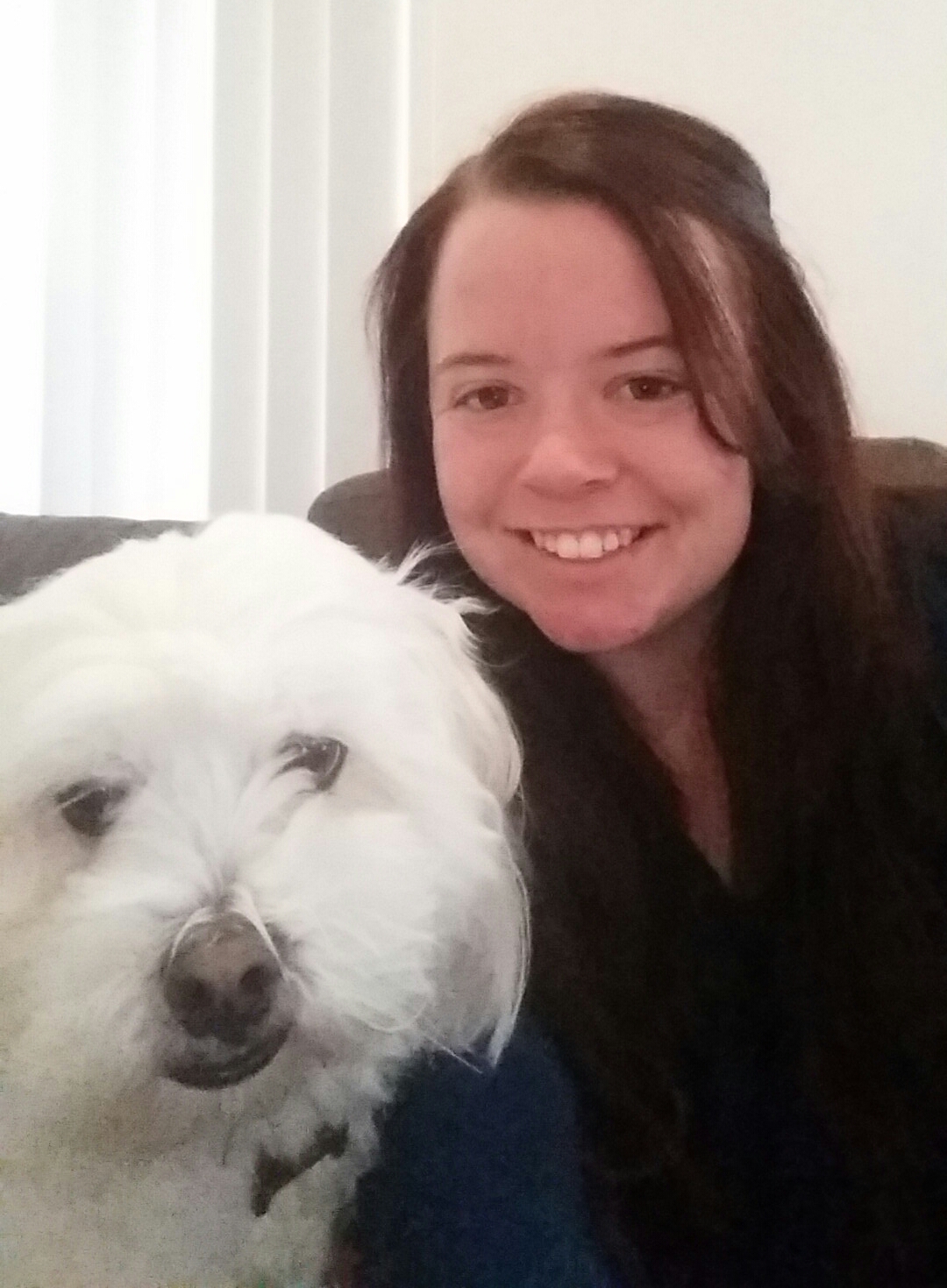
Picture: Peta with Bruce. Supplied by Peta Hazelton.
“It is quite a prevalent behaviour in Australia, particularly with dogs having so many benefits to our psychological health,” Peta explained, listing decreased loneliness, reduced stress and social support as just some of the proven benefits of dog companionship.
“I wanted to start from scratch and look at who does it and why they do it.”
Inspired by a 2012 Sealy Sleep Census that reported 10 per cent of Australians co-slept with at least one pet, Peta used social media and dog-friendly forums to circulate her more detailed questionnaire, collecting both qualitative and quantitative data on the subject.
Of the 1000-plus participants, 34.4 per cent said their dog spent the night on top of the bed, while 12.7 per cent revealed that they went so far as to allow their dog under the covers. A further 22 per cent let their dogs sleep in the bedroom, but not actually on the bed.
Many pet-less people may wonder why anyone would want to potentially disrupt their sleep like that.
Turns out, there are plenty of reasons. And believe it or not, they’re mutually beneficial, for man and mutt.
For some respondents, “Not having the dog in the room meant that they scratched at the door to get in, or their dog barked too much at night,” Peta said.
“Another reason was health or medical reasons; say, their dog was a seizure alert dog, so they needed their dog’s presence during the night,” she added.
“Some started co-sleeping for reasons relating to attachment.
“They had nightmares that their dog had been injured, and they were quite anxious without their dog in the room, so to make sure their dog was safe and to avoid that anxiety, they preferred to sleep with their dog.”
Peta also found that single people were more likely to co-sleep with their dog than married couples, but that divorcees were more likely to co-sleep with dogs than never-married singles.
That last nugget of information is partly why Peta believes there’s more to be learnt by studying co-sleeping habits.
“I think that there’s room for research to actually consider whether co-sleeping may enhance our psychological benefits.”
Having completed her thesis, she’s now looking to get the results published.
When asked if there could be an investigation into cat co-sleeping in her future, she laughed, adding diplomatically, “I think you have cat people and then there are dog people.”
There’s no question as to which side of that bed she sits in that debate.
Open up your universe and consider a degree at CQUniversity, just like Peta. For more information, go to cqu.edu.au
Topics
Ref: 97de85ac-d80b-489d-813e-a4ec0077f1c2






Comments & Feedback
Share your opinion
Emoji cheatsheet Formatting Comment guidelines