Adventures In Academia: Meet The Professor Who Gets Up Close And Personal With Bears And Snow Leopards
This post is presented in partnership with CQUniversity.
Professor Owen Nevin wants you to know he doesn’t look like Dumbledore.
There are similarities, sure. He’s the Head of Campus at CQUniversity Gladstone, for starters, and just like the playful Hogwarts headmaster, he’s got jokes.
“We’re on the phone so you can’t see me; maybe I do look like that,” he laughed to Student Edge.
Nonetheless, the professor’s initial point stands.
“People still have this stereotype of the bearded academic or the professor looking like Dumbledore from Harry Potter,” he continued.
“The sort of work that I’m involved in is very much applied, real-world research; looking at questions that have immediate applicability and solving problems for conservation, for industry, for agriculture, for the health profession.”
This is his way of explaining how hands-on his career in academia has actually been.
Here’s another way of explaining it:
“I’ve had some studies where we’ve put collars on bears."
“We’ve actually anesthetised and captured bears; handled them; put satellite tracking onto them,” he added.
“The collars also had a satellite phone and a dial-up modem… and those bears were able to send me an email once a day, because their collar made a phone call connected to the internet.”
That is just some of the work Professor Nevin conducts as an academic. The life of a researcher involves a lot more bear-wrangling than you might have anticipated.
“I’ve had various projects over the last couple of decades which have ranged from pure observational studies, where I’ve used viewing platforms, either up in trees or built by riverbanks, to watch the bears feeding. So you might have bears passing underneath you, where they’re just a few metres away,” he said.
"You don’t spend a lot of time sitting in your office stroking your beard and pondering things. You get out there and apply innovative technology to answering questions."
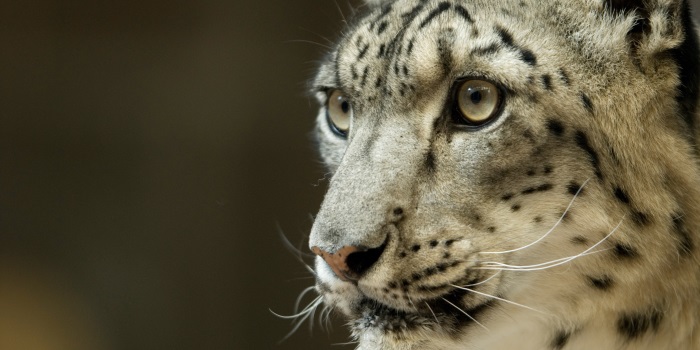
The questions he’s looking to answer these days surround the endangered snow leopard, an animal he first encountered while doing “bear work” in the mountains of Kazakhstan.
“[Snow leopards] only occur in that high mountain massif in Central Asia. So, the foothills of the Himalayas and the Tian Shan mountains and areas like that, that spread to, essentially, all the places that end in –stan: Afghanistan and Kazakhstan and Uzbekistan and Turkmenistan,” he explained.
“When you look at those countries that have conflict going on, poaching can happen quite easily in those isolated parts of the country, because people aren’t paying attention to that.
“When you’ve got armed insurgents running around your country, conservation isn’t a high priority.”
He also cites “retribution” against snow leopards - who are murdered by grazers and herders losing livestock to the mountain cats - as another reason for their withering numbers.
Which is precisely why he’s helping the snow leopards in their fight for survival, counting the remaining numbers, training locals on conservation methods and developing models to evaluate the effect of climate change on the species.
“The snow leopard habitat becomes constricted as climate warms, because they’re being pushed up higher and higher into the mountains,” he said.
Professor Nevin is heartened that more people are starting to appreciate the conservation movement, as well as the field of research itself.
“I do think the number of people who are aware and concerned is increasing, as time goes on,” he said.
He admits his initial desire to undertake an undergraduate degree to eventually get a PhD and a job as an academic is an unusual one (at least, by the standards of most undergraduates).
“For me, that career path was something I aspired to because I wanted to be involved in conservation research and training,” he explained.
Though, sometimes he gets a little jealous of the animals he’s researching, like those satellite phone-toting bears.
“They had better technology than me,” he joked.
Photo supplied by CQUniversity.
Open up your universe and consider a degree at CQUniversity. For more information, go to cqu.edu.au
Topics
Ref: ea669aa6-5af7-4b43-ae8d-a5310037dff0






Comments & Feedback
Share your opinion
Emoji cheatsheet Formatting Comment guidelines