Do I Have to Wear a Mask? What Kind? Here's What Melbourne Peeps Need to Know
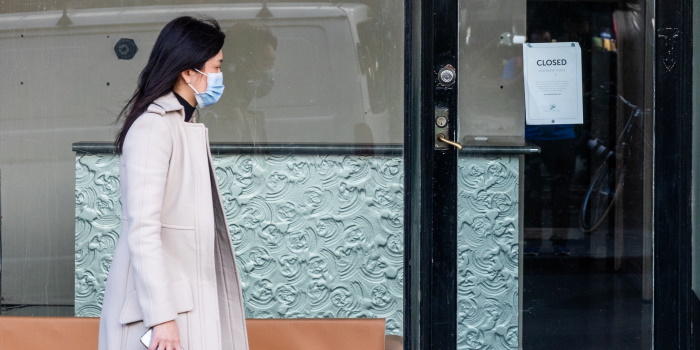
Wearing a mask will be mandatory from this week.
The Victorian government has announced that it will be compulsory for people in Melbourne and Mitchell Shire to wear face masks when out in public.
The measure, which aims to reduce community transmission of coronavirus, will be implemented from 11:59pm on Wednesday 22 July.
As reported by the ABC, Victoria's Chief Health Officer Brett Sutton said universal mask-wearing is crucial because an infected person wearing a mask sheds less of the virus, and people around them are less exposed.
Everyone over the age of 12 will be required to wear a mask or face covering when they're heading outside for study or work (if it cannot be done from home), medical care, caregiving, shopping for essentials, or daily exercise.
NOW: Wearing a face covering in public will be mandatory in #Melbourne and the #MitchellShire from midnight Wednesday. $200 fines for those who don’t. Premier @DanielAndrewsMP will address media shortly on @abcnews #COVID19au pic.twitter.com/fx1xKWQ8l7
— Rhett Burnie (@RhettBurnie) July 19, 2020
Does everyone need to wear a mask?
While the Victorian government has specified people must wear face masks when they're out in public, children under 12 years of age don't need to wear one. Plus, 12-year-olds attending primary school won't need to either. People with chronic respiratory issues also don't need to wear a mask.
Additionally, you won't need to wear a face mask if it stops you from doing your job, or if you're going for a run. In saying that, the government has suggested carrying your face mask at all times to wear whenever you can.
“If you are out of your home — you MUST wear a mask or a face covering. We will be wearing these for a very long time.”
— Dr Sandro Demaio (@SandroDemaio) July 19, 2020
Premier announces MANDATORY masks for Melbourne and Mitchell Shire from Wednesday midnight.#Masks4All #MaskUpMelbourne #covid19Vic
So, what's the best mask to wear?
Surgical mask
If you can get your hands on some, it's a smart idea to wear a surgical mask. These are loose-fitting, generally disposable masks that form a physical barrier between the mouth and nose of the wearer and the immediate environment.
Surgical masks are useful in limiting the spread of large particles from an infected person. They can shield against big cough or sneeze droplets, splashes or sprays.
You can buy surgical masks from chemists and dollar stores all over Melbourne. The Victorian government has also ordered about three million reusable masks.
Respirators
Seal-tested respirator masks include the N95 and P2 masks. These are built with tangled fibres to filter pathogens in the air, and they fit closer to the face than surgical masks.
However, the Department of Health and Human Services (DHHS) has recommended people not use P2 or N95 masks outside of healthcare settings, so you should only grab one if you're a frontline worker.
Cloth face covering
Another option is to make your own cloth face covering. In fact, you can learn how to make your own here.
Wearing a cloth face covering still provides a physical barrier to the virus, with Dr Sutton saying, "Cloth masks are inexpensive, easy to make and simple to use." You'll just need to make sure it fits securely around your face and allows for breathing without restriction.
They're similar to the cotton face masks you may have spotted being sold by Culture Kings or Cotton On.
If you do make your own cloth mask, ensure you routinely wash it in a washing machine to keep it clean.
Face masks will be mandatory in Melbourne and people who are out of the house and not wearing a mask can be fined $200 by police. pic.twitter.com/4zbusv1ZVa
— SBS News (@SBSNews) July 19, 2020
In the event you've accidentally left your mask at home, you can use a scarf or a bandana to cover your face. Except, they will not offer the same level of protection.
If you don't wear a face mask when you're out in public, you could be smacked with a $200 fine.
It's important to note that you should also wear a mask if you're catching an Uber or a taxi, but it's okay to not wear one if you're driving your car by yourself or with someone from your household.
Keep it up Melbourne.
— life_by_caroline (@lifebycaroline1) July 18, 2020
Halved the case numbers from yesterday, less people are in hospital, put on ya mask, don’t go shopping. pic.twitter.com/fj7JW5QQNZ
Header Image: Asanka Ratnayake / Stringer / Getty Images News via Getty Images
Topics
Ref: 87c1cf9c-bffa-44a0-8e92-abfe00574e91
Comments & Feedback
Share your opinion
Emoji cheatsheet Formatting Comment guidelines