Aaron Sorkin Ends "The Trial of the Chicago 7" With Two Full Minutes of Applause
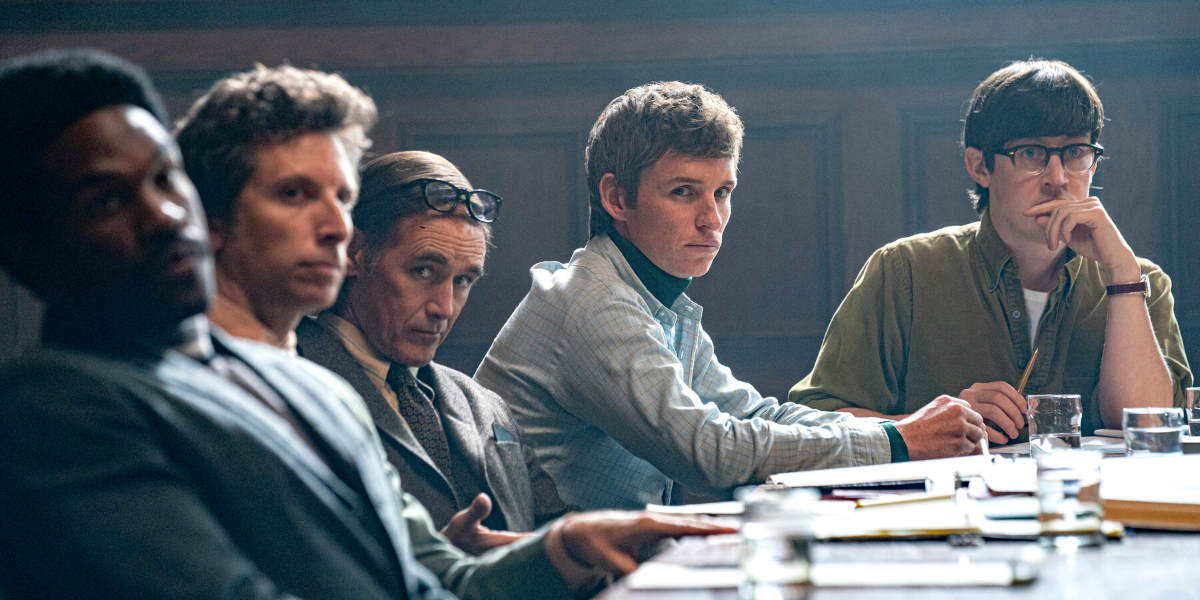
That's a lot, even for him.
Remember when Quentin Tarantino, in the closing line of dialogue for Inglorious Basterds, had Brad Pitt’s character say directly to camera, "I think this just might be my masterpiece"?
Aaron Sorkin would like Tarantino to hold his beer.
The Trial of the Chicago 7 is the latest effort from the Oscar-winning screenwriter of The Social Network and auteurist voice behind The West Wing, and it marks his second feature as a director after Molly’s Game. It’s a long-in-the-works dramatisation of the real life trial (duh) of the seven defendants who were accused of conspiring to incite a riot at the 1968 Democratic National Convention. (The film also includes the plight of Black Panthers founder Bobby Seale, who was also charged but ultimately tried separately, after an ignominious start in which he was bound and gagged in court).
It is—for Sorkin fans—like manna from heaven, thanks to its smorgasbord of character actors (all playing great, difficult men, of course) railing through whip-fast Sorkenese while extolling American values and debating civil rights. It’s the most Capra-on-Crack that a Sorkin project has ever seemed, and that is truly saying something.
And if you accept that this is what you’re in for, and you don’t mind the occasional cheesy flourish, there’s a whole lot to like in The Trial of the Chicago 7. I’ll even say it’s really good! Despite a wobbly accent, Sacha Baron Cohen is compelling as leftist agitator Abbie Hoffman, and Eddie Redmayne gives the only calibrated performance of his career as moderate social activist Tom Hayden; in their loaded exchanges, they thoughtfully bring to life the battle for effective revolution still raging among the left and center-left today. The picture also has a hilarious supporting turn from Jeremy Strong as Jerry Rubin; Yahya Abdul-Mateen II offers a powerful presence as Seale; and Mark Rylance, as their lawyer, wears a wig that must be seen to be believed.
It also has the cringe-worthiest ending in modern film history: two full minutes of self-congratulatory applause, to rival even QT's self-masterbatorypiecatory declaration.
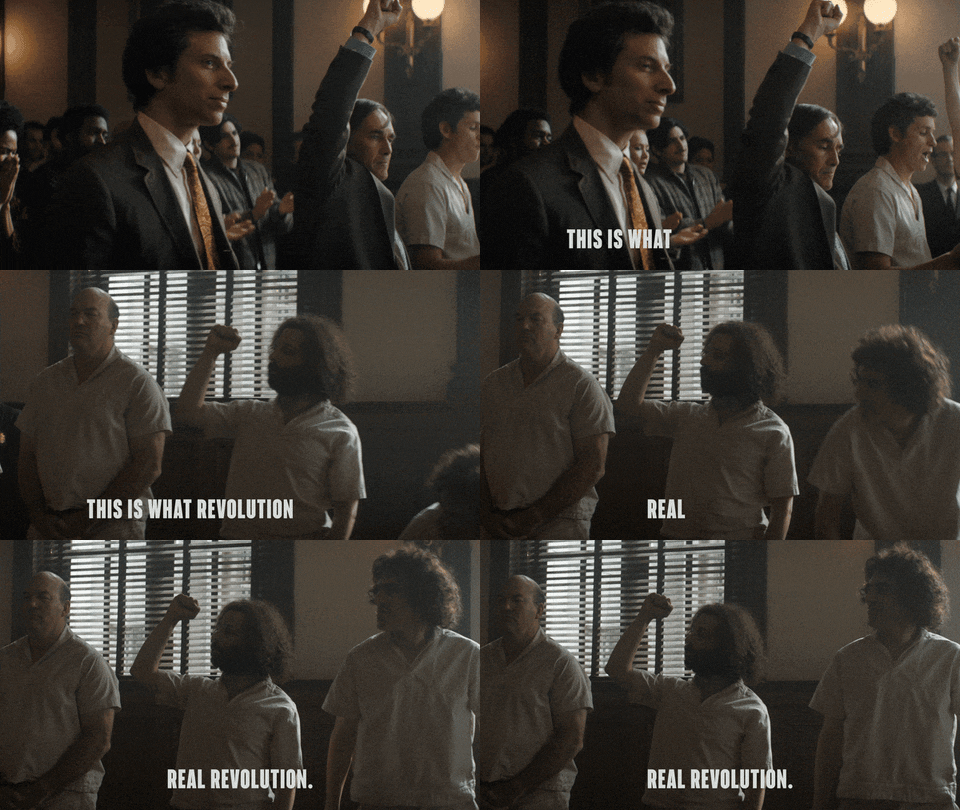
Two minutes. That is not an exaggeration. Well, only a little: The Trial of the Chicago 7 concludes with 111 seconds of sustained clapping. Yes, Sorkin pauses the applauding to run some titles on the screen explaining what became of all the figures, and then there’s only seven seconds more clapping after that. Still—104 consecutive seconds of clapping is a lot of clapping to sit through! (Especially with composer Daniel Pemberton's cloying score atop it.)
Do you honestly realise how long that is? You could play The White Stripes "Fell In Love With a Girl" in its entirety. You could watch Ray Liotta and Lorraine Bracco in Goodfellas take the kitchen entrance into the Copacabana and get to their seat. You could walk an approximate 155m loop and be back in time for the credits. It’s 2.6 per cent of the entire film!
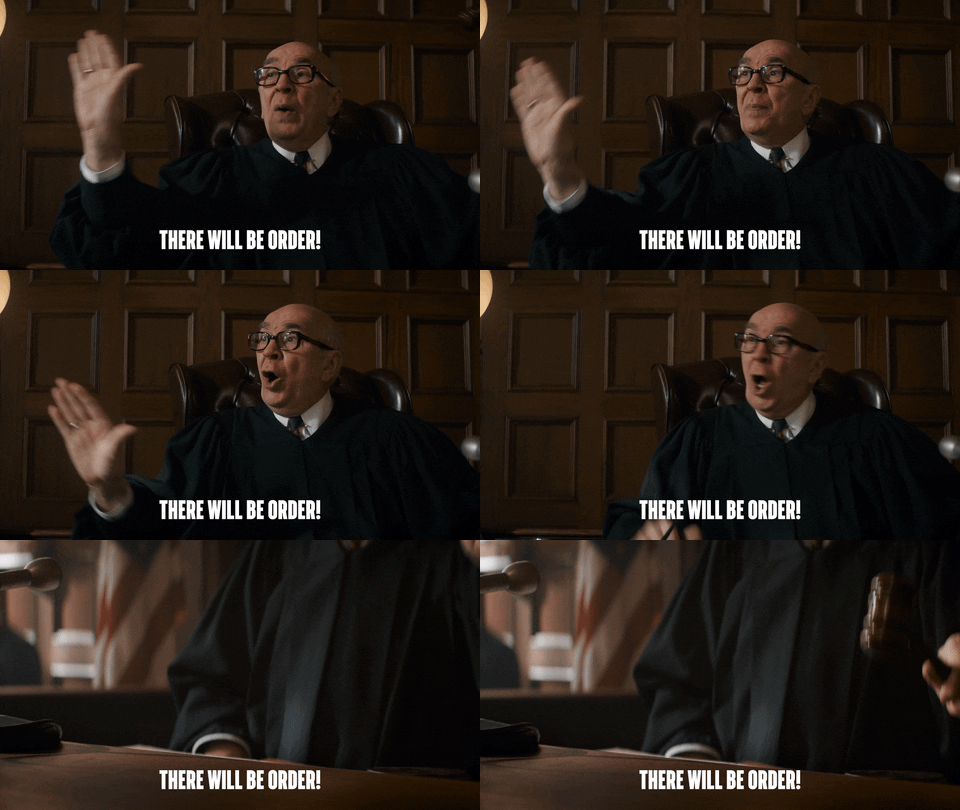
Now, Sorkin isn’t simply making everyone stand-up and clap his marathon screenplay. Rather, the sequence involves Tom Hayden, in a final statement on behalf of the five convicted protesters, reciting the names of the "4752 US troops" who died in the Vietnam War throughout the trial; that being what the men were protesting at the DNC in the first place. His act of protest, as depicted in the film, inspires the crowd to give him an ovation, as the defendants, their lawyers and opposing council stand in solidarity. Judge Julius Hoffman (Frank Langella) isn't happy about it.
Inspiring stuff! I mean, it didn’t really happen that way, but go off, king. In reality, it was Hayden's co-defendant David Dellinger (played here by John Carroll Lynch) doing the reading, and it wasn’t during their sentencing statement. Rather, it was on 15 October 1969, while the trial was still in progress, and while the Moratorium to End the War in Vietnam occurred outside the courthouse's doors. Dellinger stood and read off the names of the fallen soldiers before the judge arrived in court, though when the judge arrived, he called an end to the reading.
Obviously, it’s more dramatically satisfying to have the entire court defying Langella’s most cartoonish villain since Skeletor as he vainly bangs his gavel for (*checks notes*) two full minutes. Yet it’s hard not to feel like ending on applause is a cheap win after what was ultimately a well-fought contest.
At least Charlie Kaufman, in the climax of his alienating Netflix film I’m Thinking of Ending Things, followed a moment of rapturous applause with the image of a nearly silent, snowed-under car.
Silence? Sorkin would never.
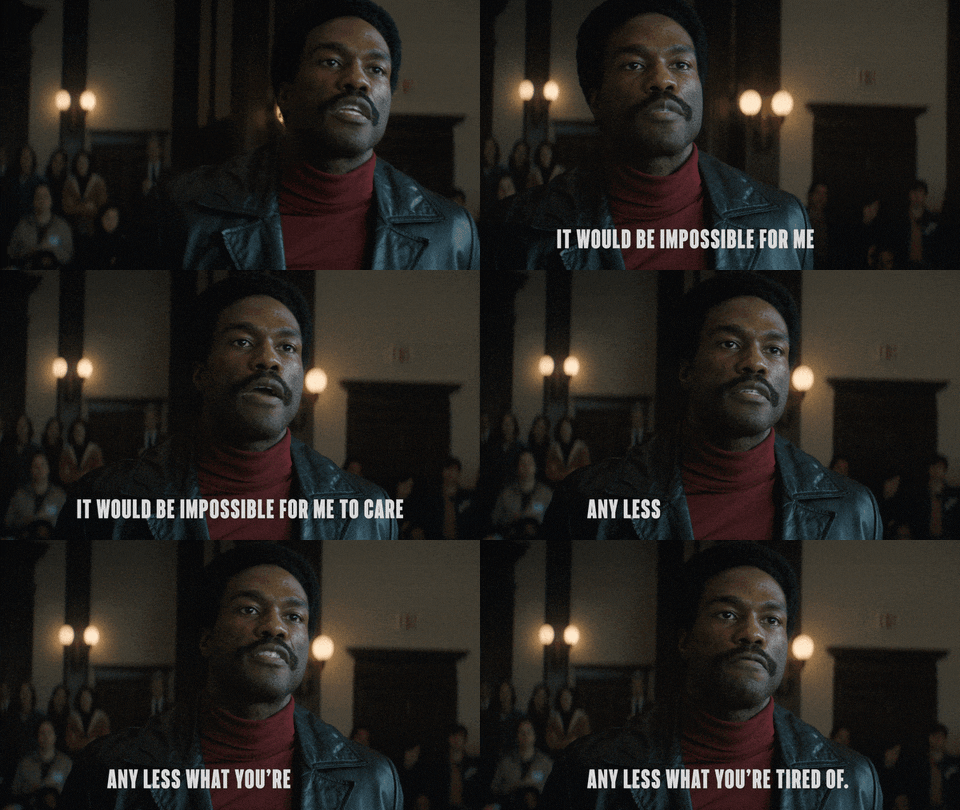
The Trial of the Chicago 7 is now available on Netflix.
Header Image: Netflix
Topics
Ref: 672f5f26-4deb-441d-ba62-ac5900553cac





Comments & Feedback
Share your opinion
Emoji cheatsheet Formatting Comment guidelines