What You Need To Know About Solar Power And Renewable Energy In Australia
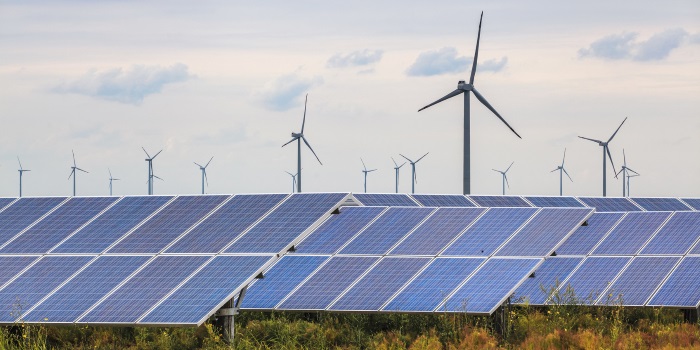
Australia has had a long-running history with solar power. Something to do with all that sunlight, perhaps?
There are a fair few opponents to solar and other renewables, however, and they all came out of the woodwork when the entirety of South Australia lost power during a once-in-a-lifetime storm.
They sought to place the blame on renewables for bringing down the grid, pinpointing power fluctuations from several wind energy sites as the catalyst that led to state-wide failure. Nick Xenophon, Barnaby Joyce, Energy Minister Josh Frydenberg, and even PM Turnbull have weighed in to criticise renewables.
Oh, and Pauline Hanson had something to say, but we try not to think about her.
This opposition is very vague, however, which is a shame. There's a genuine conversation to be had about renewable energy, but their comments aren’t founded on hard facts, and are inciting anti-renewable sentiment.
Let’s take a look at how things stand:
Despite doubts on continued government funding and assaults on the integrity of renewables, Australians continue to turn to renewable energy, putting priority on concerns of environmental health and sustainability, rather than concerns of 100 per cent reliability.
As a country, we’ve got a lot of faith in solar. In 1989, Australian scientists set a world record by creating solar panels that converted 20 per cent of focused light into power. In 2014, they doubled this achievement, reaching 40 per cent conversion. Not satisfied with that, they then went on to produce similar conversion rates with unfocused light, reaching 34.5% earlier this year.
Oh, and there was that time when an entire state was powered by renewables. We were pretty proud of that.
The incident in South Australia looks to have had more to do with downed pylons than renewables, with the damage to the physical network causing 'shorts' (which meant parts of the grid shut down to prevent further damage). This acted in much the same way as a circuit breaker in your home, only for an entire state. The fluctuations in output right before the blackouts were nowhere near strong enough to bring the entire state’s grid offline, after further investigation.
It’s true that renewables like wind and solar energy are inherently less consistent than thermal generation (i.e, burning things). They can’t run constantly and can definitely be compromised during severe storms. There has to be some way to ensure a reliable base load of power in that event, but no matter what's generating the power, if the wires that bring it to you are being cut then power isn't going to reach you at all, which is a more pressing problem.
Solar isn't flawless - absolutely not. But, if you want to cover 500km at speeds of over 100km/h without using fossil fuels, Australians have you covered. If you want a commercial version of a solar car that's road-legal, Australians might also have you covered. And if you want a residential skyscraper that will be designed from the ground-up to provide at least 50 per cent of its base load power through solar? We can do that too.
Despite federal-level opposition to renewable measures (in the form of cost-saving plans, usually), local government is getting in on the solar game, building a 15 megawatt solar grid in Victoria that will completely cover all the council's power usage - street lights, libraries, gardens, and government offices included. (Though I'm not sure how much power a garden usually needs... do the trees put out Wi-Fi?)
South Australia is still keeping to its 40 per cent renewable targets (mostly wind), and is aiming to reach a consistent 50 per cent by 2025.
With 14 per cent of Australia's national power needs coming from renewable energy, this isn't a trend that's going to disappear. Renewables are looking like an incomplete solution, but the best way to solve that is to invest and research, rather than back down.
Quitters never win, after all.
Anthony Pearce is one of Student Edge’s student contributors. Learn more about the contributor program.
Photo: iStock.
Topics
Ref: 322f70e1-b960-490f-9852-a69b0060a7fe





Comments & Feedback
Share your opinion
Emoji cheatsheet Formatting Comment guidelines