Today Is Mabo Day: Here’s Why It’s So Significant
Trigger warning: this article discusses and contains images of people who have died.
If you’ve lived in Australia for at least a few years, you’ve probably heard the words "terra nullius" at least once or twice.
This phrase and legal concept referred to the dispossession of Aboriginal and Torres Strait Islander people’s traditional rights to their lands.
For more than 200 years, the Australian government presumed that Australia belonged to no-one before colonisation from the British. So, they declared the land ‘terra nullius’ or ‘nobody’s land’ and took it from our First Nations people.
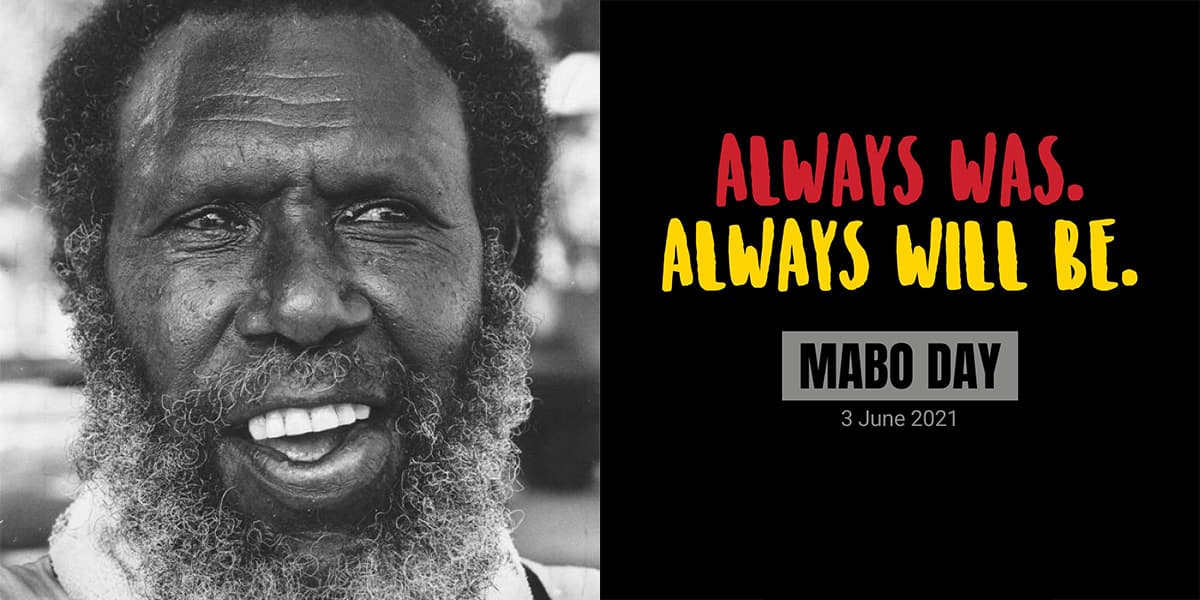
Today, 3 June, marks the day that ‘terra nullius’ was finally overturned in the High Court, and every year Australia bands together to remember and celebrate the man that fought to change it. His name was Eddie Mabo.
So, in case you’ve never heard of him before, or you need a bit of a brush up since school, here’s everything you need to know.
What is Mabo Day?
After fighting for Indigenous land rights for over 10 years, Mr Mabo and community activists won their fight in the High Court of Australia.
On 3 June 1992 the High Court overturned ‘terra nullius’ and instead ruled in favour of the Meriam people, six votes to one. It was later named the Mabo Decision.
Then in 1993, after 51 hours and 49 minutes of debate in the Senate (the longest ever debate at the time), the Australian government officially passed the Native Title Act.
Both decisions marked the acknowledgement of the traditional rights to land for Indigenous people and recognised that First Nations Australian’s were the first owners of Australia’s land for tens of thousands of years—well before the British came in 1788.
Unfortunately, Mr Mabo was unable to celebrate his victories having passed away just five months before the Mabo decision in early 1992.
I'm gonna tell my kids that this was the original Justice League - our unprecedented league of heroes against the lie of Terra nullius. Eddie & Bonita Mabo, brothers Dave and Sam Passi, James Rice and Celuia Mapo Salee. #MaboDay pic.twitter.com/N38G3QSqSm
— John Paul Janke (@jpjanke) June 3, 2021
Who was Eddie Mabo?
While Mr Mabo is most well known for his landmark precedent, he was actually a long-time activist for the Torres Strait Islander community from a young age.
Born Eddie Koiki Sambo on 29 June 1936, on the Torres Strait Island of Mer (also known as Murray Island), Mr Mabo founded one of Australia’s first black community schools along with his wife Bonita.
In 1974, while working as a gardener at James Cook University, Mabo learned that Mer Island was under British ownership instead of the true owners, the Meriam people.
He later attended a land rights conference in 1981 where he spoke about Mer’s land inheritance. There he met Melbourne lawyer Barbara Hocking, who encouraged him to fight for his land rights in a court of law.
Soon, Mr Mabo was joined by James Rice, Celuia Mapo, Sam Passi and David Passi in taking their land rights case to the High Court of Australia.
Mr Mabo’s actions changed Indigenous Australian’s lives forever, re-granting them the ownership and acknowledgement of their land, waters and homes.
Remembering Eddie Koiki Mabo who fought for recognition he owned his land on Mer Island in the Torres Strait. On this day in 1992 the High Court overturned the legal fiction of Terra Nullius - that Australia was a land belonging to no one. Thank you Eddie. #MaboDay pic.twitter.com/r1cVs7UVEJ
— Malarndirri McCarthy (@Malarndirri19) June 2, 2021
What Mabo Day means for First Nations people.
The overturning of ‘terra nullius’ and the decision for Native Title doesn’t just impact those who won the cases in the 90s. Both acts still work to assist Indigenous Australians in protecting land, culture and history today.
It means that Indigenous Australian people can live on their land and erect shelters and structures, access the area for traditional ceremonies, visit and protect important sites, and teach their customs, law and language freely.
The Native Title act also states that land under Native Title can co-exist with non-Indigenous property where there is shared interest, as long as land rights are respected.
For example, in modern times if a company wishes to access or use a particular part of traditional land for structures or mining, Native Title protects that land and the people abiding in it.
Or if the land is not yet claimed by a traditional owner, Native Title allows Aboriginal people to prove that they have a continuous and unbroken connection to their land, preventing outsider disturbance.
You can learn a little bit more about the Native Title process here.
Not only does Native Title and the Mabo Decision continue to protect Indigenous land, but Mabo Day, Sorry Day and every day between 27 May to 3 June recognises the ongoing reconciliation between First Nations people and non-Indigenous Australians, as well as the Australian government.
You can also learn a bit more about what reconciliation is and why it is still being fought for today, here.
Always was, always will be Aboriginal land.
Header Image: Twitter (@IndigenousXLtd and @lidia__thorpe)





Comments & Feedback
Share your opinion
Emoji cheatsheet Formatting Comment guidelines