A Report Has Found That Indigenous Students Were Unfairly Disadvantaged During COVID-19 Lockdowns
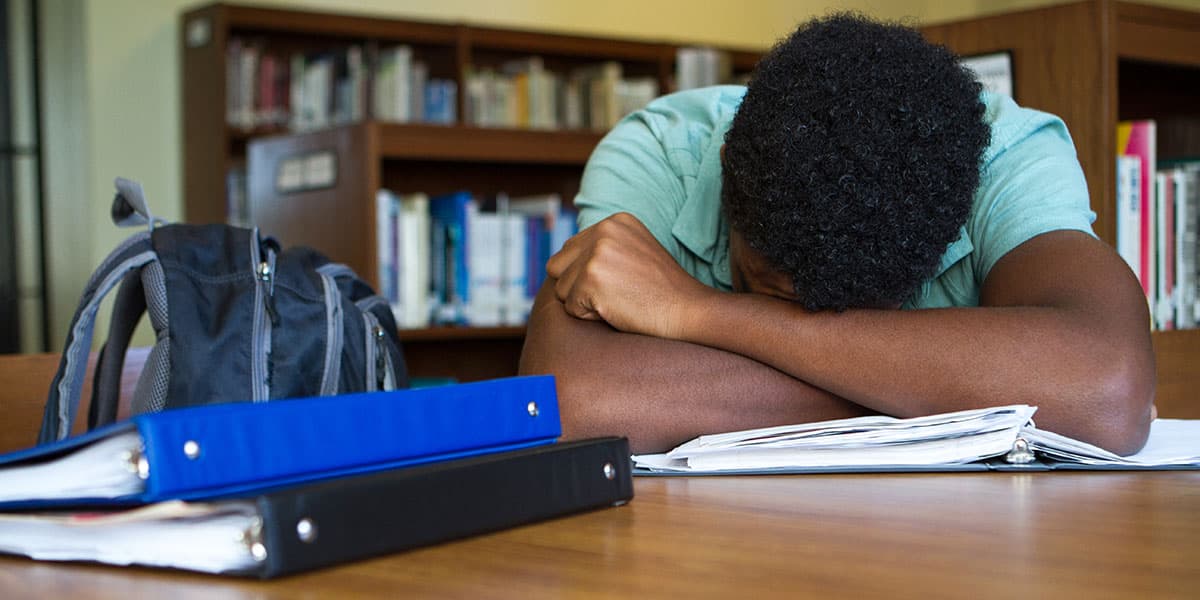
The digital divide was noted today on national Closing the Gap Day.
The third Thursday in every March each year is National Closing the Gap Day, which represents the efforts to close the health and life expectancy gap between Aboriginal and Torres Straight Islander peoples and non-Indigenous Australians within a generation.
Each year, it is a great opportunity for people all over Australia, in schools, businesses, community groups and workplaces to show their support and send a clear message to the Australian government that health care is a fundamental human right, and we must take meaningful action in closing the gap.
It's National #ClosetheGapDay and the 2021 Campaign Report 'Leadership and legacy through crises: keeping our mob safe'...
Posted by Close the Gap on Wednesday, March 17, 2021
This year, a report released by World Vision and the Australian Literacy and Numeracy Foundation found that there is a huge digital divide between Indigenous and non-Indigenous students, which was heavily exacerbated by the coronavirus pandemic.
This has now led to calls for the federal government to subsidise the cost of devices and the cost of internet access for students who need to overcome a digital divide.
But what is a digital divide?
Essentially, when the pandemic hit Australia and most cities went into lockdown, many of us were left to rely on our phones, laptops and internet access to stay connected to work, school and uni.
The report found that during this time, many First Nations students were left at a disadvantage because they did not have regular access to these kinds of devices or the internet, which meant that their education suffered.
“The Digital Divide is the gap between those who can access and use modern information and communications technology—such as the internet, computers and mobile phones—and those who cannot. This gap is often defined along socio-economic, gender, geographical and cultural lines,” the report said.
“People without access to the internet and other technologies are heavily disadvantaged in our digital age as they are unable (or less able) to learn online, get their information online, get mentoring or support online, or participate in broader society online.
“Internet affordability and coverage, access to devices (such as laptops, tablets and smartphones), data stability and users’ abilities or digital literacy are the key barriers to effective online participation.”
According to the report, based on census data from 2016, one in four First Nations households did not have internet access.
On National Close the Gap Day, SNAICC continues our call for governments to invest in strengthening Aboriginal and Torres Strait Islander-led solutions that put First Nations children and families front and centre.https://t.co/S7AKiXZhzM#CloseTheGap
— SNAICC (@SNAICC) March 18, 2021
Why is there a divide?
The reason why so many students might not have all the devices or internet access that they need largely comes down to socio-economic reasons but is also influenced by gender, location and culture.
This means that families who can’t afford a computer or the internet can just miss out.
“Affordability is a major barrier for equitable online access. Data affordability is much lower for First Nations people, primarily because of the high levels of exclusive reliance on mobile phones to access the internet. Around 36.8 per cent of First Nations people exclusively rely on mobile data to access the internet compared to 21.1 per cent for the general Australian population,” the report stated.
“The problem is that mobile phone is data is more expensive and often less reliable than broadband data, and the cost can lead some First Nations households to have no internet access altogether.”
Many young Indigenous students also live in remote communities around Australia and there are limited options for those who don’t have access to online resources.
The report did note that much was done by schools and teachers to provide physical copies of materials to students who had to work offline, but also acknowledged that more needs to be done for young people where this is not an option.
View this post on Instagram
So, what can be done to help close the digital divide?
Thankfully, the report has offered up some solutions to help close the divide between Indigenous students and non-Indigenous students.
Firstly, the report suggested ways in which the government could subsidise the cost of internet access and computers for First Nations students.
It also put forward a program in which telecommunications firms and equipment providers could promote digital inclusion for all.
Additionally, it encouraged a faster rollout of 5G, along with increased satellite access and a digital donation service for remote communities or communities with large Indigenous populations.
To learn more about the digital divide, you can read the full report here.
If you want to help support First Nations people this Closing the Gap Day you can head to the National Closing the Gap Day website and sign the Close the Gap pledge. You could also call, tweet or write to your local Member of Parliament or donate to assist in closing the gap.
For more than a decade now, Australians from every corner of the country, in schools, businesses and community groups, have shown their support for Close the Gap by marking National Close the Gap Day on the third Thursday in March each year. pic.twitter.com/TX0DIY0MTn
— Canberra Grammar School (@CanberraGrammar) March 18, 2021
Header Image: pixelheadphoto via Getty Images
Topics
Ref: 68ba82dc-da70-4a9b-ae64-acef007d99cd






Comments & Feedback
Share your opinion
Emoji cheatsheet Formatting Comment guidelines