The Government Just Signed Two More Agreements for COVID-19 Vaccines
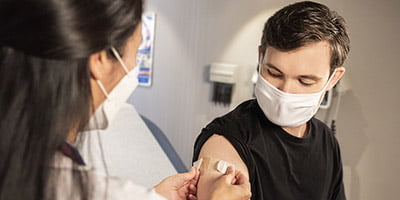
We could have the jab as early as next year.
Coronavirus has pretty much been the biggest thing on everyone’s minds this year, and whether or not you have been directly impacted or you just hated lockdown, one thing we can all agree on is that we’ll do pretty much anything to get rid of this virus and make things go back to normal.
From the beginning of the pandemic, the most likely solution to this problem was the development of a vaccine that directly targets SARS-CoV-2.
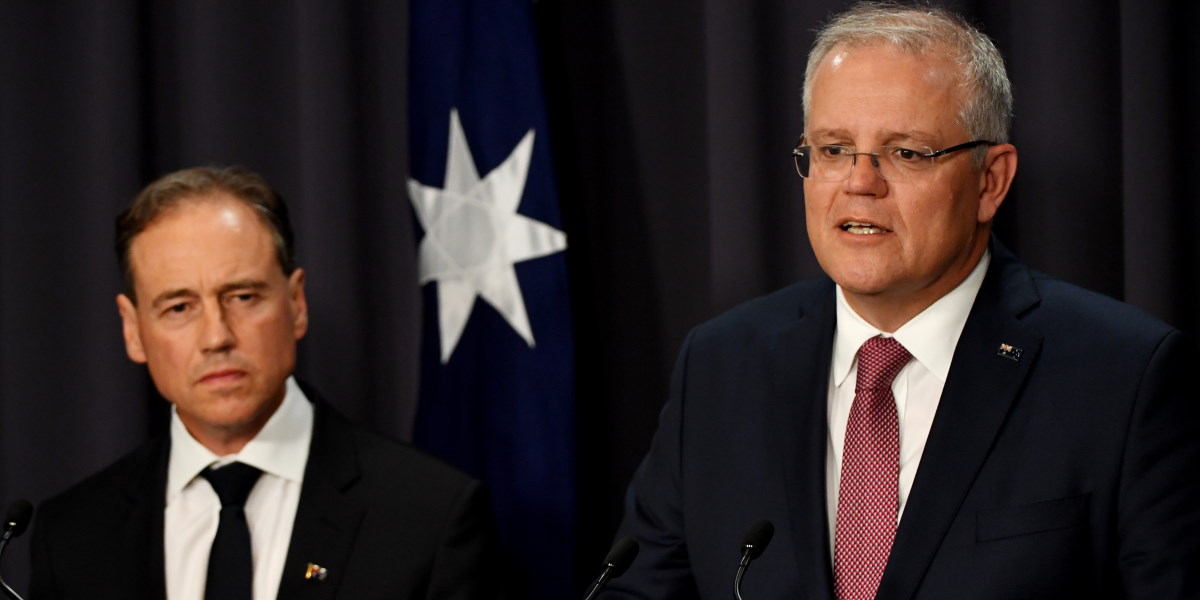
The Australian government is doing whatever they can to get a head start. The Prime Minister and the Health Minister confirmed this morning that Australia has signed two new agreements that will fund the government’s immunisation plan worth more than $3.2 billion.
This adds to the two prior deals struck with AstraZeneca/Oxford and the University of Queensland and will further diversify the vaccine types available to Australia.

In this new deal, pharmaceutical brand Novavax will supply us with 40 million vaccine doses and Pfizer/BioNTech will provide 10 million.
However, this is all dependent on both vaccines being proven safe and effective after their clinical trials.
So, how do they work?
The first vaccine, Novavax, is a protein type vaccine which is currently undergoing later stages of trials in the UK. They plan to complete a phase three trial in the US and Mexico in late November.
The second vaccine by Pfizer and BioNTech are currently undergoing their phase two and phase three trials globally in adolescents, young adults and older adults.
Basically, the Pfizer vaccine contains some genetic material matter called mRNA (human bio students, you know what’s up). When this is injected into a person the body grows a “spike protein” of SARS-CoV-2, which ultimately makes the body react with an immune response that it will remember when it comes into contact with the real and active virus.
Both vaccines will be made in the US, Czech Republic, Belgium and Germany but all have some drawbacks worth noting.
While the agreements cover a lot of doses, it won’t cover the entire population. The Novavax vaccine, for example, will leave about five million people without access. Both vaccines will likely require two doses, so cut the number of doses we’ve agreed on in half and that’s how many people will get access.
The Pfizer vaccine also has an issue surrounding storage. It needs to be stored and distributed at temperatures of at least minus 80 degrees, so it’s kind of tricky to get it to Australia, even if it was ready.
When will we have it?
So, you might be wondering why we have signed a deal for more than one vaccine and when exactly it's going to arrive in Australia.
Basically, the government doesn’t want to put all their trust in one vaccine, which is why they’re putting money into a few, because it’s kind of like a lucky dip; we don’t know which one is going to be successful.
“By securing multiple COVID-19 vaccines we are giving Australians the best shot at early access to a vaccine should trials prove successful,” the Prime Minister said.
“There are no guarantees that these vaccines will prove successful; however, our strategy puts Australia at the front of the queue if our medical experts give the vaccines the green light.”
The vaccine also won’t be mandatory, so people can choose to not vaccinate if that is their preference.
As for when it will become available, as long as trials have been safe and effective, we should start seeing them in the first quarter of 2021, so fingers crossed we can return to normal sooner than we thought.
Header image: Tracey Nearmy via Getty Images
Topics
Ref: 2ffdcee5-fee0-47d8-a9a7-ac6a0080f91e

Comments & Feedback
Share your opinion
Emoji cheatsheet Formatting Comment guidelines