Take It From an Employer: Five Skills Every New Boss Wants From a Grad

We spoke to a graduate manager to figure out what companies want from uni leavers.
This post is presented in partnership with Monash Business School.
While most university students can't imagine their future being more stressful than their present, upon graduation, the reality of getting a professional job sets in.
And it's warranted: it's damn tough out there.
Earlier this year, Quality Indicators for Learning and Teaching (QILT) released a report stating that while graduates were getting paid more than ever, it was taking them a whole lot longer to find full-time employment.
Thankfully, it's not all doom and gloom.

We spoke to Sarah, a graduate manager at a major Australian bank, to better understand what companies are looking for in recently graduated workers. Her role is to help companies find the best and brightest graduates from an ever-increasing pool of qualified and hungry young people.
While she explains that, these days, large-scale graduate recruitment processes tend to prefer stage-based assessments over traditional cover letters and resumes, the most important part of 'getting the job' actually involves demonstrating an alignment of capabilities between the applicant and the organisation.
Luckily, she offered us a look at a few of these key skills you need to focus on to get you ahead of the pack.
Initiative.

First up is initiative. Gone are the days where you can use the same cover letter to apply for every role, or where you can wing an interview. Instead, you'll need to put in that work, even before you've got the job.
Sarah explains that recruiters can spot a generic cover letter from a mile away, so, to stand out, you really need to take the initiative to research the company (like what they do and their goals) and then tailor your pitch to them.
"Really think about the type of questions that company will ask [you] and what will be some of the experiences [you] can share that really allows [you] to demonstrate that capability," Sarah recommends.
"[Graduates] need to talk about the organisation and why they're applying... and what value they can bring to that organisation as well as detail their skills and experience that would make them successful for that role."
This will translate well after you've been offered a role, as showing initiative will set you apart instantly from other workers who do the bare minimum in their roles.
Adaptability.

Adaptability is a key skill to have in the 21st century because it basically guarantees you'll never get left behind. It's why many employers are looking for this skill in their graduates.
Sarah recommends highlighting your experiences; not just from university but from real-life work experience too.
These experiences could be when your university decided to move lectures online or when a process changed in your workplace, giving you a chance to explain how you adapted to the new technology. In the workplace, adaptability will be a key skill for the future as technologies become more advanced, and companies look at new ways to improve physical and digital spaces in the office, from a rigid structure to more agile set-ups.
Resilience.
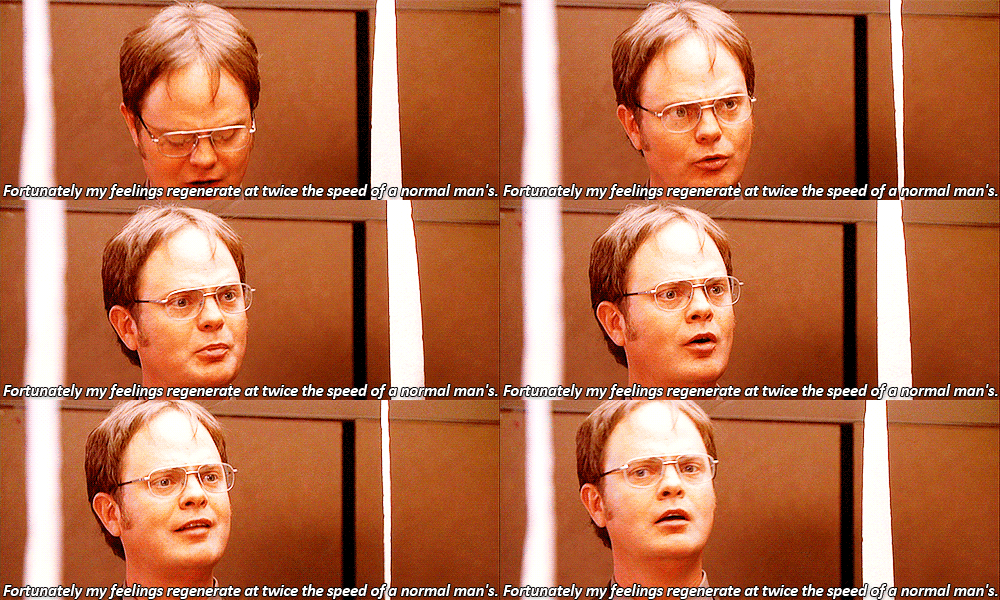
With the rise of automation and digitisation, resilience will be an important skill to develop for workplaces of the future. If your work environment suddenly changes, with a coworkers moving on to other roles or your office space transforms drastically, you'll need to be able to demonstrate some examples of how you coped with the changes like a boss.
If your work experience is limited, some examples you could draw upon might be dealing with difficulties in uni group assignments (we've all been there) or maybe that time your work bestie left and you coped with that huge hole in your heart.
"You really need to have experiences to draw upon to show the [employer] your capabilities and what it is you would do in that situation," Sarah adds.
Team worker.
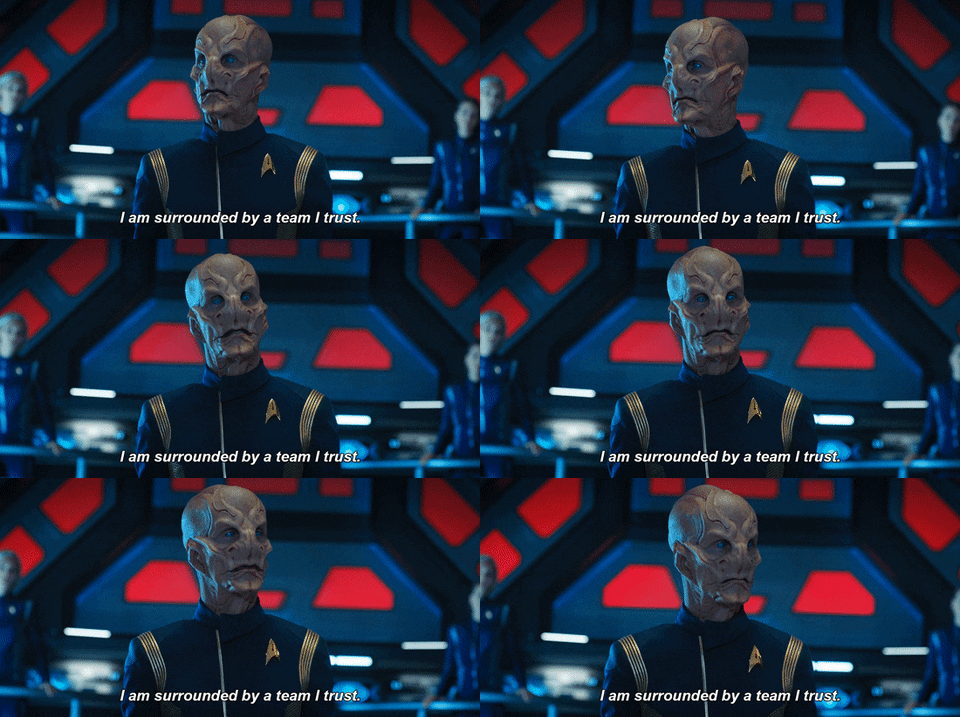
In most roles, you'll need to be able to successfully work within teams, so naturally, great team workers are in high demand.
Thankfully, it's a skill a lot of us should already have in the bag thanks to decades of schooling and university, with the occasional extra-curricular activity like team sports or study groups.
Just remember, it's important to mention any challenges you've faced in team environments and how you rose up to overcome them.
Respectfulness of others.
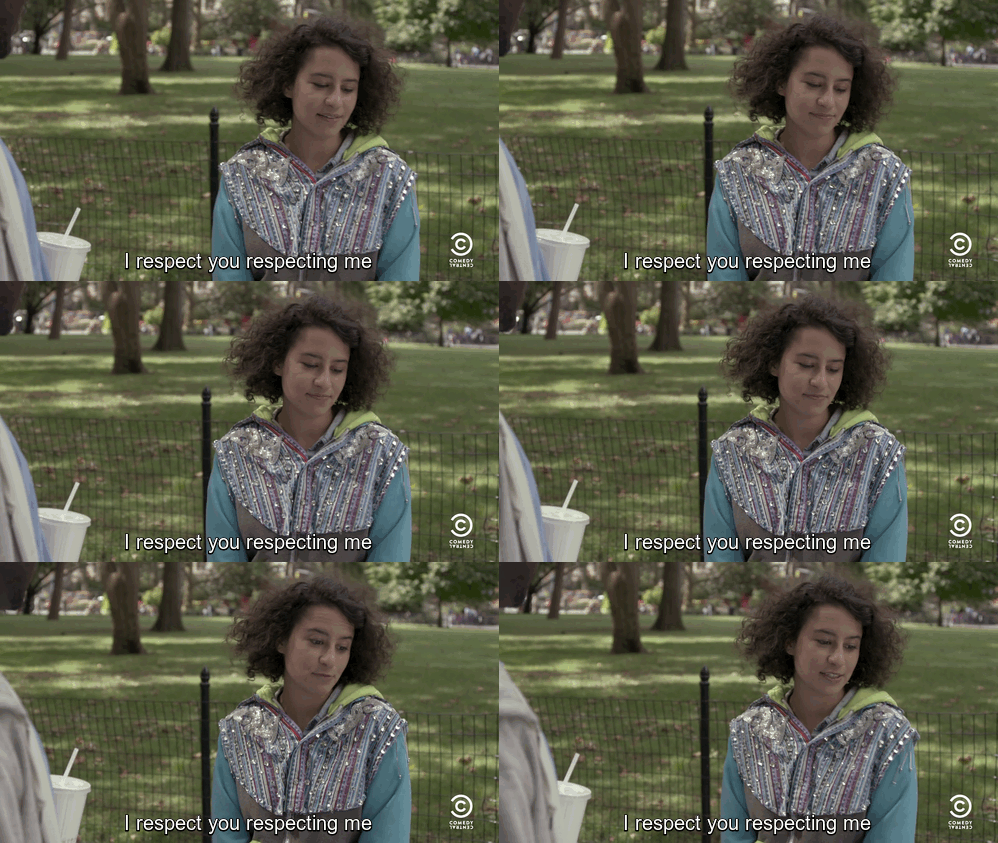
No work environment thrives with toxic people who aren't respectful of others. Ideally, even the CEO of a company would treat the building's janitor with the same respect he affords his peers, which is why respectfulness of others is a key skill to have.
As Sarah explains, that respectfulness should start with how you treat your interviewers.
"Show your personality and smile," Sarah offers.
"It's an opportunity for both parties to meet each other, get to have a conversation and really, the graduates should be interviewing the organisation as well to make sure it's the right fit for them.
"It's a two-way process."
But, long after the interview when you're comfortable in your new, shiny graduate role, respectfulness of others around could also be the difference between enjoying your workplace and tolerating it.
Looking for a degree that will prepare you for life after uni? Find out more about Monash Business School's wide range of single and double degrees, and see why employers prefer their graduates for a reason.
ALSO: Free on Wednesday 26 June and live in Melbourne? Why not come along to an Inside Monash session and get the inside story of what it's like to study at Monash.
Header Image: iStock.com/skynesher
Topics
Ref: 748e0aa4-be54-490f-a1ed-aa540052f5c1


Most Popular



Comments & Feedback
Share your opinion
Emoji cheatsheet Formatting Comment guidelines
thank u. know i now what to prepare for. thank u so much student edge. u the champs.