Three Signs You’re Burnt Out From Studying and What to Do About It
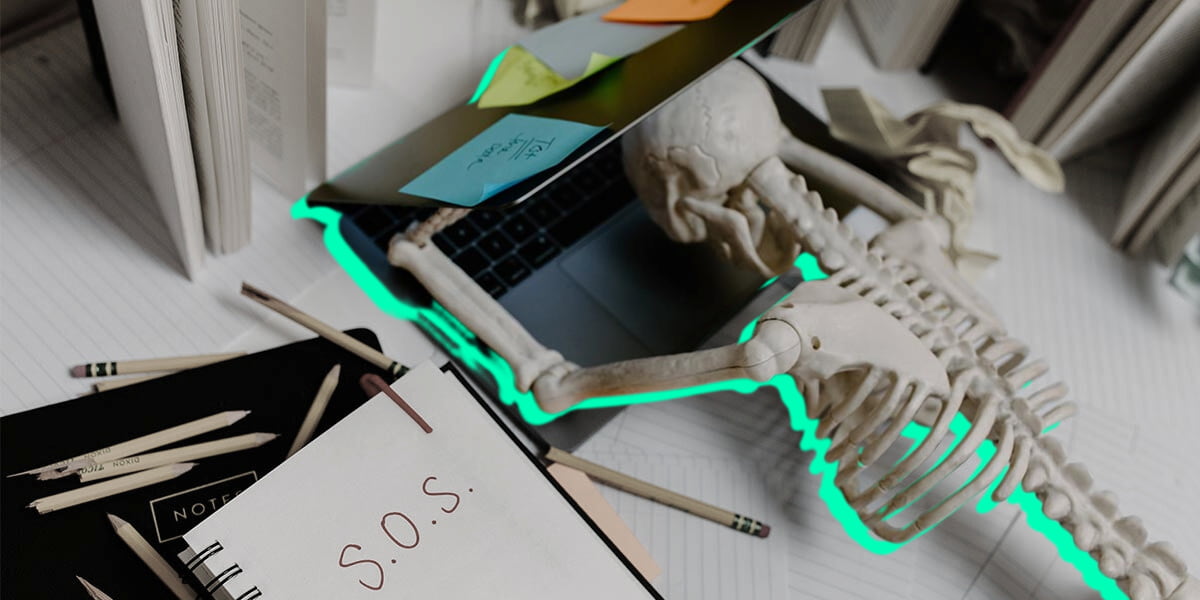
Your mental health comes first.
Exam season can be a long slog.
There may come a certain point when you’re feeling a bit worse for wear and the day-to-day grind has become a monotonous chore.

It’s normal to be stressed and tired after an intense period of studying. But there are warning signs that you’re actually experiencing burn out—a state of prolonged mental and physical exhaustion.
We’ve identified these signs for you and provided some tips to help you cope. Check in with yourself and take care!
1. You suddenly have zero motivation to study or even do things that you enjoy.
It’s always difficult to get started, but if you’re genuinely struggling to even open your laptop lid, and this is a recurring event, you might be burnt out.

It’s a misconception that this is due to overworking; quite often, burnout can occur because of the guilt which builds up due to procrastinating tasks.
How to cope: set reasonable goals.
Burnout will only get worse if you look at a to-do list overflowing with tasks in an impossible period of time.
So be kind on yourself, and only set goals for what you know is realistically achievable.
This might mean breaking down a larger task like 'revise module 1 of History notes' into 'create flashcards for key terms in module 1 of History notes'.
Less brain-intensive tasks, like writing out flashcards, can be great for getting into the groove of things again.

2. You are constantly exhausted, even if you’re getting enough sleep.
This can be due to many factors. Your sleeping schedule could be out of whack because you’re staying up later to study, or you might even be over-sleeping because you don’t have any commitments other than study.
It can be very degrading on your quality of life to constantly be yawning and unenergetic. Go to your GP if you are really concerned about your energy levels, as they may be related to health issues.
In relation to studying, exhaustion can be a case of concentrating for long periods of time on intensive tasks, and not getting enough variation in your day-to-day activities.
How to cope: fit energising activities into your day.
You might challenge yourself to go for a run every morning before getting into your books.
Or a simple dance break in your room to your fave new album could suffice.

Spend time with your pets, take time to properly do chores around the house (cooking, cleaning, laundry) and set reminders to stand up at least once every hour.
3. You notice a decline in your mental health and a lack of confidence in your abilities.
The constant pressure of getting good grades and performing at your best will inevitably put some kind of strain on your mental health.
It can be a toxic cycle of procrastinating, feeling guilty because you’re procrastinating, and being a perfectionist when it comes to actually doing the work.

How to cope: communicate with friends and family.
Set frequent check-ins with the people around you. They’ll be among the first to realise that something might be off.
The most important thing to do when you’re feeling down is to not isolate yourself, even though that can feel so tempting.
Simply talking with others can give you a sense of connection to life in a broader sense; you’ll get perspective on your studies and pull yourself out of a rut of over-thinking and doubt.

Remember that while you have might have set grand expectations for yourself and the results of your hard study, you and your mental health come first.
So if you need to have a jiggy in your undies for your 1am study break, so be it.
This article was originally published 17 November 2021 and has since been updated.
Header image: Tara Winstead via Pexels.
Topics
Ref: 8a344756-42d1-45cf-94b2-ade30035bd6c



Comments & Feedback
Share your opinion
Emoji cheatsheet Formatting Comment guidelines