One Year On: Remembering Rosie Batty’s “Australian Of The Year” Speech
Trigger warning: This article deals with domestic violence and abusive relationships.
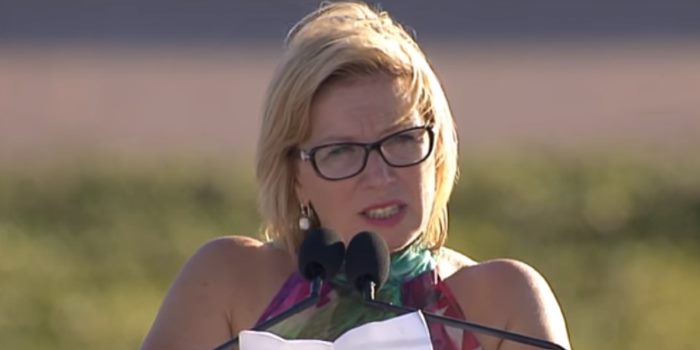
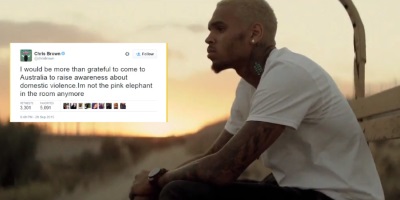
On the Australia Day long weekend in 2015, Rosie Batty was named Australian of the Year. Eleven months earlier, her 11-year-old son Luke was killed by his father following a cricket training session in the small-town of Tyabb, south-east of Melbourne. Whilst dealing with an unimaginable personal tragedy, Rosie Batty nonetheless spent 2014 campaigning for action to be taken in combatting domestic violence across the country. She was selected as Australian of the Year on January 25, 2015 and her voice was given a national platform. As we await the passing of the baton to the next Australian of the Year, revisit her speech and reflect on the changes she helped institute over 2015.“Family violence may happen behind closed doors, but it needs to be brought out from these shadows and into broad daylight.” – Rosie Batty No doubt the act of selecting Rosie Batty as Australian of the Year – one of the most visible positions of advocacy in the country – helped communicate to the wider community the urgency of dealing with domestic violence. However, the alarming stats provided by police services should have been enough to inspire immediate action. On average, the police deal with 657 domestic violence matters every day of the year, amounting to one every two minutes, and 239,846 a year. It would have been unreasonable to expect an immediate, significant decrease in domestic violence matters across the country as a result of Rosie Batty’s campaigning. Yet, ACT Policing revealed in December that callouts to reports of domestic violence in Canberra declined over the past financial year. Still, according to the Counting Dead Women project by Destroy the Joint, at least 66 women died in Australia as a result of domestic violence in 2015. Domestic violence may have been brought out of the shadows in 2015, but there remains much work for all Australians to bring these figures down to zero. “To our government, we need your strong leadership to change these rising statistics and your investment into both preventing the violence and long-term secure funding to our specialist women services, to deliver the intensive support so desperately needed.” – Rosie Batty Though the selection of Rosie Batty occurred under Tony Abbott’s Prime Ministership, it was his replacement, Malcolm Turnbull, who pledged the Federal Government’s commitment to her cause. In September, Prime Minister Turnbull followed up an appearance on the Today show where he noted “real men don’t women” with an announcement of a $100 million package to support victims of abuse. Newly-instated Minister for Women Michaelia Cash and Rosie Batty joined him at the unveiling. The money is intended for initiatives such as providing support training to police, social workers and emergency staff, as well as training hospital staff to better recognise signs of domestic violence. Lawyers will also be made available on-site at some hospitals, to provide counsel and assistance in these matters. The Government also pledged to provide 20,000 mobile phones over three years to women attempting to escape abuse. “Call out sexists acts, sexists attitudes and speak out when violence against women is trivialised.” - Rosie Batty In December, Chris Brown’s tour to Australia was officially cancelled, after the Government issued a Notice of Intention to Consider Refusal of Brown’s visa following public outcry. The notice was issued on account of his criminal convictions from 2009, following the assault on then-girlfriend Rihanna. Though definitely a victory for domestic violence campaigners, the petition to block Brown received criticism of its own. GetUp! eventually apologised for some aspects of their campaign, saying they didn’t mean to support “a racist narrative that sees men of colour unfairly targeted, and stereotyped as more violent than their white counterparts.” Brown himself Tweeted a desire to come to Australia and “raise awareness about domestic violence” amidst the controversy. All to no avail. This particular story had a range of complexities. For instance, should those who have served time for criminal acts be forever tarred? Had Brown really learnt his lesson from 2009, given that, just last June, police were called to the home of his ex-girlfriend after he caused a disturbance outside? Will the Government act similarly for other touring artists responsible for domestic violence? And did ticket-holders who expressed their disappointed in the cancellation of the tour understand and appreciate why Brown had been blocked? Regardless, this marked a cultural moment, in which a popular recording artist who had visited the country twice since his conviction (in 2011 and 2012) was suddenly considered ineligible for entry. Part of that, surely, can be attributed to a positive mood change in our culture. “To men, we need you to challenge each other and become part of the solution.” - Rosie Batty The $100 million package announced by Prime Minister Turnbull was also intended to help change the national culture surrounding domestic violence, especially in the way it’s discussed by males. (Yes, the kind of culture in which former party leader Mark Latham can suggest Rosie Batty was “demonising men” and only made domestic abusers “feel worse about themselves.”) "We have to make it as though it was un-Australian to disrespect women," Prime Minister Turnbull added at the package’s launch in Melbourne. That culture-shift is essential amongst young men, particularly when you consider that young women are more likely to experience physical and sexual violence than any other age group, with partner violence being highest for those between the ages of 15 and 24. This was addressed first by the Government’s #RespectTheLine ad campaign. In it, a young male offender is literally branded with his crime. (The campaign has been bolstered by print posters featuring young tattooed teenagers.) The advertisement received mixed reviews on Gruen, with panelists Todd Sampson and Dee Madigan expressing concern with the “shaming” nature of the campaign. They also lamented the lack of ‘next-step’ advice for offenders in the clip. Though the success rate of these campaigns can only be evaluated in the long-term, their existence is at least evidence of a culture shift in the right direction. In an interview with ABC News, reflecting on the past year, Rosie Batty had this to say about “changing a culture.” "It's going to take several decades to change society, it's not an overnight thing, but we've now started. I don't think we'd started in earnest before." If you are in an abusive situation please seek help: Call 1800 RESPECT (1800 737 732) or visit Reachout.com
Topics
Ref: bc4faf23-825a-4b15-9809-a5980051a920


Most Popular



Comments & Feedback
Share your opinion
Emoji cheatsheet Formatting Comment guidelines
australia is fine the way it is but what ever happens is cool