Really Hidden Figures: Here’s Why Representation In the Media Matters to Minorities
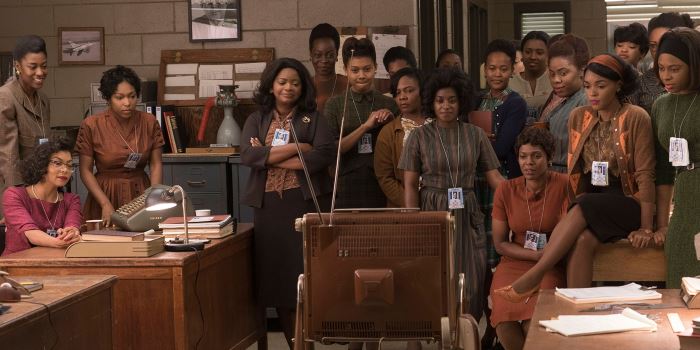
How did it feel when you first saw someone on the big screen you could relate to? What did it mean to you?
The term 'minorities', as we know it, describes the groups that are disadvantaged and smaller in size than others. People of Colour (PoC), the LGBTQI community, the disabled and women fall into this category because they hold less power in society than their major counterparts: white, heterosexual, abled men. Therefore, it's no surprise that minorities have minimal representation in the media, whether it's in film, the fashion and beauty industry, government, or even in some workplaces, among others.
When we don't see ourselves in the media, it can make us feel as though the world doesn't see us as normal people. How do you think this affects the children and teens who fall into one or more of these minority groups? The push for diversity in media is toughened as we start to realise that representation matters.
Hollywood has a particularly big diversity problem. The statistics are actually quite depressing; according to a recent study by the University of Southern California's Annenberg School for Communication and Journalism, only 28.7 per cent of speaking characters in America’s 2014 films were women. Across film and television, LGBTQI representation sat at two per cent; meanwhile, just 12.2 per cent of speaking characters were black, 5.8 percent were Latina or Latino and 5.1 percent were Asian.
Of course, we see plenty of minorities in the media outlets we frequent. However, not enough has been done to portray minorities fairly and accurately. For example, every now and again, PoC are in movies or TV shows only to play the part of the best friend, assistant, sidekick, as their stereotypes, or caricatured in a way to incorporate a 'comedic' element.
For PoC to not even be assigned to roles belonging to them (like in whitewashed movies) is ridiculous. So, when a film like Hidden Figures is released, it garners a lot of positive feedback, not just for righting a representational wrong (in this instance, by showing the black women who worked at NASA during the 1960s), but for presenting girls (especially girls of colour) with role models to encourage them (perhaps to pursue study in the fields of Science, Technology, Engineering & Mathematics: STEM). The film has been a box office hit, here and abroad, and is hopefully nudging Hollywood into understanding that more diverse films are what the people want.
Not only are diverse representations important for minorities psychologically, they're also crucial for showcasing the variations of beauty. From projects like 'Black Mirror', to significant presences like Madeline Stuart (a model with Down syndrome), minorities are able to see themselves in the limelight and know that they exist, are valid, beautiful, and part of society.
More inclusivity can also be very beneficial for businesses. If the audience doesn't see themselves reflected in a business' core values or goals, then minorities could think their interests are being ignored, misinterpreted, distorted or undervalued. That audience might go elsewhere, at a time when growing the audience is critical to a business' sustainability.
Minorities have long recognised the media's power to influence their lives, and they have struggled to achieve greater influence over their own media destinies. We are still going slow and steady on this long, stretched road, and the influence of mass media on the public image of minorities remains concerning, when it could be positive.
While broader issues of societal discrimination and disadvantage can’t be magically fixed, there is something our media organisations can do: include the diverse audience that is in front of you. Although it may seem like it does nothing, it really does help us to better understand and shape our multicultural society.
Ratria Nindita is one of Student Edge’s student contributors. See more student contributions here.
Photo: Fox
Topics
Ref: 3e923ad7-89ee-49fb-9277-a73400e2b674






Comments & Feedback
Share your opinion
Emoji cheatsheet Formatting Comment guidelines