What Rachel Dolezal And Many More Get Wrong About Race
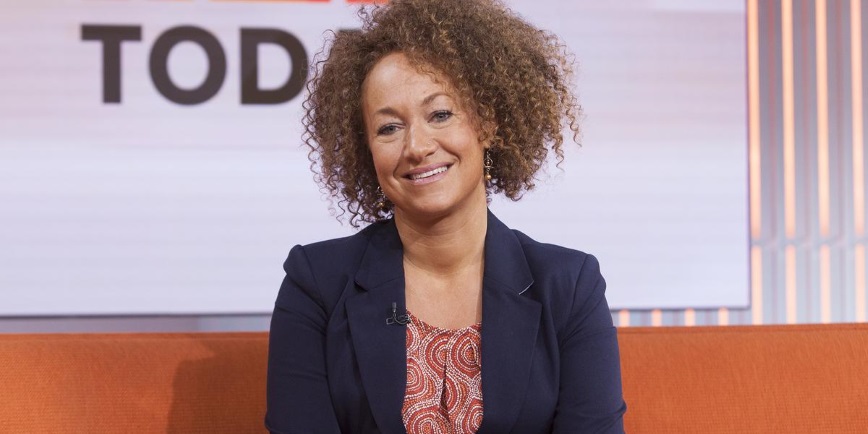
One of our student contributors looks at the Rachel Dolezal controversy to examine how we talk about race.
Racism continues to exist in contemporary society, but its reach extends beyond racial attacks, or unjustified deaths, such as those of Trayvon Martin, Michael Brown and, most recently, the congregation of the Emanuel AME Church in Charleston.
It persists more subtly and casually through the media and even amongst ourselves, in the way we classify – too simply – people of colour (POC).
The term ‘POC’ was adopted after the American Civil War, as a term of racial pride (according to the Oxford English Dictionary). It today describes any and all people of African, Latino, Native American, Asian or Pacific Island descent. However, the word ‘colour’ carries its own controversy. NPR says it’s “packed with history, prejudice and confusion when it's used to describe someone's complexion as an indication of race or ethnicity”.
We’ve seen this debate over skin colour explode in recent weeks thanks to Rachel Dolezal, a white woman who has posed as a black woman for much of her adult life.
Her case has been crucial in our realising that an understanding of different races must run deeper than skin colour alone. Cultural identity and history must be acknowledged when discussing racial issues; otherwise, racial discussions will continue to ignore cultures and ethnicities not ‘dark enough’ to be considered a person of colour.
With skin colour defining the boundaries of race, a world has been created where mixed-race individuals are erased. This is evident in the media reaction towards Mad Max: Fury Road, in which some critics (here and here) did not recognise the presence of Megan Gale - of English and Maori descent - as a person of colour as she was not ‘visible’ enough.
The lack of recognition by the media exposes the greatest issues with our current classification criteria: it suggests only representations that fit within a certain expectation of colour will be discussed, when representation is crucial for all races and ethnicities.
This has created a vicious cycle in which society becomes accustomed to the flawed understandings of race. The exposure of Rachel Dolezal has been crucial to exposing the issues associated with this literal understanding of ‘people of colour’.
Prior to her resignation, Dolezal was the president of the NAACP in Spokane, Washington, and a well-known civil rights activist. On multiple occasions, she has classified herself as African American, and therefore implied her cultural and ethnic history was defined by oppression and inequality. Since her family has spoken out about Dolezal "disguis[ing] herself" as "black", Dolezal has since stated she "identif[ies] as black", a defence she furthers by her claim that race is superficial, rather than inherently tied to racial history and ancestry. However, the identities of those she represents – and tries to impersonate - cannot simply be defined by skin colour.
Dolezal’s history is not marred by oppression, but rather, ‘white privilege’, and by choosing to overcome racial issues through the falsification of her own race, she represents the failure to truly deal with racial issues. Her impersonation is not a single failure; in fact, her understanding of how race is defined is something embedded in modern day society. People of colour are often reduced to appearance alone, and since Dolezal represented a role which attempted to deal with racial inequality on all levels, the truth of her own ancestry undermined the complex history of marginalisation.
If we want to understand race better, we must first recognise identity is intertwined with experiences. By extension, race is tied to history.
The superficiality of the most conventional definition of race causes misrepresentations in the media, and therefore society. In order to change this, we need to listen to others, and realise that skin colour is not the defining factor – it’s merely a basic indicator, which exists as a term to ensure all individuals are represented in some way.
By letting race be defined by binary appearances, it means groups of POC are either erased, or invalidated, even when recognised in films and television shows. Rachel Dolezal’s recent scandal is part of the greater issue, where complexion becomes a defining factor of race and therefore allows racial stereotypes to exist, keeping racial issues from being properly discussed.
Emily Lam is one of Student Edge’s student contributors. Learn more about the contributors program.
Topics
Ref: 791faaf0-e1f7-4c8e-afeb-a4c2003b59c4






Comments & Feedback
Share your opinion
Emoji cheatsheet Formatting Comment guidelines