A Psychologist's Advice on Having COVID Convos with Your Parents
“We’re humans, we’re community animals, and we always want to get along with each other.”
If you’re under the age of 18 and looking to get your COVID jab, there's a possibility your decision could conflict with your parents if they're opposed to it.
According to the Melbourne Institute, vaccine hesitancy is currently at 9.6 per cent in Australia. Recent data also suggests one in four are hesitant to receive booster shots.
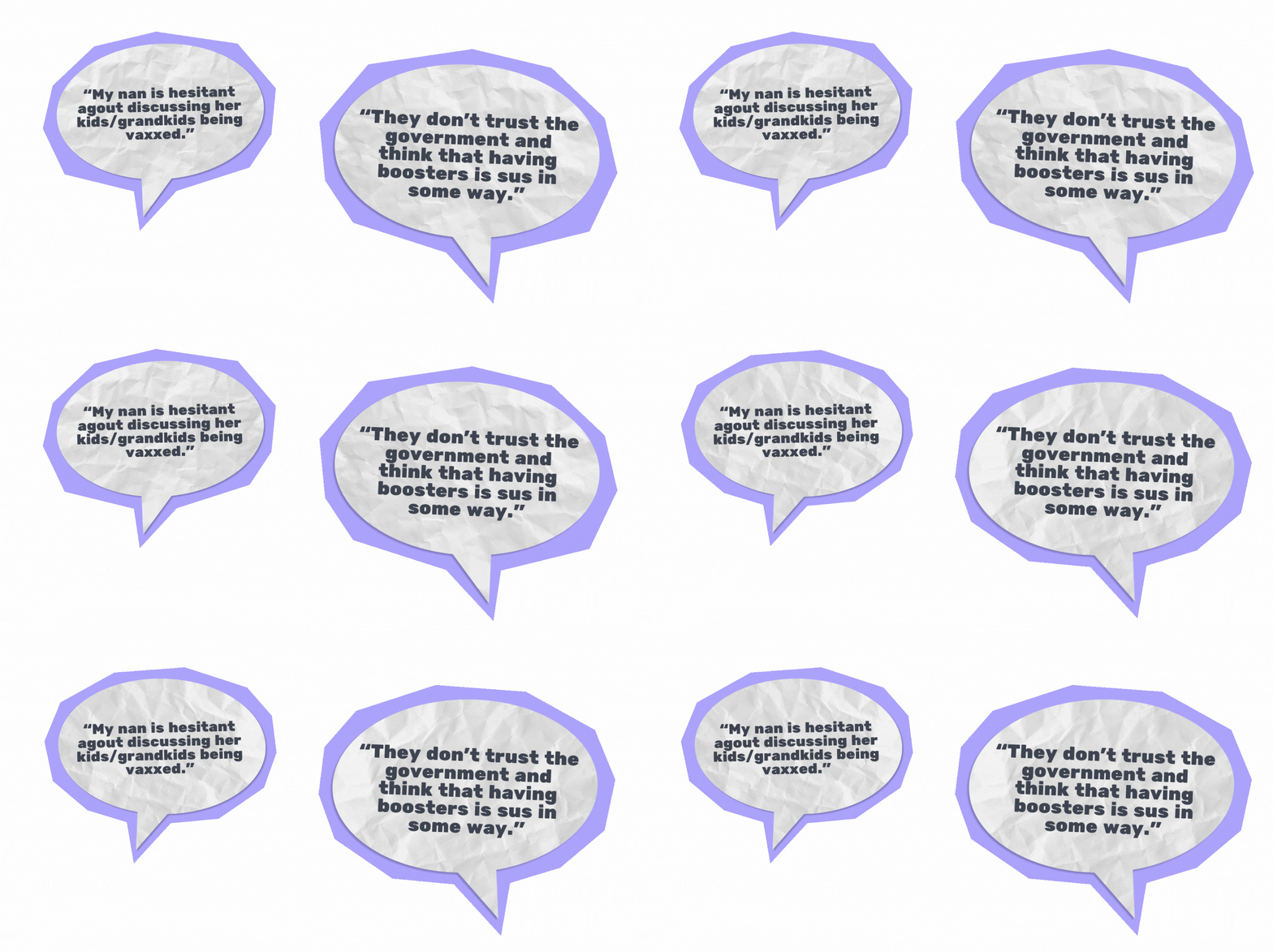
Some of our Instagram followers shared their experiences, too.
Tension in the family can cause a lot of stress and anxiety. We chatted to Ammar Al-Asadi, a provisional psychologist specialising in positive behaviour support. He has experience working in child protection and gave us some advice on how to have hard conversations with your parents.
How should you approach your parents and have a productive conversation?
Ammar recognised that it’s tempting to present your argument in a direct manner. “Scientifically, if you want to change someone’s opinion about something, you have to present the hardest hitting facts,” he told us.
“But if you’re a child and you go in gun’s blazing, it’s not going to be effective because you have a certain relationship with your parents.”
Instead, Ammar suggested two possible approaches.
Firstly, express your argument in terms of your personal concerns. “If your parents have concerns around the vaccine, you can say you have some concerns around the virus,” he said.
“Then, you can get someone who is good friends with your family to talk to them directly—a peer, or someone they respect [like] the family GP.
“A really rational, direct approach would be to book an appointment with your GP and ask your parents to come with you.”
How can you cope with the anxiety of going against the will of your parents?
It’s important not to get too bogged down by their opinions.
“We lean on our parents and our family. But if you’re in a situation where you can’t, lean on your friends.

“Your family is never going to agree with every decision you make. It doesn’t mean every time you see them, you have to bring it up.”
Ammar touched on the intensity of the media and how controversies can often make you feel overwhelmed, but it’s important not to apply macro issues to the microcosm of your family unit.
What’s the last resort if this continues to cause tension in your family?
Lots of influencers and people around you might have expressed the need to “cut off” family and friends who have a toxic or unpleasant influence in your life.
Ammar thinks this can be a knee-jerk reaction and encouraged being critical instead. “You shouldn’t have to cut off your family or friends purely for [different opinions]," he said.
“If you’re a young person, it’s usually always more detrimental to cut off your family than to maintain some kind of relationship with them. Definitely see a psychologist first and explain things to them.”
Ammar had some final sage words of advice.
“We’re humans, we’re community animals, and we always want to get along with each other. At the end of the day, everyone’s trying to do what they think is best.”
If you or anyone you know needs help, support is available now. Call Lifeline on 131 114 or Kids Helpline on 1800 551 800 or visit headspace to find your nearest centre or to get support online.
Topics
Ref: 5f73e6b6-08c0-42d3-8d99-ae1c00559f2e





Comments & Feedback
Share your opinion
Emoji cheatsheet Formatting Comment guidelines