Movie Review: There Is Nothing Small About Greta Gerwig’s "Little Women"

It’s a delightful adaptation.
In 2018, director Greta Gerwig received multiple accolades for her critically acclaimed and highly nostalgic Lady Bird, emerging as a filmmaker with the world at her feet.
So, when it was announced she would be directing another iteration of Little Women, it didn’t feel like the groundbreaking next step she should be taking with her career. Yet, Gerwig has proven she should never be underestimated, injecting remarkable vitality and fresh perspective into characters who have been beloved since 1868.
There is certainly no shortage of Little Women adaptations. The story, based on Louisa May Alcott’s 150-year-old book, has been remade for the screen again and again. There was even a Broadway production that first opened in 2005. However, none of these previous takes have anything on the exquisitely mature and self-assured film Gerwig has offered up. The most prominent choice that sets this adaptation apart is her genius decision to switch up the narrative. Instead of presenting the tale in chronological order, beginning with the central March sisters as children, the movie begins with Jo March (played here by Saoirse Ronan) as a fully-fledged woman.
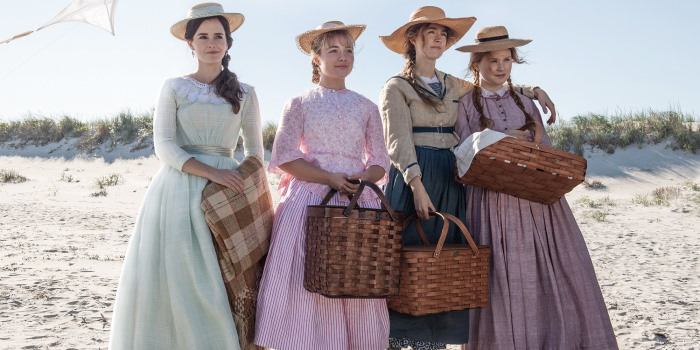
Using colour grading to differentiate between the separate timelines, we’re introduced to Jo as she’s trying to make it as a writer during the 1860s in New York, often having to compromise the ending of her stories to make them more palatable for audiences. ("And if the main character is a girl, make sure she is married by the end," one publisher played by Tracy Letts tells her.) Jo is nothing like her older sibling, Meg (Emma Watson), who is married with two children, and longing for material wealth. Sweet Beth (Eliza Scanlan) is still living at home, while the youngest sister, Amy (Florence Pugh) has accompanied their Aunt March (Meryl Streep) to Paris in the hopes of becoming an artist and marrying rich.
Still, all the key moments from the source material are in there, visited in flashback: Christmas morning with Marmie (Laura Dern), the whole ice-skating debacle, and naturally, the many theatrical plays performed by the sisters. Those scenes are some of the most joyful, and it’s genuinely touching to witness the girls wreaking havoc and endlessly teasing one another. The love shared between the sisters is undoubtedly the real heart of this tale. By changing up the narrative, Gerwig has made even more room for these characters to truly flourish. You register that they are no longer "little women", but grown-up human beings forging their own paths in the world.
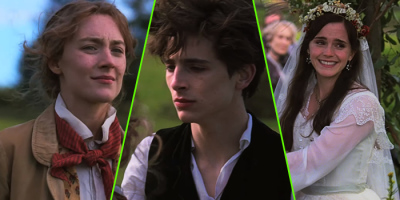
The character that gets a relatively large amount of attention from Gerwig is Amy. She has traditionally been the least liked of the March sisters, and Pugh absolutely nails her hilariously whiny and self-absorbed nature, while also bringing more sensitivity to the role than expected. Amy always feels second best to Jo, and the film sets them up to challenge each other, proving they’re more alike than they probably discern. The biggest similarity: they’re both entangled with the boy next door, Laurie, portrayed by a wonderfully heartbreaking Timothée Chalamet.
Chalamet and Ronan still share that same undeniably fiery chemistry that they did in Lady Bird, so much so that in some scenes, it is difficult to remember the two aren’t real-life lovers. Laurie is besotted by Jo from the first time they meet as teens, but unfortunately for him, she believes she is too wildly ambitious to fulfil the role of wife, or perhaps even a partner.
It’s hard to blame Jo. After all, it’s her desire to be astonishing and to reject traditional stereotypes that makes her such an empowering character. "I’m so sick of people saying that love is just all a woman is fit for" she says to Marmie through tears at one point. She is paramount to the progressiveness of the book and now this film, and is played with explosive energy by Ronan. Yet, despite the central character being extraordinarily driven, Gerwig is careful never to condemn women who are satisfied with domestic life. Alternatively, she recognises that women’s dreams are of equal value no matter what they are. For instance, Meg tells Jo, "Just because my dreams are different from yours, doesn’t mean they’re unimportant." It’s a beautifully sincere exchange.
Gerwig has also expertly rejigged the finale, making it far deeper than its predecessors. The end of the film presents a refreshing reality: that women can be anything they want. The last scenes demonstrate how women can unapologetically chase their goals, and love at the same time. Their stories carry weight, regardless of how big or small, and Gerwig has made clear why Little Women is a story that continues to matter even today.
5/5
Little Women lands in Australian cinemas on 1 January 2020. It is rated G for very mild themes.
Header Image: Sony Pictures.
Topics
Ref: 3559b81b-9ace-4258-aead-ab28007fb933




Comments & Feedback
Share your opinion
Emoji cheatsheet Formatting Comment guidelines