How Young People Are Helping Shape Australia's Anti-Bullying Resources
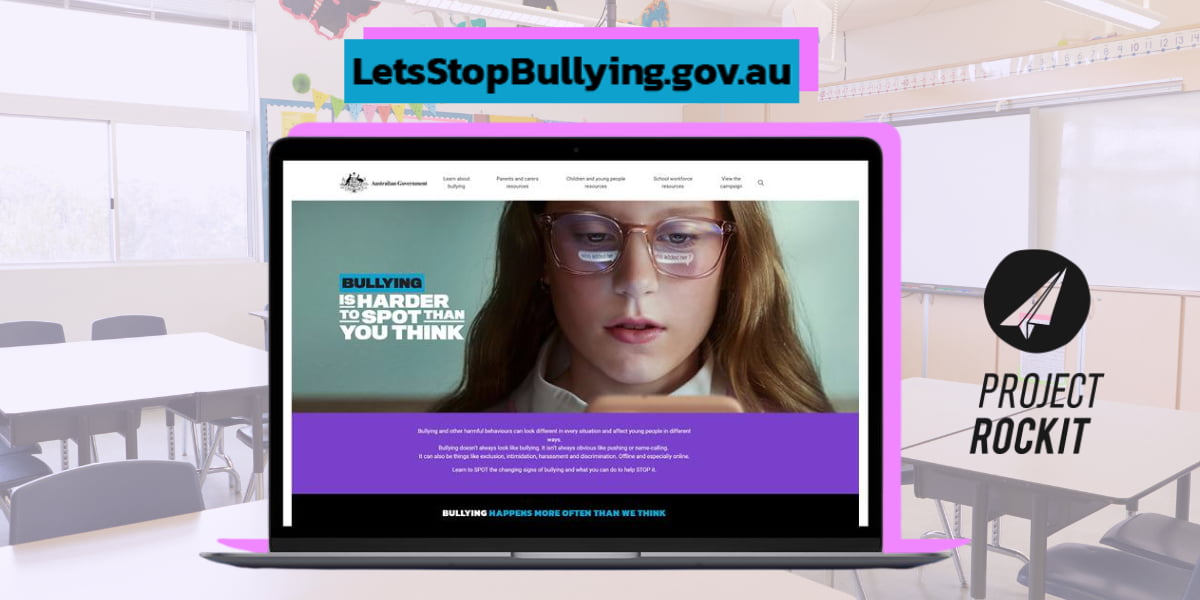
Inside the Let's Stop Bullying campaign and why student perspectives matter more than ever
Please note: This article contains discussions of bullying, cyberbullying and harmful online behaviour.
This Bullying No Way Week, we got the opportunity to speak to PROJECT ROCKIT Collective Member Raghu (17) about his role in the Let’s Stop Bullying campaign.
Raghu shared how his own experience with bullying inspired him to contribute to resources designed to help students, parents and schools navigate bullying in a changing digital world.
A journey from student to PROJECT ROCKIT advocate.
While many students encounter conversations about bullying at school, Raghu has had the opportunity to help shape them.
A long-time Student Edge member, Raghu became involved with PROJECT ROCKIT after applying for a campaign on kindness. What started as a single project became an ongoing opportunity to contribute to national conversations about bullying prevention.
PROJECT ROCKIT delivers workshops, provides resources and partners on special projects to help students build resilience, tackle prejudice and bullying, and support their wellbeing.
“It's been an absolute, wonderful journey meeting a lot of amazing people who are also part of the collective and working on different projects,” he told Student Edge.
Raghu has been involved in consultations that informed Australia’s newest anti-bullying initiative Let’s Stop Bullying. Alongside other young Members, he contributed to shaping the resources available on the Let’s Stop Bullying website.
Why this project is personal.
For Raghu, bullying prevention isn’t just an issue he’s passionate about, it’s something he’s experienced personally. Like many young Australians, his understanding of bullying came not only from seeing it happen, but from living through it himself.
“I must share my experiences and provide the support to 12 year old me,” he explains, “and the thousands of other young people around the nation that are going through similar experiences.”
Throughout primary school and beyond, Raghu witnessed different forms of bullying, including exclusion, cyberbullying and harmful behaviour within social groups. Those experiences have helped shape his commitment to supporting others.
“It's a very surreal experience to kind of know what bullying is, but then to experience it as well,” he explained.
Involving young advocates like Raghu helps initiatives about bullying prevention be more effective as they can give their insight on how technology is evolving, and its impact on bullying.
How bullying has changed and why empathy matters.
While bullying is an ongoing issue, the ways it is happening is rapidly evolving.
Bullying can take physical forms or overt harassment, but many students are also experiencing bullying that can take subtle forms, particularly online.
The Let's Stop Bullying campaign found a 455% increase between 2019 and 2024 in reports of cyberbullying.
“It's not that stereotypical 90s high school movie. It's not always physical and it's not always visible.”
When talking about cyberbullying, AI and deepfakes, Raghu explained how he believes one of the driving forces is accessibility.
“A lot of it has to do with ease as well and how easy it's become to create such harmful resources,” he says.
Discussions about online safety often focus on legalities, rules and consequences of breaking them, but Raghu believes another piece of the puzzle is empathy and understanding the real-life impact these actions can have on others.
“Oftentimes, I think a lot of people see it as a joke,” Raghu explained. “We don't really understand the underlying harm.”
He believes young people need opportunities to learn about why certain online behaviour is harmful, not only what types are harmful.
“I find that the nuances of why we shouldn't do it isn't thoroughly explained, especially to younger students,” Raghu says.
That’s why he sees empathy education as an important addition to existing lessons about bullying and respectful relationships.
“Empathy is such an important thing,” Raghu says. “It's often expected for young people to develop naturally. Sometimes that's not the case.”
Raghu told us that this focus on empathy has been woven in the resources developed for the Let’s Stop Bullying campaign.
Advice for students experiencing bullying.
For students who may be questioning what they are experiencing and wondering whether they should reach out for support, or wondering why it is happening, Raghu has an important message.
“It's not you. It's not your fault. It's nothing to do with who you are as a person.”
He encourages students to trust their gut, and if they’re comfortable, to speak to someone they trust about what is happening.
“Speak to somebody that you trust, but don't feel obliged to share everything,” Raghu says, and reaffirms that, “It's always good to get a second opinion from somebody who's not involved.”
“Trust your gut. In fact, all cases trust your gut. If you feel like something's off, if you don't like how somebody's treating you, look for more information,” he says.
The Let’s Stop Bullying website has age-specific resources for young people looking for more information, for those in year 6 and year 7, and then years 8 and above.
“Look at some of the resources,” Raghu says, “because these are resources that are specifically designed for young people, and for trusted adults, for teachers and carers, to identify the situation.”
How friends and classmates can make a difference.
While schools, parents and teachers all play an important role, Raghu believes young people themselves can also be the first to notice when something isn’t right.
He encourages students to pay attention to quieter classmates and those who may regularly find themselves excluded.
“Look out for who is invited to be themselves and who is being suppressed for being themselves,” he says.
Raghu emphasises that letting a classmate know you are there for them can make a positive difference.
“It's really hard to spot sometimes,” he explains. “But by being curious and being kind and friendly, you move one little step closer to finding out and learning about any problems that they may be having.”
These small acts of kindness can help create environments where students feel seen, included and supported.
“Sometimes, it can be hard to stand up for someone. If you can't stand up for someone, let them know that you're there.”
The Let’s Stop Bullying campaign.
As bullying continues to evolve alongside technology, so too must the way we understand and respond to it.
Whether it's recognising the signs of exclusion, supporting a friend who may be struggling, or simply making someone feel included, Raghu believes everyone has a role to play.
As he puts it, preventing bullying isn't just about responding when harm occurs. It's about creating communities where kindness, empathy and respect are part of everyday life.
Interested in being a part of PROJECT ROCKIT? You can find opportunities and sign up to the Network list for the PROJECT ROCKIT National Youth Collective here.
If you or anyone you know needs help, support is available now. Call Lifeline on 131 114 or Kids Helpline on 1800 551 800. Visit ReachOut to get support to help you with everything from everyday issues through to tough times.





Comments & Feedback
Share your opinion
Emoji cheatsheet Formatting Comment guidelines