HSCya Later? Why the Current Exam Format’s Got to Go
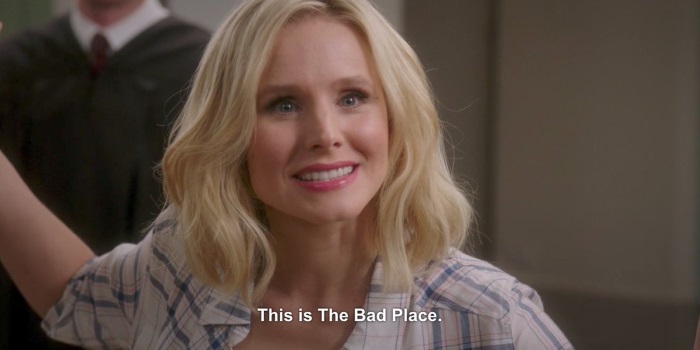
Is it time for a new approach?
Student Edge members can submit articles, reviews and opinion pieces inspired by events affecting student life. This opinion piece comes from member Kaitlyn Seretis. Submit your stories here (or contact us directly).
As a current Year 12 student, it’s hard to maintain my sanity when preparing for the most prominent examinations of my schooling career.
As I yo-yo between short bursts of intense study and three-hour-long sessions of The Office, I can’t help but wonder why the dreaded HSC or its interstate counterparts like the WACE and VCE exist at all.
When it was introduced in the late 1960s, the HSC (AKA the Higher School Certificate) was considered a new, fresh way to measure the ability of a post-war student body, and to teach them core skills suitable to a changing society and workforce. But this may not be as effective in our current age.
For instance, is the compulsory English and 10-unit structured course really the most suitable system for technological 21st century students?
Of course, it’s hard to measure which subjects are more important than others in school. Most of us have asked ourselves when sitting in maths, "When would I use this at any other point in my life?" It will always be true that some elements of our secondary education will not be relevant for every one of us in whatever career we pursue, but even those subjects teach us other skills: resilience, problem solving, critical thinking, analysis of stimuli, teamwork, and creativity, among others.
The thing is: Why can’t these skills be taught in a setting more relevant to our society? How can we better learn how to collaborate with colleagues over long distances via technology, rather than, say, simply write essays? Where can we learn how to file taxes online, rather than complete multiple-choice questions? And how can we incorporate traditional subjects such as maths, science or geography into building sustainable technologies for our future?
It is estimated that 40 per cent of today’s jobs will cease to exist in their present form within our lifetime. As technology continues to replace traditional careers, school should be focusing more on social, character-focused and critical skills, rather than how to memorise and regurgitate essays in a two-hour period.
Only around 26 per cent of young people use their ATAR to gain access to university. Even the very end result of thirteen years of schooling, the ‘golden ticket’ to our future that is the ATAR, is losing relevance. It is time for a transformation to Australian education. It is time to encourage the academics, the inventors, the thinkers and the dreamers to collaborate in an environment designed for our own time, rather than 50 years ago. Our time for revision to our education starts now.
Congratulations to Kaitlyn for winning this week's writing challenge. Kaitlyn wins a $50 Westfield gift card for her submission. For your chance to win, check out our latest writing challenges in our Competitions section. Also, be sure to follow this guide on how to win the writing challenge.
Header Image: NBC
Topics
Ref: 19a366a2-27ca-4376-9d01-a96d00233533





Comments & Feedback
Share your opinion
Emoji cheatsheet Formatting Comment guidelines