How To Stay Safe From Air Pollution During Bushfire Season
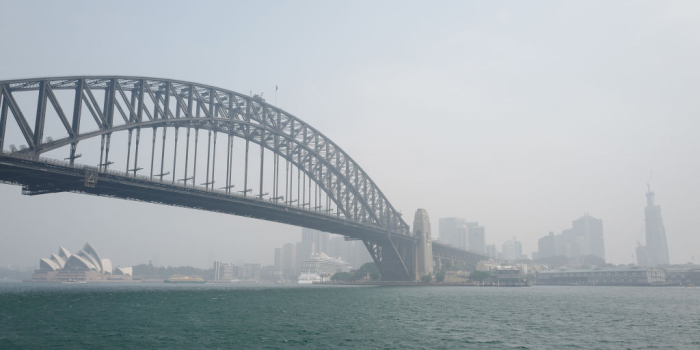
Air quality is beyond hazardous range in Canberra and NSW.
As the unprecedented bushfires continue to sweep the nation, more and more photos are emerging of Australia’s smoke-covered skies. The dark haze is ominous to say the least, and it’s also polluting the air.
Over the new year, Canberra's air quality was more than 22 times the hazardous rating, and the smoke even travelled across the sea to New Zealand. Earlier today, a cloud of smoke caused by the bushfires was spotted all the way in Chile and Argentina.
MUST SEE: Smoke From Bushfires In Australia Is Seen 12,000km away In Chile.pic.twitter.com/alYiNyanbX
— Global Breaking News (@GBNReports) January 8, 2020
With the air quality in parts of Australia being so poor, it’s important to take measures to protect yourself against bushfire smoke.
As the Australian Medical Association (AMA) pointed out on Twitter, bushfire smoke can trigger asthma symptoms, including wheezing, breathlessness, coughing, or chest tightness. Plus, long-term exposure to bushfire smoke can irritate the respiratory system, even in normally healthy people.
So, if you’re in a bushfire affected area, how can you stay safe? Here are some precautionary methods you can take.
Avoid air pollution by staying indoors.
It’s not always the most practical solution, but if there is a lot of smoke in the air, remaining inside is the ideal option. Make sure you keep all doors and windows shut until the smoke clears. If you have an air conditioner, turn it on and switch the setting to 'recirculate', or use an air purifier with a HEPA filter.
Head somewhere that’s air-conditioned.
No air conditioner? According to NSW Health, you might want to consider spending some time in air-conditioned venues such as cinemas, shopping centres or libraries to cool down.
If you intended to head out for a morning run, go to an indoor gym instead.
Wear a P2 mask.
Normal cloth or paper masks will not protect you from bushfire smoke, as they can’t filter out the microscopic dust particles that make the smoke dangerous to your health. P2 masks are used by builders and landscapers, and you can purchase them from hardware stores, such as Bunnings Warehouse.
However, it’s essential that the mask is fitted correctly, or it won’t be as effective. If there are any air leaks around the sides, it’s not tight enough. NSW Health provides a checklist for fitting and removing the mask here.
With P2 masks in demand at the moment, keep an eye out for stores that are getting more shipments.
PSA for folks living on the border, Office Choice is about to get a P2 shipment in. AQI quite literally off the charts here today (the monitoring station has stopped recording data) #bushfirecrisis #vicfires #NSWfires pic.twitter.com/I7fi58aDN1
— Amy Coopes (@coopesdetat) January 6, 2020
Keep your medication close.
For people with asthma, it’s crucial that you follow your asthma management plan. Have a preventer and Ventolin on hand, and consult your doctor if your symptoms worsen. Continue to monitor the air quality until it’s safe to open windows or go outside.
If you’re not sure whether you have asthma, Asthma Australia have launched a survey that can help you identify whether you’re coping with the bushfire smoke. The organisation is also calling out for real time reporting, so people can proactively avoid exposure to harmful air pollution.
To donate towards bushfire recovery, you can see a full list of organisations here.
Header Image: James D.Morgan / Getty Images AsiaPac via Getty Images
Topics
Ref: cee91fbd-f893-46e5-8f1c-ab3c0076e96e



Comments & Feedback
Share your opinion
Emoji cheatsheet Formatting Comment guidelines