How to Nail Your New Year’s Study Resolutions

Making your education a top priority this year.
This article was updated on 4/01/2024.
It’s officially 2024, which means that eventually we’re all going to have to get back into the swing of things (that’s if you aren’t already back at work yet).
Soon, February and March will roll around, which means that many students will begrudgingly make their way back to high school and university campuses for another year.
But hey, you never know! 2024 could be your best year of exam marks yet.
So, If one of your New Year's resolutions was to be at the top of your class, here are our tips on getting there.

Keep a calendar.
If you’re wanting to make the most of your study time, the first thing you’re going to need is a solid calendar.
Whether you’re using a physical book, the basic app on your phone or a shared calendar like TimeTree, you’re going to want to jot down all the classes, assignments, exams and life events that you’re sure are locked in for the year.
Not only will this keep you organised but it will ensure that you don’t forget about any important deadlines. Plus, it'll keep you accountable for time that is set aside just for you or for friends and family.

Use a study planner.
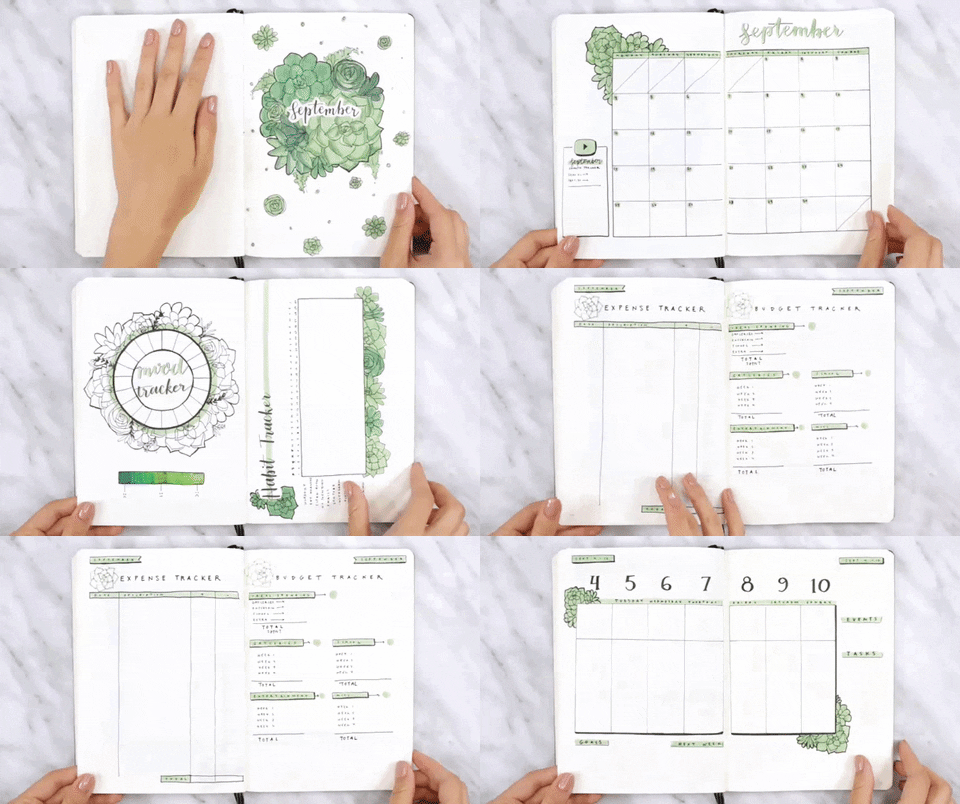
If you want to make the most of a study sesh, you’re going to have to break down your day even further and plan when your homework time will be.
The best way to do this is to write everything down in a study planner. You can write one up yourself to best suit your style or if you need a template, Student Edge has an awesome free study planner that you can get your hands on here.
While using a calendar and study planner can be super helpful, it’s important to also consider that sometimes things don’t always go as planned and life can get in the way.
If you miss a study marathon or aren’t in the mood, that’s fine! Your mental health and physical well-being are way more important. By taking care of yourself, it’s likely that your learning will be more productive when you’re feeling extra motivated.
Take breaks.
You could argue that study breaks are just as important for your academic performance as actual study time.
While this isn’t an excuse to take an eternal break (although I know we’d all love that), it is super important to schedule breaks in.
Sure, studying for six hours straight might seem like a good idea in theory but for most people, the information that you’re trying to revise is just going to go in one ear and out the other.
Schedule intentional breaks. Find something you enjoy even if it’s just playing a video game or watching some Netflix and take that time to relax and wind down.
Be sure to also give yourself the amount of breaks that you need. Just because your straight-A student mate can take five-minute breaks and then get right back into it, that doesn’t mean that the same plan will work for you. If you need to take an hour, take an hour.

Feed yourself.
I’m sure you've heard how important it is to make sure your body is fueled so that you can study at your highest potential. Well, it’s true!
If you're like me, this won't be a difficult tip to follow, but it's worth a mention.
According to a 2018 study from the University of Illinois, diet and nutrition moderate the association between network efficiency and cognitive performance in the brain.
Essentially, when we show certain blood levels of some micronutrients like B-vitamins and omegas, there is a correlation between cognitive function and brain function.
So, not only should you be making sure you get your three meals a day, but you should also be including some of your favourite snacks and listening to when your body is hungry.

Figure out your learning style.
The hardest part about studying is getting started, especially when you know you’re going to have a tough time understanding certain concepts or retaining some information.
Something that you may not have considered is that the way you have been taught how to learn might not be the best style for you.
For example, you could have been taught to read a textbook, take written notes and memorise them as best you can, but you’re not a reading/writing learner. This will make it harder for you to learn.
Learning styles range from reading/writing, visual, auditory or kinesthetic. Finding out which one you are can help you tailor your study experience so that you can learn better.
Whether it’s using videos or listening to podcasts, adding in a study technique that fits your learning style will make it a lot easier for you to understand a concept and remember it for a future exam.
Before you get stuck into your homework, do a quick Google search for the four learning styles and read a bit more about them or take an online test to discover which one you might fit into.

Set realistic goals.
While we all want to get the best grades in the class and the highest ATAR score in the state, that obviously isn’t realistic for everyone, but that’s okay!
If you weren’t happy with a mark of 55 per cent on your last English assignment, aim for a 60 per cent next time.
While it’s awesome to set big goals and aim high, you are going to find a lot more satisfaction in reaching goals that are attainable now. You can always work your way up from there.
One way to calculate where you’re at versus where you want to be is by using the Student Edge final grade calculator, so you can track your results for the entire semester.

Keep your study space organised.
Clear study space, clear mind, right?
There are some things you can consider to keep your space organised all the time.
While it's fun and feels productive to buy a bunch of cute stationery for the school year, you may end up just accumulating things that will end up making your study space more cluttered and harder to work in.
We’ve all been told 100 times not to study on our bed or in our bedrooms because it’s a place of rest and you may start to feel tired. However, if you work better in your bedroom or on the couch rather than in an office or at a desk, go for it!
Just make sure the space is clear and that you can sit in a comfortable position without straining your neck, back or eyes. You'll also want to avoid distractions like TV or video games. If you’re on the couch, turn the screens off.
With an organised and clear study space, you won’t have to worry about getting a place ready to study. All you have to do is sit down with your books, notes or laptop and get to it.
Of course, if you have a few personal study hacks up your sleeve that you’ve been using for the last few years, keep using them. Whatever helps you reach your goals!
Header Image: mixetto via Getty Images
Topics
Ref: f7139946-0fc1-4a7e-b4c2-aca6007f54ab






Comments & Feedback
Share your opinion
Emoji cheatsheet Formatting Comment guidelines