How to Cope With Your Parents' Divorce

When your parents decide to get divorced it can be a really rough time for the whole family.
Among everything that's going on that you can't control, it's helpful to be active around the stuff that you do have a say in. Here's how to look after yourself during and after the break up.
Or, read the text below:
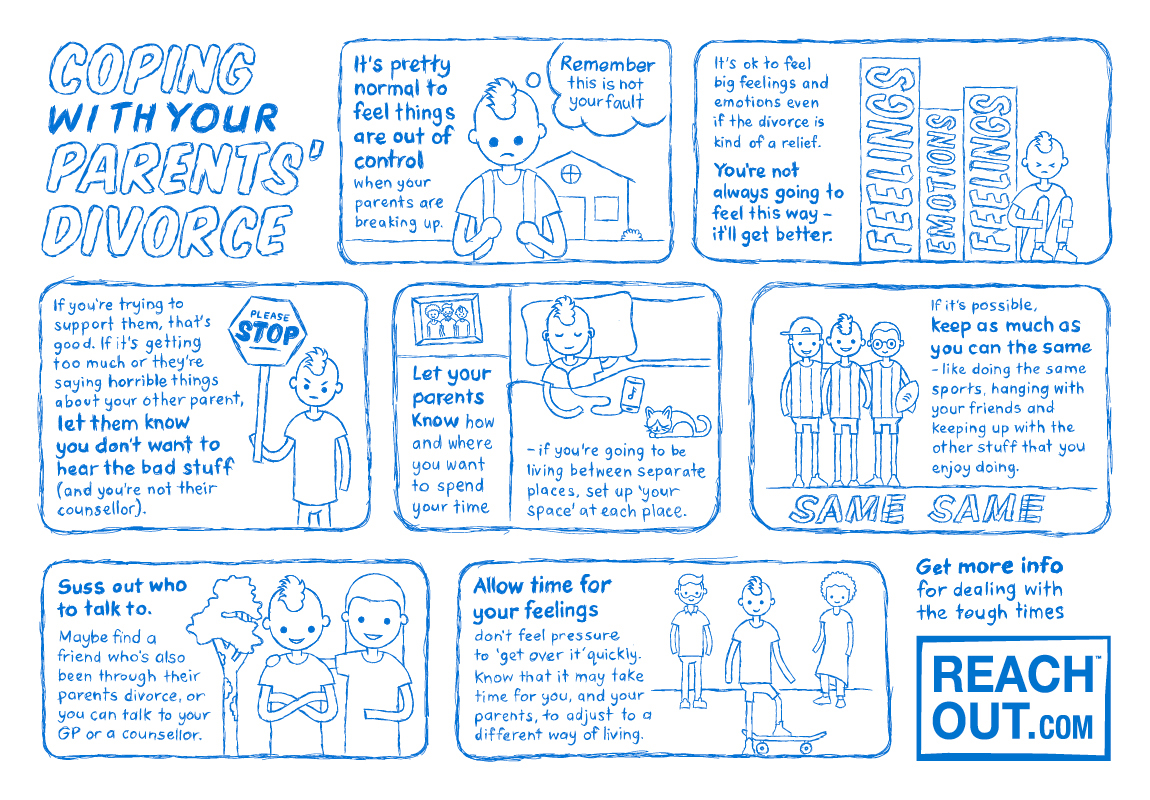
It's pretty normal to feel that things are out of control when your parents are breaking up. Remember, this is not your fault.
It's okay to feel big feelings and emotions even if the divorce is kind of a relief. You're not always going to be feeling this way: it will get better.
If you're trying to support them, that's good. If it's getting too much, or they're saying horrible things about your other parent, let them know you don't want to hear the bad stuff (and you're not their counsellor)
Let your parents know how and where you want to spend your time, and, if you're going to be living between separate houses, set up 'your space' at each place.
If it's possible, try to keep as much as you can the same - like doing the same sports, hanging with your same friends and keeping up with the stuff that you love doing.
Suss out who to talk to, maybe find a friend who's also been through their parents divorce and start there, or you can also talk your GP or a counsellor if you need.
Allow time for your feelings and don't feel pressure to 'get over' it quickly. Know that it may take some time for you, and your parents, to adjust to living in a different way.
We've borrowed this content from ReachOut—Australia's leading online mental health organisation for young people and their parents—with their permission. You can find the original article here. Check out more of their full range of practical support, tools and tips at ReachOut.com and ReachOut.com/Parents.
Are you experiencing suicidal thoughts, sexual assault or domestic and family violence? Seeking to support someone who is? Call Lifeline on 131 114 or Kids Helpline on 1800 551 800.
Visit ReachOut to get support to help you with everything from everyday issues through to tough times.
Header Image: iStock.com/Andrew_Rybalko
Topics
Ref: 05e8cf66-bb16-4a67-b85c-aa93006e607a






Comments & Feedback
Share your opinion
Emoji cheatsheet Formatting Comment guidelines