Here's How Meditation Can Help You Study Smarter

For some, studying is an easy task. For others, it’s entirely harrowing.
Whether your issue is finding the motivation to study or dealing with the anxiety that comes with it, meditation could be the key to unlocking your potential.
Meditation does not require an abundance of candles nor does it require money. Remove any thoughts of a culture-appropriating, hyper-spiritualist obnoxiously chanting and telling you to "repeat your mantras" and "find your happy place." Meditation is way simpler and extremely rewarding. Research shows that meditation can help you focus, reduce anxiety and improve your memory.
Studies have shown that being able to regulate and control our impulses is a greater indication of academic success than IQ. So where does meditation help out? A US study revealed that "those trained in meditation stayed on tasks longer and made fewer task switches, as well as reporting less negative feedback after task performance.”
Learning to meditate and performing mindful exercises such as thought control and breathing can translate into better focus. It can be as simple as breath regulation: one breath in and held for 5-8 seconds, followed by a long breath out for 5-8 seconds
Have you ever been in an exam and forgotten a crucial piece of information that you know you've studied for? Have you been put on the spot by a teacher and forgotten the answer? There’s a reason for that. Stress decreases our ability to retain memories and manipulate those thoughts contextually.
American academics decided to see just how effective meditation would be for those in high pressure professions where a reduced working memory capacity would be detrimental. The results? Amazing.
The researchers tested out a group of marines during and before combat deployment. As anticipated under pressure, the marines who were not trained in meditation techniques had a reduced working memory capacity. However, it was revealed that the marines who meditated for more than 10 minutes over an 8-week period maintained their memory and improved their ability.
The facts are in: meditation works.
So, how can you start to meditate?

1) Don't overdo it.
Don't start out with the expectation of becoming a Zen-master. Allocate a few minutes every day until it becomes habit or something that you thrive on.
2) It's all about habit.
Meditation is a habit. It should become a regular practice and a time to unwind, so choose a general time to meditate during which you can relax your mind. It could be in the morning, to ease into a busy day of school, or in the evening, to let go of a chaotic study session.
3) Find your zone.
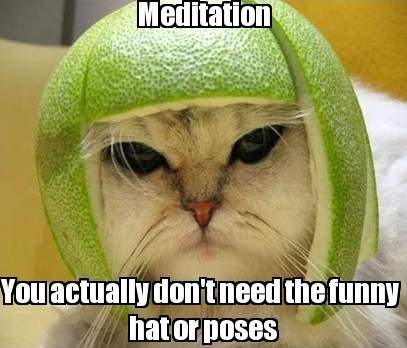
You need to be comfortable, both in how you sit and where you sit. Sit somewhere you feel secure and calm, like a quiet spot in the house or maybe the backyard. Also, don't think about pose too much. Sit in a relaxed position that will allow you to breathe easily.
4)Breathe in, breathe out.
Take a deep breath in, feel that breath through your body and hold it for a few seconds. Let that breath go, feel that breath leave the body and continue to let it go. Feel the ebb and flow of your breathing. Let your mind wander with the breath before reigning it back in slowly. It may not work the first time but, the key is to have no expectations and to just let yourself go.
Something to remember when the study period kicks off again. Happy meditating, y'all.
Cassie Ngurah is one of Student Edge’s student contributors. Learn more about our contributors program.
Topics
Ref: 882491ce-001e-4dd5-a739-a55600513861



Most Popular



Comments & Feedback
Share your opinion
Emoji cheatsheet Formatting Comment guidelines
Interesting! Better Start!
We learnt about this at school! Soo helpful
Thanks for the tips!
ooh
Really good :) thanks student edge
Love the idea of spending time to meditate and just soak in your surroundings for a bit, to evidently improve studying skills.