Has Political Correctness Actually Gone Mad?
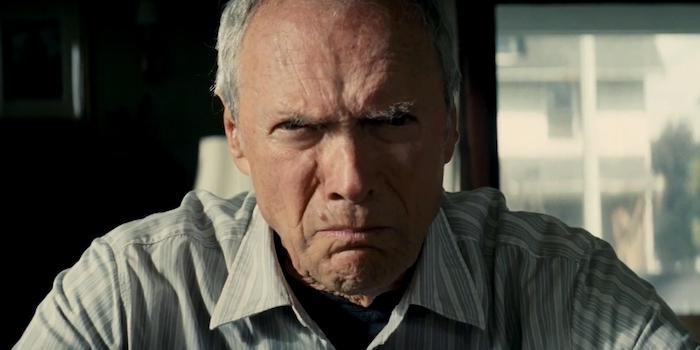
This month, Clint Eastwood declared his support of Donald Trump whilst simultaneously crowning those under the age of 86 as the “Pussy Generation” for being too politically correct.
Eastwood’s remarks were disgusting and bigoted; his support for Trump a clear indicator of senility. Clint Eastwood fits neatly into the category of the over-privileged, old, angry white male stereotype that is out of touch with contemporary society.
Or rather, that is the narrative we want him to fulfil because it is easier for us to swallow. Some have argued that Clint Eastwood grew up in a time where extreme racism was the norm and thus doesn’t know anything about political correctness. And yet many people fail to see that maybe because of this, the racism of today pales in comparison. The reaction to Clint Eastwood’s critique on political correctness is exactly what is wrong with the way we approach it.
That is not to say that political correctness is not important. On the contrary, I believe the way we choose to use words has a profound impact on the way we shape ideas. It is precisely due to the power that words have we should be giving more consideration towards how we express ourselves, and increasingly, how we allow others to express themselves.
The debate was indeed muddied this week when Senator David Leyonhjelm lodged a half-sarcastic complaint with the Human Rights Commission, claiming he’s been racially discriminated against for being called an “angry white male” (mostly to poke holes in Section 18C of the Racial Discrimination Act, which he claims limits free speech).
Political correctness at its most useful curtails language that is deliberately designed to be hateful or hurtful. There are times when individuals or groups should be condemned for the words they use because they are deliberately choosing them to express their hate. Yet, increasingly, we see political correctness aimed at those who have no intention of offending, propelling them into the middle of public controversy. Instead of looking at language as whole, we start considering it in a vacuum.
There is really only one reason that we do this. Laziness. By stripping words from their context, we remove the necessity for us to actually think about what is said. Instead, we can easily make judgments on the words being used without the complications of actually listening to what a person has to say. We enjoy the satisfaction of vilifying a person because we feel that they are completely wrong and we are completely right and willing to ignore everything that says otherwise. Just take a look at today’s pop culture. The prevailing movie genre today, the superhero movie, deals with clear lines of good and evil. And our world is not delineated by these lines, no matter how hard we try to make it so. Even though David Leyonhjelm only half-heartedly filed against the Human Rights Commission, it reveals a more disturbing trend in our society that tends to automatically dismiss those we don't agree with.
Political correctness has also extended to the control of ideas. Clint Eastwood merely challenging the validity of political correctness was met with vehement outrage. Comedians are often the subject of public outcry for taking jokes too far. But too often we only observe the surface levels of what is being said. By decreeing that certain subjects can never be joked about we eliminate nuance from considering what is actually being said. The most taboo question you can now ask is “Was that actually offensive?” That’s not to say comedians can say whatever they want under the guise of fighting against political correctness. However, an important part of growth is considering viewpoints that make us uncomfortable. Homosexuality and the rights of LGBTQI people, once a taboo subject, has only been able to come to the forefront of the discussion because of the people who have gradually pushed the boundaries of what we should feel comfortable with.
Steve Jobs once said, “When you're young, you look at television and think, ‘There's a conspiracy. The networks have conspired to dumb us down.’ But when you get a little older, you realise that's not true. The networks are in business to give people exactly what they want.” The same can be said of censorship. There is no government conspiracy to censor our speech to control our thoughts (at least, probably not) – we’re doing that to ourselves. We so thoughtlessly give away our right to express ourselves; not for any sinister conspiratorial reason, but because we find it too hard or unpalatable to look for nuance.
People are entitled to get upset at whatever they want. You owe it to yourself to think about why.
Louie Zhu is one of Student Edge’s student contributors. Learn more about the contributors program.
Photo: Warner Bros.
Topics
Ref: 67fe7916-d8bf-467c-bdb7-a664009058bd






Comments & Feedback
Share your opinion
Emoji cheatsheet Formatting Comment guidelines