Everything You Need Before You Start Applying for Jobs

Things to keep in mind while you’re still studying.
Applying for work is a lot more complicated now compared to how it was back when our parents and grandparents were trying to get jobs.
Nowadays it feels like you need to be young, qualified and have 25 years’ experience to land even an entry level role.
Yeah ‘cos that’s totally doable.
But don’t worry, if your student career is coming to an end or you’ve already finished and you’re not sure where to start, we’ve compiled a list of all the things you’ll need (and a few extras that will give you a boost) to get a job ASAP.
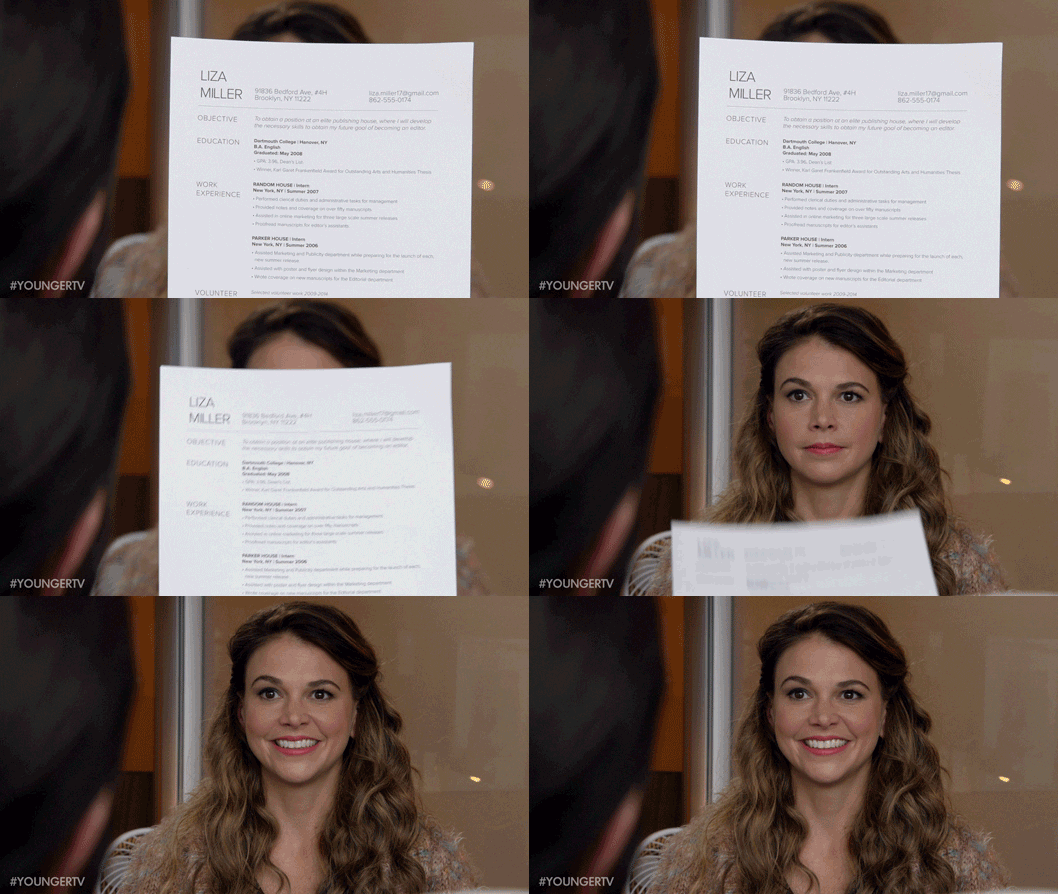
A resume.
Okay sure, this is the most obvious thing that you will need when applying for jobs. In fact, you may have even been shown how to write a resume in high school.
What’s important to keep in mind with resumes is that they're the most essential part of your job application, because it’s the first chance employers have to get to know you.
Of course, you will want to double, triple and maybe even quadruple check your resume for grammar and spelling errors but you also want to make sure your resume is built for the kind of jobs that you're applying for.
For example, if you were looking at applying for roles in illustration or graphic design, it’s much more beneficial to stick to a one-page resume with a coloured or graphic theme, so that you can use it as an opportunity to show off your design skills.
However, if you’re applying for an admin job, you may want to steer clear of too many colours or shapes. Keep the resume easy to read and straightforward, but have a bit more flexibility with the length of your CV.
It’s also vital to consider that some jobs want to know your skills first. On the other hand, some prefer to hear about your experience, and others want to know all about your education. It’s always good to check with the employer first; it doesn’t hurt to ring and ask.
If you’re struggling to write a resume, you can get some tips on what to include in your CV here.
A cover letter.
Number two on the list is cover letters. If you’ve never worked before, this step might seem like a really annoying and unnecessary part of the application process. You might have even skipped adding one in the past.
It’s always best to include a cover letter where you can. This is another opportunity for employers to get to know a bit about you and why you’re interested in the position.
It’s also a sneaky way for the employer to figure out if you’ve actually read the job ad and/or researched the company, as employers are looking for a cover letter specific to them and that job.
This is also a great opportunity for you to essentially create a ‘brand’ for yourself. What we mean by this is keeping a consistent design, theme and language flow throughout every aspect of your application.
This could include your resume, cover letter, portfolio, social media and much more.
If you need a little help formatting and writing a cover letter, we have heaps of tips here.

A portfolio.
A less obvious but really crucial step is building your portfolio. This particular part of the job application process won’t necessarily apply to every job type, however, it does fit into a lot, so it’s worth a mention.
Whether you studied design, modelling, writing, engineering, photography or makeup artistry. It’s always best to have a detailed portfolio of your education, work and any relevant experience.
When you think of a portfolio you probably picture a literal folder with clippings of work, right? Don’t worry, we do too. Except, now that basically everything is online, so are portfolios.
You can build a portfolio on a social media site, as a PDF or the most popular option is to build a simple website. With a website portfolio, you can build and customise everything really quickly and easily.
A portfolio is a great way to tie your whole application together. Here employers can see examples of the work you have mentioned in your resume and get a better idea of your background and skill level.
You can also match your portfolio to your cover letter and resume so that you have a consistent theme or ‘brand’ for yourself.
You can build an online portfolio with heaps of free website makers like Wordpress and Wix, just to name a few.

Experience.
One of the most beneficial things you can put on your resume is experience.
If this is your first time applying for work, don’t stress! You can apply for jobs without relevant experience. You can always include tutoring work, babysitting, or any volunteer work you have done in the past.
You can also focus on your skills if your experience is a bit thin.
If you do have a background in the workforce, you’ll want to include the most relevant experience or the jobs that gave you the most transferrable skills.
If you’ve worked like 10 jobs before, there’s no need to try and fit every single one on your resume. Instead, focus on your most recent and relevant experience. This is usually no more than just four jobs.
You can always include relevant volunteer experience, even if you have paid experience. This is a great way to show employers that you are passionate about community work and are open to learning new skills when you can.

A network.
An underrated but important part of the job application process is knowing people in the right places.
You don’t need to be best mates with the CEO of Commonwealth Bank to get a leg up in the finance industry. All you need to do is start connecting with like-minded people and other experienced professionals that are already in the industry that you want to get into.
The easiest way to do this is via Linkedin. Connect with friends, family, workmates, employers and teachers (if it’s appropriate or you have graduated) and start building a network of people that can help you on your career path.
You can start this at any time, including while you’re still in high school, you don’t need to wait until you’re set in a job or have graduated uni. Start as soon as you can.

A clean social media presence.
Something you’ll want to double check before you start applying for work is your social media.
Make sure all of your profiles are only full of appropriate content, because a potential employer will probably suss out your social media presence.
If you’ve got some content that is questionable for employers to see but not exactly inappropriate, you can always just make your account private or hide certain photos or videos so that only close friends can access them.
Now that you’ve got everything you need, it’s time to start applying.
Get out there, practise some interview questions and get that dream job!
Header Image: CBS
Topics
Ref: 819f9f84-3055-49d7-b16e-ac8c0039cbda



Most Popular


Comments & Feedback
Share your opinion
Emoji cheatsheet Formatting Comment guidelines
Thank you. Will definitely need this.