After Furious 7, Will More Dead Actors Be Resurrected For New Movies?
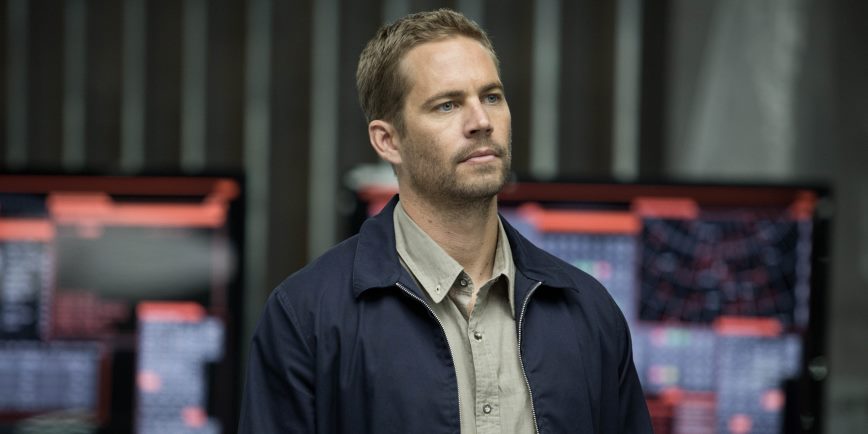
Death is not the end, in Hollywood at least.
In a piece discussing the late Paul Walker’s CGI reconstruction for Fast & Furious 7, The Hollywood Reporter closes with this chilling vision of the future: “20 years from now, filmmakers would still have access to the likeness of [an] actor – dead or alive.”
It’s referring to a process quite common in most big-budget blockbusters, in which 3D scans are conducted on actors before shooting begins, so that they can be duplicated on computer for CGI stunts. It was this process that likely made it possible for Paul Walker's character Brian to live on in the latest Furious feature.
VFX supervisor Scott Squires then tells THR, “I’ve also heard of certain studios having actors scanned just as an archival thing.”
And that’s the frightening part.
The producers of Fast & Furious 7 integrated Walker into scenes he had not yet shot with the help of body doubles – including two of his brothers – and face-mapping technology led by Peter Jackson’s Weta Digital effects house.
As I mentioned in my review, the makers of Fast & Furious 7 “are never glib in executing their morbid task.” It’s a mostly seamless viewing experience, except, perhaps, for those close to the deceased actor.
However, not much is asked of the faux-Walker; his lines are kept to a minimum and he's largely integrated into group scenes, where he can stand quietly, or into action sequences, where things move too quickly for us to raise any suspicions.
Compare this to the presence of Oliver Reed in Gladiator, who also died early in production. Outtakes were used for some rudimentary face-mapping onto a body double, and the effect was, well, weird, even back in the year 2000, when we were still being wowed by movies like Hollow Man.
The technological progress that’s been made in fifteen years is certainly astounding, and, as THR wonders, maybe brings us closer to an all-CGI actor one day sharing the screen with real flesh and blood performers. (The Planet of the Apes pictures are inching closer to this achievement, though its CGI apes are unlikely to fall into the uncanny valley, where most CGI humans reside.)
Ari Folman’s recent flick The Congress explored the more frightening angle of THR’s piece, in which dead, archived actors are resurrected for the movies.
In it, Robin Wright plays a parallel universe version of herself. Convinced that her best days are behind her, she signs her likeness over to a movie studio, which now has a forever-young CGI Wright to put in films as they choose.
(Later, citizens hoping to look like the dead actors for a spell can even purchase those likenesses, but that’s a whole other dystopian vision we don’t have time to get into here.)
Though Fast & Furious 7 used technology to overcome a genuine tragedy and handled it respectfully, has it paved the way for mainstream acceptance of bringing the dead back to life on celluloid? It certainly looks to become the highest grossing entry in the already gigantic franchise. The presence of a walking ghost in the lead role hasn't been a turn off for audiences in the slightest.
Back in 2000, Oliver Reed’s presence in Gladiator seemed ghastly. Walker appearing in Fast & Furious 7 feels right. Who knows how we’ll feel in 2030?
Topics
Ref: 33aaf0cf-0579-4a01-8f8b-a46e00436e47



Comments & Feedback
Share your opinion
Emoji cheatsheet Formatting Comment guidelines