Could You Care For Your Parent? How A Stroke Changed An Entire Family’s Dynamic
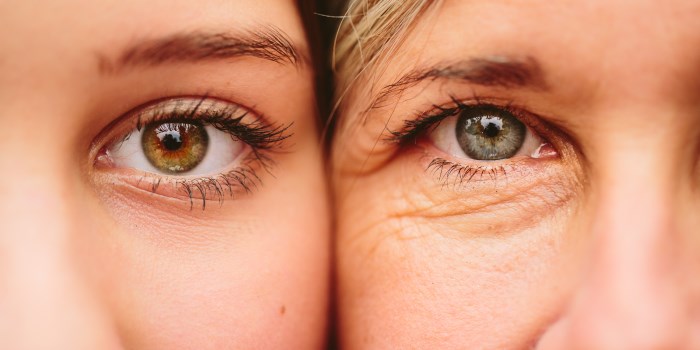
What happens when a person who cared for you becomes someone you have to care for?
Courtney, 18, found this out when her own mother, Nicole, 44, became a stroke survivor.
While many students were celebrating the New Year partying or on holiday, Courtney spent the beginning of 2016 learning how to help her mother. While Nicole has since improved significantly, there is still an uphill battle ahead as they continue to work towards recovery together.
A ‘stroke’ is defined by the National Stroke Association as a “brain attack”, occurring when blood flow to a part of the brain is cut off. Subsequently, brain cells become oxygen deprived and begin to die, often resulting in lasting problems for the stroke victim. How severe these problems are and which parts of the body they effect is dependent on which part of the brain blood flow has been cut off to.
On December 29, 2015, Nicole awoke at 1pm in the afternoon feeling unwell. Usually an early riser, she attributed the extra sleep to being sick and decided a shower might help. When a shower did not change anything, Nicole texted Courtney and her family, only to find that her cognitive senses were being impaired; she was able to read her texts but unable to reply to them.
Courtney, who was far from home at the time, noticed her mother’s strange texting and could not help but assume that Nicole was intoxicated. The last thing that crossed her mind was that her mother had had a stroke. Nevertheless, Courtney was concerned and decided to message a family friend, who proceeded to check in on Nicole.
“When she saw mum, she knew something was wrong, so they rushed [Nicole] to the hospital,” Courtney told Student Edge.
It wasn’t until three days later, on New Year’s Eve, that Nicole was diagnosed as having suffered a stroke. When Courtney called her mother at 1am on January 1 to wish her a Happy New Year, she was shocked to hear the diagnosis and rushed to the hospital to be with Nicole.
When Courtney arrived at the hospital, Nicole had no recollection whatsoever of their conversation that morning. It was also revealed that earlier Nicole had been having trouble with memory, believing she was at different stages in her life. At one point, she didn’t recall that Courtney’s younger brother (Ben, 15) existed, and she thought Courtney was just five years old.
“When I first saw her, she looked like a little girl seeing the world for the very first time,” Courtney explained.
“The doctors said she would take eight months to recover, but it’s been more than eight months and she is still in recovery. It will never be the same. She has to have naps; she has memory problems. The occupational therapist said that she cannot concentrate long enough to retain the thought, so it takes her a long, long time to retain information.”
Nicole’s personality has also changed, Courtney explained. “Her social skills are very different. She has no filter with what she says; if she thinks something she says it. The more tired she is the more she stutters and you know she needs to sleep.”
Following Nicole’s diagnosis, Courtney also changed. Having to grow up very fast, she took on work to help support the family.
“I have to pay for everything myself,” she said. “[Mum] helps when she can. I’ve had to take on a lot of responsibility that I didn’t have before.”
Nicole’s mother also moved into their house to help care for them. “Nana has taken on the role of looking after my brother, me and my mum. She is the backbone of our family. Without her it would be very physically and mentally draining on my mum to look after two kids.”
Nicole has overcome many physical and mental hurdles in the year she has spent recovering, and Courtney couldn’t be more proud of her mother.
“She has overcome her stutter; she only gets it when she’s really, really tired, and she was really down about the whole thing at the start,” Courtney said.
“She thought her life was going to be ruined, but she has a better state of mind now. I am very, very proud of her for always trying her hardest, even though it must be extremely difficult for her.”
Courtney also now has a very different outlook on her life in comparison to how she felt on the day she found out about Nicole’s stroke.
“It was incredibly daunting, I didn’t know what my life would be like and how much I would change,” she said. However, in some ways, the mother and daughter have come to be even closer.
“I have a different relationship with her now, some parts of our roles in the family have reversed. Instead of her looking after me, we now look after each other,” Courtney said.
You can learn more about the symptoms of stroke by visiting the Stroke Foundation website below and looking up the ‘F.A.S.T’ campaign for tips to help you remember the signs of an impending stroke.
Olivia Blasi is one of Student Edge’s student contributors. Learn more about the contributor program.
Photo: iStock
Topics
Ref: 1e383799-b336-4dc8-a6d9-a6c900859667






Comments & Feedback
Share your opinion
Emoji cheatsheet Formatting Comment guidelines