Should Australians Do More to Fight Smoking?
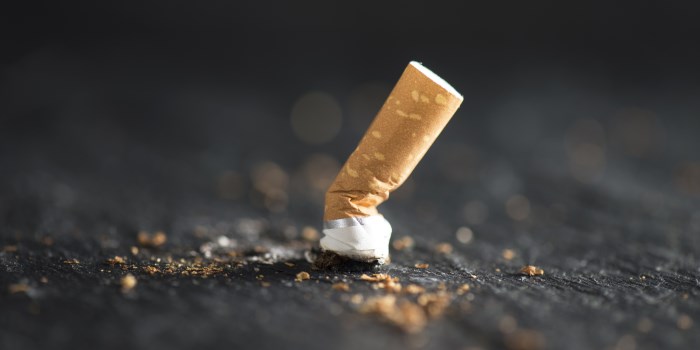
With an unexpected rise in Australia's smoking rate, one of our student contributors wonders what else can be done.
Australia has traditionally always been strict on smoking, but recent spikes in smoking rates—putting smokers and the public at risk—have raised doubts about the effectiveness of our dated laws.
Each year, first-hand and second-hand smoking kills an estimated 15,000 Australians and costs Australia $AUD31.5 billion in social, health and economic costs.
Despite plain packaging laws and anti-tobacco campaigns, the number of smokers in Australia has increased for the first time in years, according to an expert from the University of New South Wales. The Australian Institute of Health and Welfare found that Australia’s population of smokers has increased by more than 21,000 since 2013, to a shocking 2.4 million.
I know from personal experience it has become increasingly difficult to walk around the city without smelling cigarette smoke. Ironically, this is despite all the smoke-free signage that reminds us smoking in these areas is subject to on-the-spot fines. Does this mean the current regulations in place are running out of steam? Or, maybe the lack of active enforcement and monitoring of these rules might be to blame, leading many to disregard these prohibitions.
This raises the question: Is it time for the Australian Government to re-strengthen the fight against smoking?
Historically, you could say the Australian Government has already been quite tough on smoking.
Australia’s landmark Plain Packaging Act from 2011 required all tobacco products to be in plain packaging from December 2012 onwards as well as for cigarette boxes to have 75 per cent of the front covered in health warnings (up from 30 per cent); the same goes for 90 per cent of the back.
More recently, in July of 2017, news arrived that Australia’s landmark Tobacco Plain Packaging Law had won a major lawsuit against major exporters of tobacco who wanted to get rid of these strict packaging laws.
Australia also has some of the most expensive cigarettes in the world, with an average pack costing more than $AUD25, which would increase to $AUD40 in 2020 (under a Labor government). A pack averages around $US8 in America.
So, it’s even the more surprising that, with these mechanisms all in place, Australia’s smoking rate is still rising. But we’re not here to just talk about the numbers. Smoking poses a huge health risk for both the smoker themselves, as well as the people around them who inhale the cigarette smoke.
As the NSW health website states, “There is no safe level of exposure to second-hand smoke,” with the inhalation of any amount of tobacco smoke increasing the likelihood of various cancers and diseases such as those of the lung, mouth, oesophagus, and more.
Because of these dangers, and to improve public health, it is vital for the Australian Government to strengthen its stance against smoking.
It is important they actively enforce the smoke-free laws in place right now, and, if possible, expand these smoke-free areas to busy public areas such as popular shopping streets, parks and plazas. We should follow in South Korea’s footsteps, where extensive smoking bans requiring building owners to install smoking units 10m away from their buildings transformed South Korea from a ‘smoker’s haven’ to a relatively smoke-free environment.
Vivian Chen is one of Student Edge’s student contributors. See more student contributions here.
Photo: iStock.com/solidcolours
Topics
Ref: 7c3ebc33-e6d3-4951-9d51-a7d80061ddd4





Comments & Feedback
Share your opinion
Emoji cheatsheet Formatting Comment guidelines