We're All Pinching Pennies Coz Things Are More Expenno Than They've Been in 20 Years
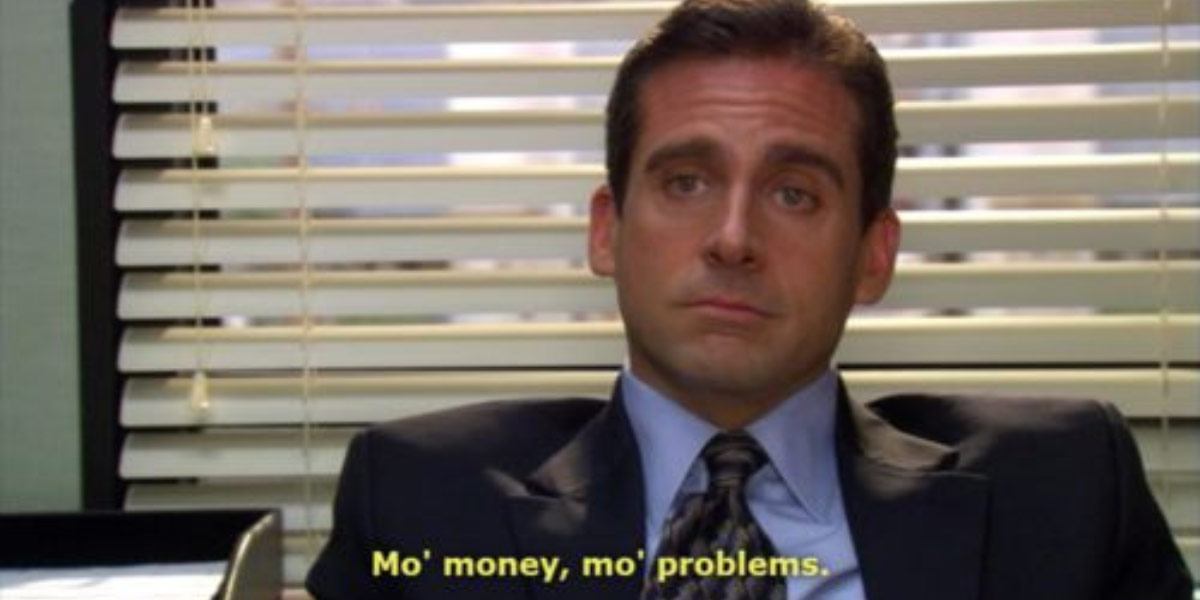
I see it. I like it. I want it. I check the price tag and put it back.
You’ve probably heard words like ‘inflation’, ‘cost of living’, ‘recession’ and ‘interest rates’ floating around a lot lately.
And you're likely struggling to keep up with the total cost of your grocery shopping bill or wondering why fuel prices. Just. Keep. Going. Up.
If you didn’t study a Masters in economics and it all sounds a bit complicated, we’ve tried our best to break it down for you.
What's the go with inflation?
You could Google the definition of inflation or we could just tell you that it's basically the rate at which prices increase over a period of time.
We know that sounds generic, but it's pretty much the overall increase in the cost of living—that's how much money it takes to afford basic and necessary expenses, which we wrote about here.
You would've noticed almost everything becoming more expensive, right? That's because prices are currently rising at the fastest rate in 21 years.
Last week, the Australian Bureau of Statistics (ABS) released new data showing that inflation was sitting at 6.1 per cent from June 2021 to June 2022. So, in the last year, the overall price of, well, everything went up an average of 6.1 per cent.
you want me to be mad about inflation…..the thing that makes my bouncy houses possible?????
— kylie brakeman is at edinburgh fringe (@deadeyebrakeman) July 5, 2022
If we break down those statistics further, we'll actually see that:
- Transport is up 13.1 per cent
- Furniture and household items are up 6.3 per cent
- Food and bevs are up 5.9 per cent and even non-alcoholic bevs are up 7.9 per cent
- More specifically, fruit and veg is up 7.3 per cent, meat and seafood is up 6.3 per cent, bread and cereal is up 6.3 per cent and dairy is up 5.2 per cent.
It's worse in some cities compared to others as well, like particularly in Perth where prices have gone up 7.4 per cent on average.
People be like “live within your means” as if rent, food, & gas are reasonably priced LOL.
— 🇳🇬 (@xx_lsp) June 5, 2022
What's the interest rate got to do with it?
In an effort to try and combat our wallets taking such a hit from these rising prices, the Reserve Bank of Australia (known as the RBA) is raising interest rates. This makes it more expensive to borrow money (like for a home loan or car loan) and hopefully discourages people from borrowing and spending money to take the pressure off inflation.
At the start of this year, the official interest rates were 0.1 per cent. But four consecutive monthly hikes later and the cash rate now sits at 1.85 per cent after another 0.5 per cent jump just this week. That's the fastest that rates have gone up since 1994. Yay for breaking more records!

At Tuesday's announcement, the RBA said it places a "high priority" on getting inflation levels back down to the 2-3 per cent mark, but expects it to peak at 7.75 per cent by December.
The Treasurer, Jim Chalmers, also said last week that things would get worse before they got better. Cool.
Is anything getting cheaper?
Surprisingly, yes. Houses.
Australian house prices are falling at the fastest rate since the Global Financial Crisis (GFC) in 2008. According to new data from property analysis company, CoreLogic, house prices fell by 1.3 per cent in July, which is the third month in a row they've fallen.
CoreLogic Research Director Tim Lawless said it was “abundantly clear” interest rate rises were causing the housing market to “weaken quite sharply” and this is expected to continue so long as the RBA keeps raising the cash rate.
Barista: would you like anything else with that?
— Forrest Dunbar (@ForrestDunbarAK) May 18, 2017
Me: No thanks. Was gonna get avocado toast, but I'm trying to buy a house this year.
That's not very helpful if I'm not buying a house right now?
Yes, we know. Sorry if it all feels a bit doom-and-gloomy. But even though world economics are outta your control, you can still stay in control of your personal finances (and your stress levels).
We’ve just launched our Real Money Talk pathway on Student Edge Plus to help you develop financial foundations. If you’re looking for a comprehensive course on managing your money, be sure to check it out!
Plus, we’ve got an endless supply of tips and advice on our website, with a bunch at the bottom of this article for you to start with.
Header Image: The Office (NBC).
Topics
Ref: 886612b4-6a2f-42a8-8b3d-aee500828a31





Comments & Feedback
Share your opinion
Emoji cheatsheet Formatting Comment guidelines