Comey vs. Trump: Here's What You Need to Know
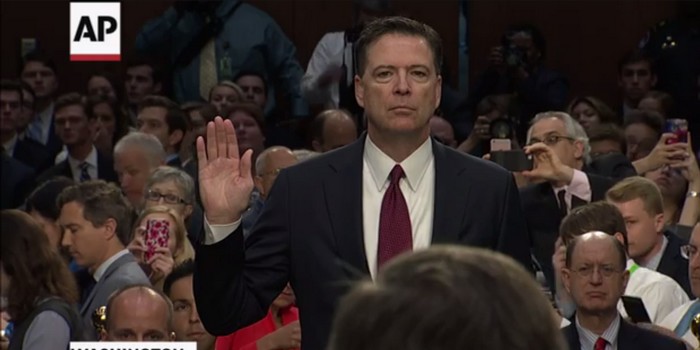
In May, U.S. President Donald Trump fired the FBI Director, James Comey, on recommendations in apparent order to "restore public confidence in the FBI."
In a Senate Intelligence Committee (IC) hearing today, former director James Comey provided some very damning statements about President Trump.
During his testimony, he revealed that he believed Trump gave him a presidential “directive” to let go of the investigation into former National Security Advisor Michael Flynn.
Flynn was being probed by the FBI for his connections to Russia amid sanctions in the period prior to Trump’s inauguration.
If you’re confused who Comey is or why any of this is important, let us go back to where this all started.
How did we even get here?
According to Comey’s testimony, it all started when Trump and Comey met on January 6, 2017. At this meeting, the FBI and IC were briefing the president and his national security team on some certain sensitive issues.
Those issues happened to be the infamous allegations that Russian hackers interfered with the November presidential election in what sounds like some real House of Cards-type drama.
Except this is real life.
Comey briefed Trump on the IC’s findings regarding the interference from Russia, starting the chain reaction that leads us to today.
In later one-on-one meetings, it’s alleged that Trump told Comey he needed “loyalty” and that he wanted the fact that Trump wasn’t personally being investigated for ties to Russia to be released to the mainstream media.
He is also alleged to have said that he hoped that Comey “can let this go” in regards to the investigation into Michael Flynn.
Comey was fired by Trump on May 9, which led to these allegations being released publicly. Trump later called Comey a “nut job” and “crazy”.
Trump's lawyer responded to the testimony, denying claims that Trump demanded “loyalty” or directed Comey to look over Flynn’s investigation.
What could happen now?
Of course, there have been cries for impeachment from his opposition, but is it even possible? Impeachment is a tricky one in the U.S.
In the United States' history, a president has never been impeached. You may have heard the word connected to Richard Nixon, along with 'Watergate', in the past, but he actually resigned because of the pressure of the impeachment process. Bill Clinton and Andrew Jackson (19th century president) were also impeached in the House, but later acquitted in the Senate.
To be impeached in the States, a majority in the House needs to vote against you. It then goes to the Senate who acts as a review board where a two-thirds majority is required; a nearly impossible feat, given Republicans have a clear majority and would need to be on board with getting rid of Trump.
If it was to somehow happen, it’s likely that current Vice President Mike Pence would become the president until the next election.
For now, it’s a lot of speculation and waiting to see what happens. If Trump is impeached for this misconduct, it could set an important precedent for future administrations.
Photo: AP
Topics
Ref: b4a8efcd-0d9d-4a89-bf8a-a78d0020f152





Comments & Feedback
Share your opinion
Emoji cheatsheet Formatting Comment guidelines