Cape Town’s About to Run Out of Water: Can Australia Avoid the Same Fate?
Have you ever been struck by a raging thirst while trapped outside with no water in sight?
(Update 15 Feb: 'Day Zero' has been pushed back to 4 June. The original story follows.)
We’ve all been there; felt that desperation for a drink. But what would you do if all the taps were barren? What if the dams were dry? What if there was no rain for months to come?
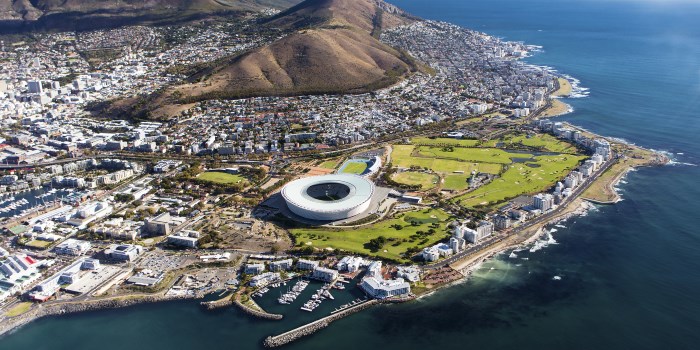
Unfortunately, this is a looming reality for the four million residents of South Africa’s second largest metropolis, Cape Town. The city is experiencing an unprecedented drought, receiving a total of 154mm of rain last year—measly compared to the annual 788mm average the region typically receives. These detrimentally low rainfall levels have been worsening over the years, leaving the populous city in a dire state of emergency. As a result, the city’s rapidly diminishing dams are at critically low levels, dropping by as much as one per cent of its total capacity every week.
Now, Cape Town is slipping closer to 'Day Zero'; the day where the taps will officially be turned off. Even after recent donations to the city’s dams (and some long-awaited rainfall over the weekend) 'Day Zero' has been placed as soon as 11 May 2018.
Cape Town is left to face a modern catastrophe; a situation never faced before. And Australians need to pay attention, in case we one day face it ourselves.
Cape Town has been classified by the Köppen Climate Classification System as having a warm Mediterranean climate, exactly the same as Perth’s in Western Australia. Other major cities that lie on the southern Australian coastline—including Sydney, Melbourne and Adelaide—experience similar weather patterns. All these cities have cool, wet, winters and hot, dry summers. So, if Cape Town—a city that has won international awards for water conservation—is facing this emergency, what’s to say this won’t happen to an Australian city?
We must learn from Cape Town. With climate change intensifying every year, this could be an imminent problem for us before we know it.
People all over the planet take water for granted, treating it as an entitlement, particularly due to its availability. But this detrimental attitude has led to the crisis. The lifestyle of filling up pools, watering gardens daily, leaving taps running and half-hour showers has led to an inevitable crisis in Cape Town, and if Australians don’t learn from their mistakes, we will be next. (These practices have been made illegal in Cape Town now, and fines are issued for hefty users. The strict water regulations will continue to tighten as 'Day Zero' edges closer.)
This dramatic water crisis has been ignited by the imbalance between Cape Town’s water use and supply. Rapid population growth in the area has increased water needs, while, simultaneously, climate change has decreased the rainfall received. Each resident of Cape Town is still limited to only 50 litres per day despite recent donations of billions of litres. When this figure is compared to the average daily use by Australians–340 litres–it is easy to understand the magnitude of this emergency.
What is going to happen when 'Day Zero' inevitably arrives? You can expect detrimental impacts on health and the environment, but also social status, as people compete for water. When valves are closed and taps stop working, residents will rely only on collection points established around the city, where their use will be monitored and regulated. In the meantime, residents of Cape Town must reduce and recycle the water they use. Desalination plants are being built and will be helpful in the long-run, but they are costly and not an immediate solution.
Authorities hope that the limited water they are currently retrieving from underground aquifers and the remaining water in the city’s dams will last until the rainy season, due to begin in May. But what if it runs out? And what if the rainy season never comes? At this point, there is little Australians can do to help. But we can educate ourselves on the crisis and learn from it, as we may find ourselves in this situation one day.
Hannan Dempsey is one of Student Edge’s student contributors. See more student contributions here.
Photo: iStock.com/V-art
Topics
Ref: c85ff371-d8c0-4169-8479-a885004c0168






Comments & Feedback
Share your opinion
Emoji cheatsheet Formatting Comment guidelines