The #BlackLivesMatter Movement Reaches Australia, Seeking Equality For Indigenous Aussies
Trigger warning: This article discusses suicide.
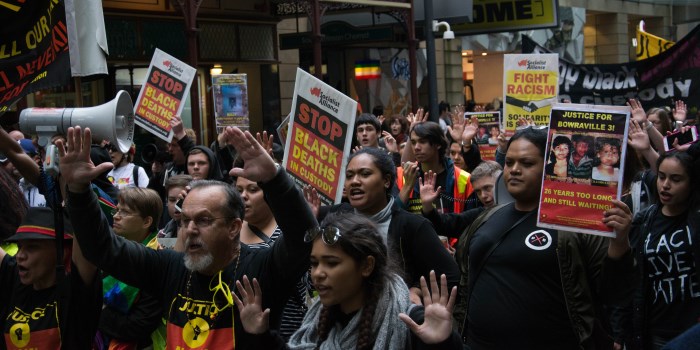
While the American Black Lives Matter movement is the largest and loudest, the campaign has gained traction in Australia, addressing issues of Indigenous rights and injustice.
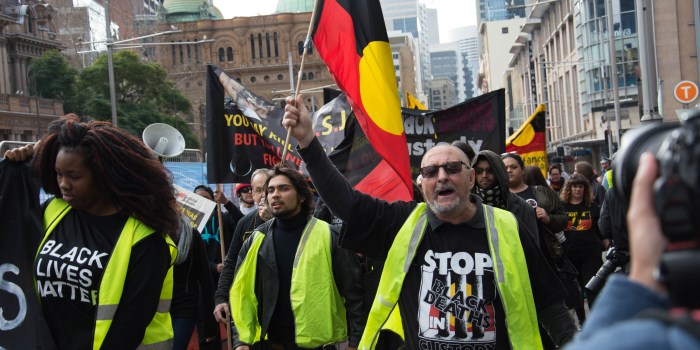
Protest marches were held in Melbourne and Sydney last weekend, and while they weren't prompted by them, they followed disturbing revelations about the dramatic suicide rates and homicide risks of Indigenous Australians.
Many of those at the rallies, including speakers, were of the opinion that these statistics shouldn't have been 'revelations' to the general population. Aboriginal Australians have long been vocal about the injustices they face, but they feel the media hasn't given them anywhere near the coverage that the American-based Black Lives Matter has seen in the last two years.
"Black lives matter too," speaker Tiffany Payton said at the Sydney rally. "Yes, all lives matter, but in this country it seems like black lives matter less."
The statistics quoted in the studies and at the rally were revelations to me. They are uncomfortable and grim, and it baffles me to think that issues of this magnitude have simply gone under-reported for so long. A warning: the next few paragraphs are full of very unpleasant numbers.
The Telethon Kids Institute report on causes of death (from 1983 to 2010) revealed that a full 25 per cent of Aboriginal mothers in Western Australia who died were murdered. Another 40 per cent died in transport accidents, many of which were due to poor regional infrastructure. A further 14 per cent of deaths were suicides. The median age of death for Aboriginal mothers? 33 years old.
It has also been found that 5.2 per cent of Aboriginal and Torres Strait Islander deaths are officially registered as suicide. According to the ABC, suicide prevention researcher Gerry Georgatos estimates that the figure could actually be as high as 10 per cent.
There are a large number of factors contributing to this; Birrugan Dunn-Velasco, another speaker at the Sydney rally, addressed the colonial oppression of Aboriginal people, which he said "has not ended.”
“It has only evolved into something more meticulous and insidious than ever before."
Rural isolation, fractured communities, systematic racism, police brutality and cultural disconnection were all cited as layers of inequality that hurt the lives and prospects of people of colour.
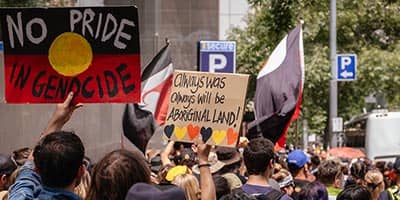
There is, however, a very, very small silver lining to this very, very large and ominous storm cloud. And that is we’re seeing an inkling of change. The rallies, and their arrest-free proceedings, are a start (compared to their American counterparts). Hundreds turned up in Sydney, and thousands in Melbourne.
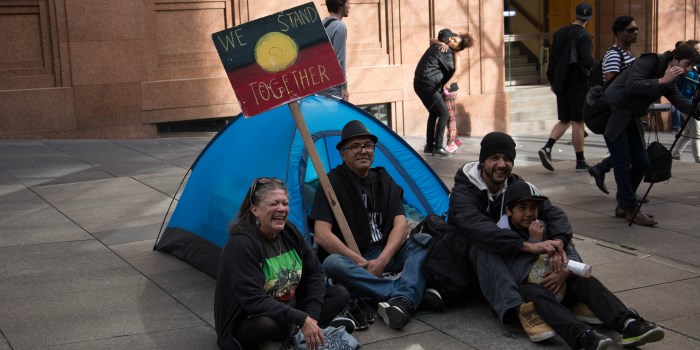
There were white allies amongst the crowd, recognising the voices of those who have been hard done by. When the Sydney protest march took a diversion through the crowded Pitt Street Mall, there were shouts of support and encouragement from all sides.
And, recently, the Liberal National member who lashed out at Senator Nova Peris was summarily dumped from the party (his membership to the NSW Chiropractic society, of all things, also placed under scrutiny) after being arrested and charged with racially incendiary hate speech.
His initial excuse (being hacked), followed by a limp “I’m definitely not a racist. I’ve got friends who are Aboriginal and family who are Aboriginal,” didn't cut it. Just last week, he released a public apology admitting his actions were inexcusable and wrong, which Nova Peris has accepted with a truly impressive amount of grace.
"I wish Mr Nelson well and hope that he reconciles with his family," she said.
The issues facing the Indigenous community are systematic and widespread. A single public admonishment isn't going to solve all the issues, and we as a society can't pat ourselves on the back for simply recognising the problem.
Perhaps it starts with volunteering. Donating. Attending rallies. Asking for better representation in public office. Paying attention to issues you might not have thought of. Taking a closer look at the Indigenous history of your local area.
Or, best of all, listening to what the Indigenous people around you are saying. They've been speaking for a very long time, and they have plenty to say.
Their lives, and their words, matter too.
If you or anyone you know needs help, support is available right now. Call Lifeline on 131 114 or Kids Helpline on 1800 551 800.
Visit ReachOut to get support to help you with everything from everyday issues through to tough times.
Anthony Pearce is one of Student Edge’s student contributors. Learn more about the contributors program.
Photos: Anthony Pearce.
Topics
Ref: be67a959-67d3-4e29-9491-a64b0047969b


Most Popular



Comments & Feedback
Share your opinion
Emoji cheatsheet Formatting Comment guidelines
I think its kinda shitty that ppl are co-opting the movement for a different purpose. #blacklivesmatter is for BLACK ppl. nobody else. first australians should create their own hashtag, rather than taking and repurposing ours.