Black Lives Matter: Speaking To A Baltimore Protester
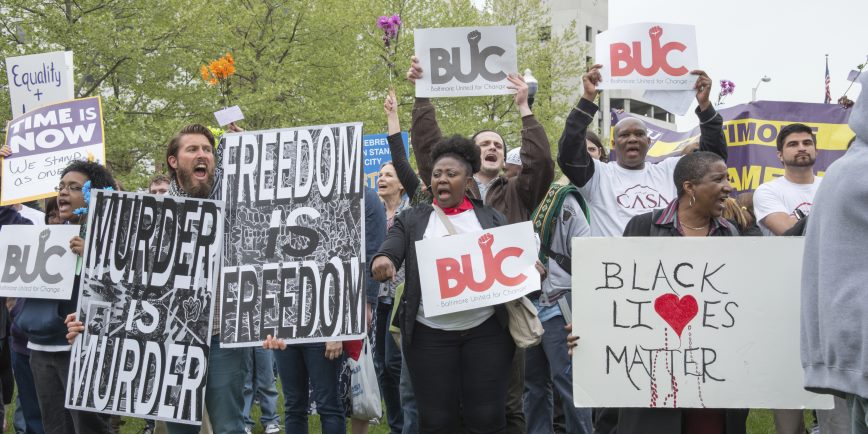
“The reality is, in America being black means that if you don't walk right and talk white, you aren't worth [anything]” says Jahdi from South Baltimore, USA.
‘Black Lives Matter’ is a civil revolution in a society where black lives are institutionally driven towards demise. It began in 2012 with the death of Trayvon Martin and the injustice surrounding his trial. The movement remains fuelled by the rage and emotions of those who actively oppose the racism still plaguing the American justice system.
Recently, riots were sparked in Baltimore after Freddie Gray – a 25-year-old African American man - was arrested for the alleged possession of a switchblade. During his arrest, he sustained a significant spinal injury leading to his untimely death. The what, the how and the why of the Baltimore riots runs deeper than the death of one man, however. It is a crisis eventuating with deeper systematic roots.
The ‘Black Lives Matter’ movement and Baltimore protests have captured the attention of the world. So, I decided to ask a local and my dear friend, Jahdi, to clarify the situation for those of us in Australia. Due to his participation within the rioting, he asked us to not disclose his last name. Nonetheless, Jah is a 19-year-old African American who resides in South Baltimore and was kind enough to answer my questions through Facebook.
First of all, Jahdi explained Baltimore is not the stereotypical American city many of us see on television. It lies in stark contrast to the affluence of Los Angeles and the opportunity exuded by New York. It is a land of decay; opportunities beyond the criminal are few and most citizens hate the police rather than trust them. “The police here are just so savage. They have no hearts, it's like they're androids programmed to just not [care],” Jahdi said.
From news reports, it would appear the African-American community has lost their hope in the current system and are also losing their sense of self. The justice system isn’t representing them, politicians have turned their backs and those who are artistically in a position of power aren’t doing enough. Jah believes that those few who hold influence are being overshadowed and the representation of the true struggle is being lost to the agendas of others. “There is a thin line between an opportunist and someone who genuinely cares about the city,” he said.
“[Rapper] Wale is such an important figure here, him being a Maryland native. So, him showing face just adds to our cause. But then you have people like [civil rights activist] Al Sharpton, this man who claims to care so much but has never put a dime into this community,” Jahdi continued.
The community is now representing their own needs through protest. It seems to have had some effect, with the news that six officers have since been charged in relation to Gray’s death.
Baltimore represents a community that, after decades of judicial failure and non-representation, has reached its breaking point, leading many such as Jah to shed their civil façade and unite to defeat a greater evil: racism and police brutality. “The reality is, in America being black means that if you don't walk right and talk white, you aren't worth [anything], he said. “I won't lie I have adjusted my vocabulary, character, morals, et cetera.” But with the awakening of the sleeping giant that is the ‘Black Lives Matter’ movement, Jah insists he can no longer stand idly by. “We don't wanna be rocked to the same lullaby anymore.”
Cassie Ngurah is one of Student Edge’s student contributors. Learn more about the Student Edge contributors program.
Topics
Ref: d46a1984-2bf1-4221-bbb9-a48f0066be8e



Comments & Feedback
Share your opinion
Emoji cheatsheet Formatting Comment guidelines