“Would You Have Ever Guessed I Was an Asylum Seeker?” Meet the Refugee Turned Human Rights Activist
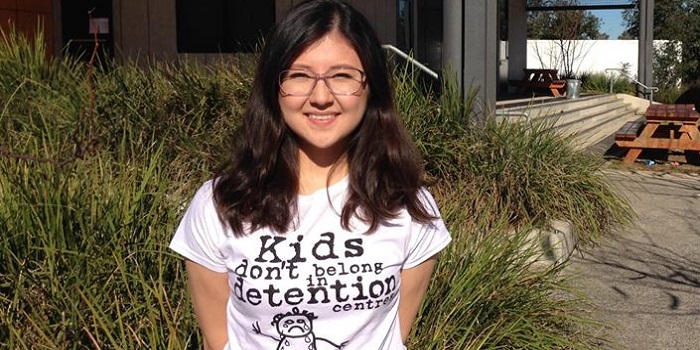
"There are people out there who care," she said with a smile.
In the year 2000, at the age of four, Gulnaz Beg fled Afghanistan with her parents and younger sister for a new life in Australia.
“The situation in Afghanistan [at the time] is that it wasn’t safe for us,” Gulnaz, now 20, told Student Edge.
“I’m part of the ethnic group called the Hazara. We aren’t just ethnically different; religiously we’re on a different spectrum too. The majority of Afghanistan is Sunni Muslim, [but] we are predominately Shia,” Gulnaz explained.
“We look different, [and] believe in a different variation of what Islam is… we’re also on a different political spectrum.”
The combination of being a sectarian and an ethnic minority has historically placed the Hazaras at risk of persecution and marginalisation.
For Gulnaz and her family, fleeing home was the hardest decision of their lives. “My mum sold everything she had in the house, including her engagement ring,” she recalled.
“It wasn’t an easy decision leaving everything behind… your identity, your family. Everything you thought was you, just left behind, [then] starting from zero, from scratch,” lamented Gulnaz.
The journey—by boat—was treacherous. In fact, the first time was unsuccessful because the engine broke down in the middle of the ocean; they were forced to turn back. As for the second attempt, there was apparently a hole in the boat and those on board frantically passed around buckets to get the water out.
Arriving in Australia, Gulnaz and her family were taken to Curtin Detention Centre in Western Australia. “When we came, conditions were much better,” she recalled. They had arrived before the massive influx of boats that came to Australia after 2001.
The family of four was assigned a “small white” demountable, with “a few beds, and a tap”.
“The thing about detention is everything’s scheduled," she said.
"In the morning, you [would] have to wake up; line up for breakfast, lunch and dinner."
“To this day my dad hates going to buffets because it reminds him [of detention]; for him, that was stripping off his pride, having to wait and line up for food,” said Gulnaz.
“Seventeen years down the track and it still hurts him.”
Eventually, the family was resettled in Brisbane where they lived in a shared apartment. The first thing Gulnaz’s father did after their release was look for employment. His factory job helped them save enough money to move into their own little apartment, and later, to Sydney.
The first day of school can be scary for most people, but imagine what it would have been like for four-year-old Gulnaz.
“My first day of school was so terrifying because I didn’t know English at all; [I] couldn’t read or write,” she said.
At the time, the family had only been in the country for a few months, so understandably, everything was very new.
“My kindergarten teacher brought everyone in and sat us all down. We were watching a movie or something, so she closed the door and dimmed the lights,” Gulnaz recalled. The teacher also locked the door.
“That freaked me out,” she said. “The first thing I did was run to the door and start banging on it… I was hysterical at that stage.”
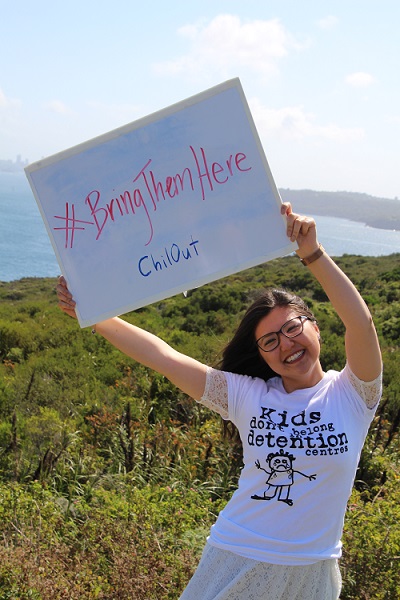
At just 20 years of age, Gulnaz is about to graduate with a Bachelor of Science from the University of Sydney. It was in her second year of uni that she stumbled across ChilOut (Chldren out of Detention) and is now one of its Youth Ambassadors.
At ChilOut she’s encouraged to share her story; one time, it even brought her to tears. After speaking at a church, one older woman sat down and held her hand. “She asked if she could pray for me,” said Gulnaz.
“I could feel the connection that was instantly built,” she said.
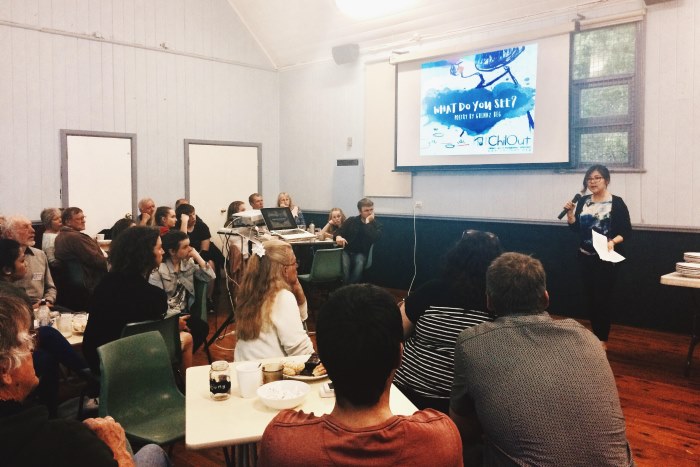
She has some advice for those out there who are trying to approach conversations about refugees with friends and family (friends and family who are—perhaps—not very empathetic about the refugee struggle). Gulnaz recommends you take the “we’re all human” angle.
“People connect to things that are personal,” she said.
“No matter what race or religion [people are], we all bleed the same blood.”
Other than that, she recommends talking to friends and family, or even writing to local members of parliament to say you care about the refugee plight.
“It’s important to show the younger generation cares about this,” she said.
In the meantime, you can check out our interview with Javid Jafari, 24, another inspiring ChilOut Youth Ambassador.
Photo: Supplied by ChilOut



Comments & Feedback
Share your opinion
Emoji cheatsheet Formatting Comment guidelines