Why Representation Matters, Especially in Rom-Coms (Like "Four Weddings and a Funeral")
Thank you, Mindy Kaling!
Romantic comedies have traditionally failed to represent people of colour. Maybe you're used to it. At first glimpse, you shrug it off or don't pay too much attention because romantic comedies are fun and light. But what this implies to an audience is that one type of story matters more than others, or that one life experience matters more than others.
Thankfully, there are writers out there like Mindy Kaling, who makes it her sole mission to place people of colour at the centre of her stories.
Her focus is to create inclusive tales that represent and portray people of colour in a way that’s not cliché, as she did in The Mindy Project and the film Late Night. More recently, in Mindy’s remake of the 1994 movie, Four Weddings and a Funeral—streaming on Hulu in the US but not yet available in Australia—she creates a diverse friendship group who fumble their way through love, heartbreak and, indeed, four weddings and a funeral. It's subtle, but appreciated.
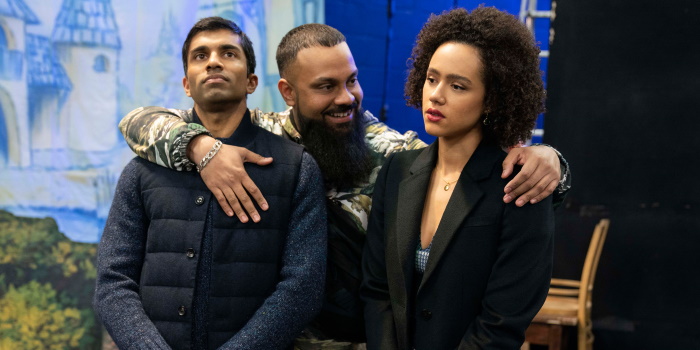
The main characters in Mindy's Four Weddings and a Funeral are compelling, and you do not need to be a person of colour to agree. For example, the lead couple is made up of a British-Pakistani man (Kash) and an African-American woman (Maya); a welcome shift from the classic Hugh Grant/Meg Ryan/Kate Hudson leads of old, as Mindy normalises mixed-race relationships and creates a broader mirror for people to identify with.
Kash (played by Nikesh Patel) is an investment banker who lost his mum and lives with his sick dad and younger brother. He also wants to quit his job and follow his dreams of becoming an actor. As an audience, you can relate to Kash’s love of his family and his commitment to following his dreams. Similarly, Maya (Nathalie Emmanuel) has a high-profile job as a political speechwriter and is incredibly loyal to her three best friends. A side plot is her affair with her married boss. Maya's strengths and flaws create the perfect protagonist because perfect protagonists are like unicorns: they don't exist! Idealising these characters wouldn't have served representation; showing them in all their flawed glory makes them fully rounded.
Mindy also uses her miniseries to highlight and normalise different types of weddings. For example, the series challenges audiences to reconsider their perceptions of traditional western ceremonies. One such example in the miniseries is a Pakistani wedding; a result of a couple who met through an arranged marriage program organised by the local mosque. It makes for an episode full of colour and celebration, but most importantly, serves as a stark contrast to the very western weddings we frequently see on screen. This decision to explore the role of an arranged marriage is both an informative and cultural experience for viewers. The Pakistani wedding also normalises 'non-western weddings' and processes of finding love. It tells audiences that it's okay to find love through your local mosque, or to be set up by an uncle or aunt. The use of this wedding sets Mindy's miniseries apart from the original movie that focused on very 'white', traditional, heterosexual weddings. The miniseries represents to audiences that it is more than fine for you to encounter romance (and perhaps even a wedding) through an arranged marriage.
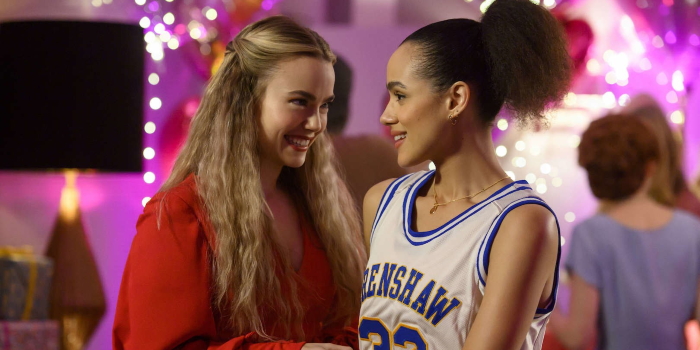
Storytellers and stories get to determine who is considered and counted in the public sphere. It’s an important responsibility. There's a theory called the 'mirror stage of development' that uses the metaphor of infants seeing themselves in a mirror as a crucial step towards recognising themselves as individuals in society. Similarly, this is what movies and TV shows do through characters and storylines: they create a mirror for people to identify with. The importance of storytellers and stories is that they can be the gateway for determining who is counted and discounted. Mindy's commitment to counting as many people as possible in her storylines is what makes her shows so compelling and essential.
Growing up, I identified with Jasmine from Aladdin, given she was the only 'brown' Disney princess. As I got older, my taste in films also developed. I learnt to identify with movies and TV shows by not seeing 'colour' on-screen and instead focusing on the storyline, the multidimensional nature of the characters and what they represented. Still, I’m glad that Mindy has successfully propelled the original Four Weddings and a Funeral into 2019 by prioritising diversity and creating authentic characters that remind us to, above all, love love. She proves, we can have both.
Header Image: Hulu
Topics
Ref: cb2b8a6e-98bd-48c7-84f7-aacb00a759a0





Comments & Feedback
Share your opinion
Emoji cheatsheet Formatting Comment guidelines