What It’s Like to Fast for Ramadan As a Young Aussie
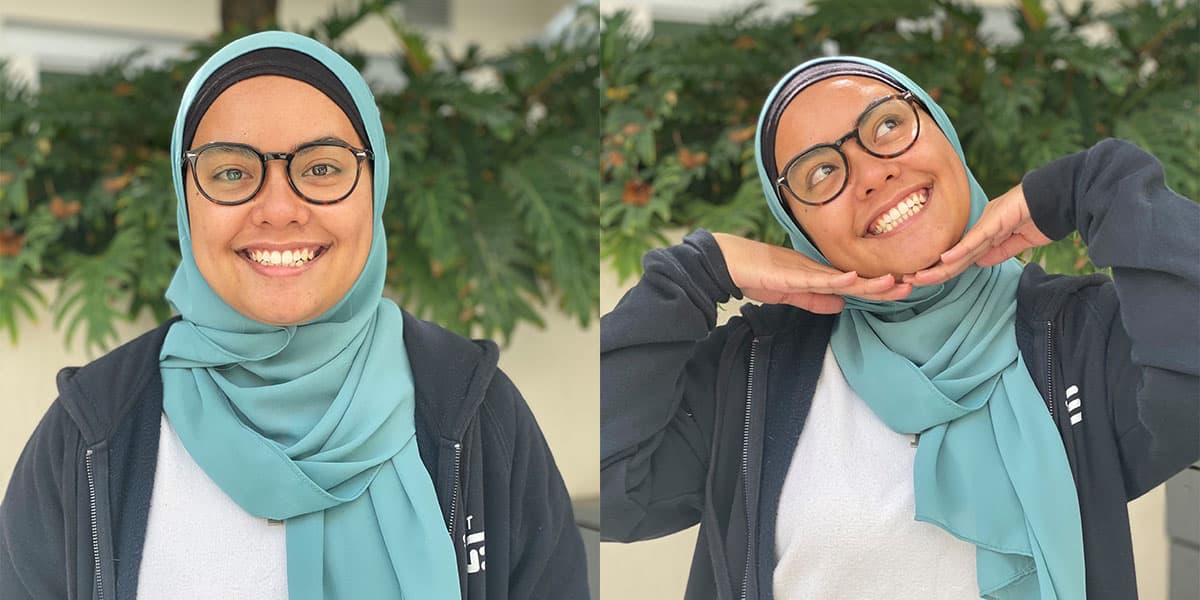
We asked our Digital Producer and Designer Intan to tell us her experience.
Every year on the ninth month of the Islamic Lunar calendar, Muslims all over the world participate in Ramadan, a month-long observation of fasting, prayer, reflection and community.
Even though Islam is Australia’s second most common reported religion in the 2016 census—at 2.6 per cent of Aussies—not all schools and young students know about the religious practice, what it means and how to support their Muslim friends and peers during this time.
To give you all the deets, we asked Student Edge’s very own Digital Producer and Designer Intan Badrun to tell us about Ramadan, Eid, fasting and what it is like to participate in it at school and work.
So, whether you’re starting your fast this week or you’ve never heard of Ramadan before, we’ve got you covered.
What’s it like to fast in Australia?
Intan’s experience going to school in Australia might be different to most Aussie students ‘cos she went to both public and Islamic schools.
She explains that it was a lot easier to participate in Ramadan when she was attending an Islamic school because all of her peers were also fasting with her. However, in a public school it was a little bit harder, especially when she had to go to cooking classes.
“When I was back in a public school it was difficult in the sense that we had cooking classes for example, so I couldn’t eat what I cooked,” she says.
“It wasn’t that hard but at the same time I wanted to eat what I had just made so I had to wait and take it home, which is fine.”
Intan also found that many people around her didn’t already know about Ramadan or even what fasting was, but has discovered that more people and businesses are learning about it and celebrating Eid.
“One of the places I used to work at, they actually had Ramadan decorations,” she says.
“I feel like it is a well-known thing in Australia, but at the same time I feel like it’s not.
"Obviously for me it’s something I know about but then when I meet some people they’re still like, ‘Oh what’s Ramadan?’"
So, what is fasting?
So, if you’re about to fast for the first time or have never heard of it, fasting is essentially when you abstain from all or some kinds of food or drink, and it’s not just an Islamic or religious practice.
Intan explains that fasting for Ramadan is as an act of prayer but also to show compassion for people who have less.
“Fasting is one of the main five pillars of Islam. It’s an act of worship, a chance to get closer to God, become more compassionate to those in need, and seen as a way to practice and break out of bad habits,” she says.
“We live in a world where not everyone is rich. There are some people who are quite poor and can’t afford to have basic necessities. So, our fasting allows us to feel how they feel.”
When is Ramadan and Eid?
You might be confused about what the Islamic Lunar calendar is. Also known as the Hijri, Lunar Hijri, Muslim or Arabic calendar, the Lunar calendar is tied to the Moon’s phases and is used to determine the dates of Islamic holidays.
“With Ramadan, it depends on the sighting of the moon, so our calendar is based on the Lunar calendar," she says.
"When there’s the new moon, once we sight that, that’s when we begin the starting of a new month and Ramadan, and the same goes for Eid.
“Eid is pretty much just the end of fasting for Ramadan and what we do is we pray and we give charity. It’s a huge social gathering, there’s festival meals and gift-giving, so it’s kind of like our version of Christmas.”
Can I fast even if I’m not Muslim?
Short answer: of course! No matter what your religion is, you can participate in Ramadan and fasting as a way to be compassionate, have a better understanding of what your Muslim mates are experiencing and even give back to the community.
“If you’re ever interested to know what your fellow Muslim friends are going through you can give fasting a go for a day or a week or even the whole month if you want to,” Intan tells us.
“You can provide food for those in need. There’s heaps of people that can’t afford to buy food, so regardless of whether they’re Muslim or not, go around and give food to those in need.
“Perhaps help out your friend that’s fasting because they may not be going to a Muslim school, so a lot of their peers around them aren’t fasting and it might be hard for them, especially when it comes to cooking classes.”
There is a lot of other info on Ramadan, so if you're keen to learn more about fasting and Ramadan you can read more here. Plus, if you’re looking for a Ramadan calendar specific to your state, you can grab one on the maa international website.
If you want to donate money or food to those in need you can check out Food Bank, Australia’s largest hunger relief charity.
Header Image: Supplied
Topics
Ref: 5c413a28-2a99-4ca7-994d-ad09007d8a0f






Comments & Feedback
Share your opinion
Emoji cheatsheet Formatting Comment guidelines