What Are Your Options if You’re Renting During the COVID-19 Pandemic?

What even is a moratorium?
Due to the coronavirus (COVID-19) pandemic millions of people have lost their jobs or lost the option to work because of social distancing shutdowns.
With so many out of work there has been a lot of worry and uncertainty about how tenants and landlords will meet in the middle.
Because the impact of the pandemic is out of our hands and affecting so many, the federal government announced in March that they would enact a moratorium on rental evictions for six months.
As the moratorium is yet to be signed into law, landlords and tenants are still confused about how it works, what their rights are and what options are available to them.
But what about share house tenants? And how are the states enacting it?
We’re here to answer all these questions and more.
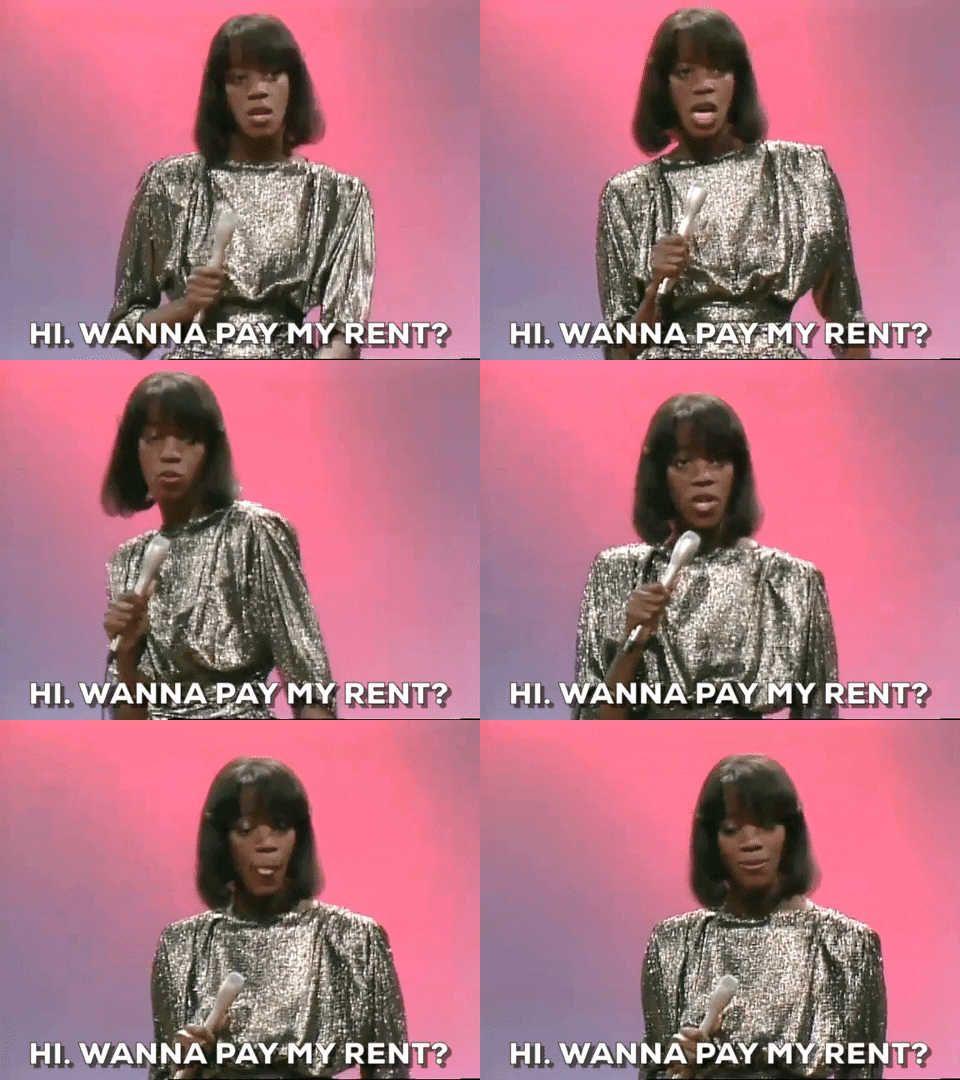
What even is a moratorium?
Basically, a moratorium is just a fancy way of saying a temporary ban on an activity or a law and, in this case, rental evictions.
Because the coronavirus pandemic has left so many people without work and therefore pay, the government has announced a moratorium on rental evictions for six months, so that if you are in a tough situation with work and can’t afford your rent anymore, your landlord can't make the situation harder for you by kicking you out of your place.
To be clear, just because there is a moratorium on rental evictions does not mean that you can just stop paying rent if you still have a job and can still afford it.
However, share house tenants are in a particularly sticky situation because roommates don’t always share a property the way that a couple or family might.
Most share house tenants split the rent with other roommates because it is the most cost-effective option available to them, whether they are studying or just looking to live in their dream location at a more affordable cost.
In most cases, when a roommate is struggling financially, they make the choice to move out, leaving the other tenants to cover the cost of the rent.
This can put a lot of pressure on some tenants as they may have been reliant on rent from other roommates to get by.
If you are in a situation where you have lost income or a roommate, you can attempt to negotiate with your landlord to pay a reduced amount or no rent for a short period.

This may be an option for you as landlords may find it much more difficult and expensive to replace you as a tenant if you choose to leave.
To help further protect tenants and landlords, the states are amending their own tenancy laws, to help protect tenants and landlords.
So here are the tenancy laws in your state or territory:
New South Wales
In NSW, the state government announced that a six-month moratorium on evictions would apply only to households that had lost at least one-quarter of their income.
The state government has also said that it is the responsibility of landlords and tenants to negotiate rental payments and pauses.
Any rent that goes unpaid by the tenant during the moratorium will require repayment in arrears.
After the six-month moratorium, landlords can proceed with eviction if they are in financial hardship, but tenants will not be blacklisted if this occurs.
Queensland
The QLD government has also enacted a six-month moratorium on evictions, which will affect all renters experiencing financial hardship due to the coronavirus.
All plans must be negotiated by tenants and landlords and any unsettled deals are being advised to go to the Residential Tenancies Authority for mediation.
Unlike NSW, the QLD government has also announced that tenants who have outstanding rent during the moratorium will not have to repay the difference.
Victoria
In VIC, the state government has not made any statements on how it will enact the moratorium.
Instead, renters are being encouraged to continue paying their rental costs in full until a written agreement has been achieved between the landlord and the tenant.
In the case of an eviction notice, tenants can take the matter to the Victoria Consumer Affairs Tribunal.
ACT & The Northern Territory
Unfortunately for now, neither the ACT or the NT have announced or enacted the moratorium into their local laws.
Tasmania
In TAS, the state government has announced a 120-day emergency period into its Residential Tenancy Act.
The 120-day period is in place until 25 July and can be extended by another 90 days if necessary.
During this period, tenants cannot be evicted for financial differences, however once the 120-day period is up, landlords can still issue a notice to vacate.
In cases where tenants agree or landlords make a successful financial hardship application, leases can still be terminated during the 120-day period.
South Australia
Like the QLD government, SA is enacting a moratorium on rental evictions for tenants who have lost their income or employment due to the coronavirus pandemic.
The SA government has not announced if outstanding rent will require repayment following the pandemic.
Western Australia
The WA government is still ironing out the details of the state's tenancy laws but are in the process of enacting the moratorium.
For now, the state government is encouraging tenants to pay whatever rent that they can and both landlords and tenants are being asked to discuss alternatives until the moratorium is formally in place.
If you are struggling to make rent or are stressed about finances because of the coronavirus, head to the Centrelink website and register your intent to claim.
If you’re looking for more advice and want to find out what other services are available to you during this difficult time, head to the Student Edge home room page; we’re here to help.

Header Image: AntonioGuillem via Getty Images
Topics
Ref: 6e1fbc46-df3e-40a7-9054-ab9e005b6a7b



Most Popular



Comments & Feedback
Share your opinion
Emoji cheatsheet Formatting Comment guidelines
Good luck everybody. Best wishes.