Welp: New Education Reforms Won’t Let You Coast on an 'A' Anymore, May Scrap Grades Altogether
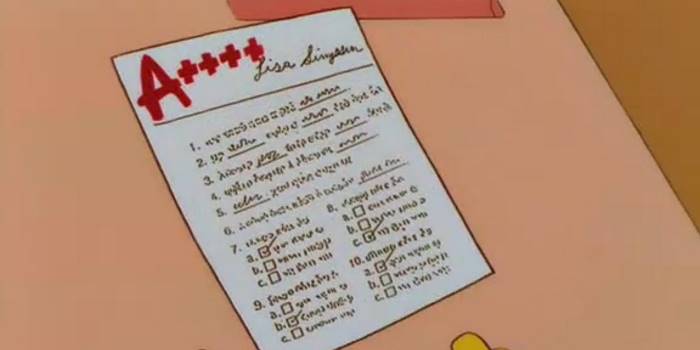
A comprehensive—and controversial—report on education in Australia has savaged the concept of A – E grades.
Though that may sound like sweet, sweet music to your ears, it doesn’t suddenly mean your essays will be marked with emojis.
Rather, the report has largely criticised the way in which schools have allowed high-performing students to cruise on an ‘A’ grade year after year. Slackers!
"There’s too much coasting and cruising," Prime Minister Malcolm Turnbull said in response to the report, prepared by David Gonski (more on that below).
"Every child should advance by a year whether they’re an A-grade student … if they’re getting As, they should be moving up to A-plusses, if they’re a B, they should be moving up to As and so forth."
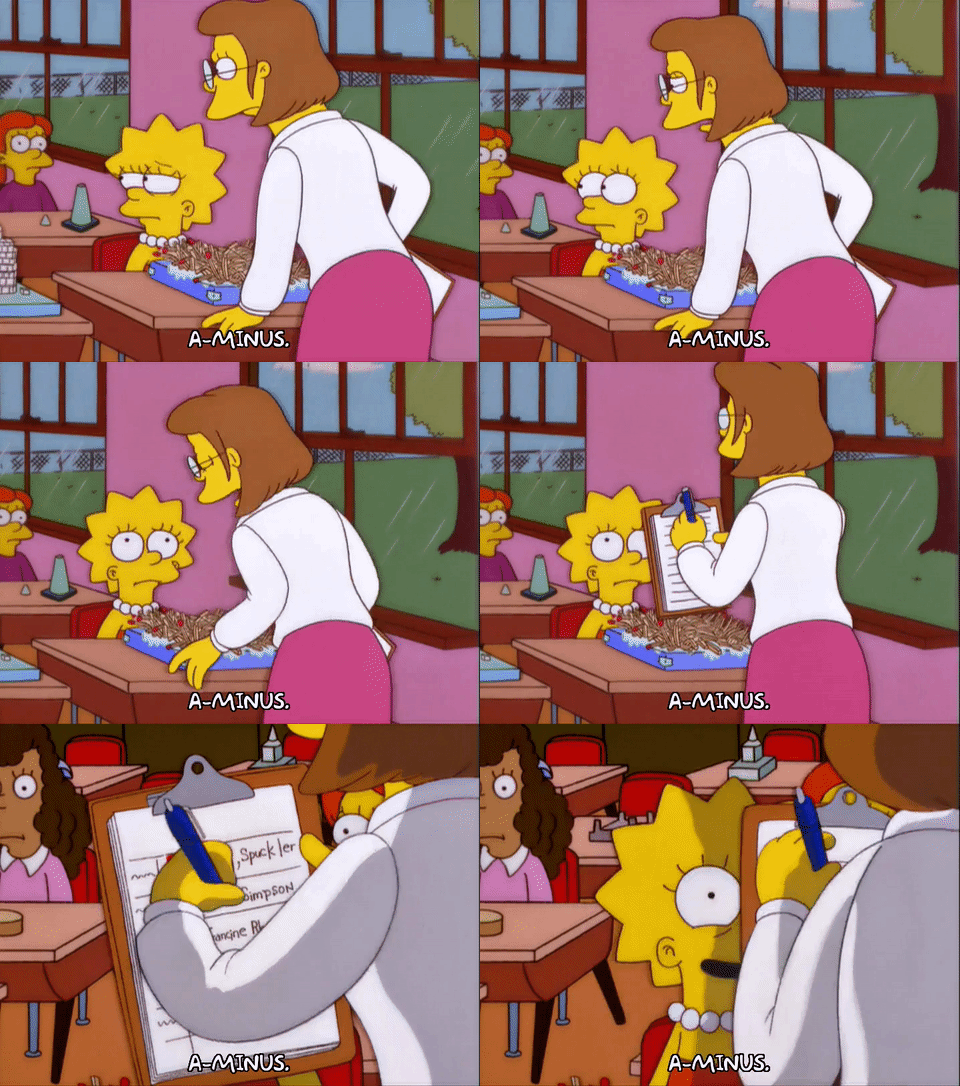
"But what if I'm already averaging an A-plus?"
If that’s something you indeed just asked aloud to yourself, congratulations: you have what we call a 'champagne problem'. But, nonetheless, it’s fair question!
As the report puts it, the current evaluation system can "lead to a situation where a student who receives a 'D' year after year is perceived as making no progress at all when, in reality, the student might be making as much annual improvement as a student who consistently receives an 'A'."
This, the report argues, "can have a negative impact on students’ learning aspirations."
"Less-advanced students who manage to improve significantly over the course of a school year are likely to become demotivated when their efforts are not adequately recognised. Similarly, academically advanced students may become demotivated if not challenged. This attitude is likely to be reinforced in a 'cruising' school with no impetus to improve results."
So, the solution proposed by the report is having teachers monitor "advanced" students’ progress and setting "challenging learning targets… rather than assuming year-level achievement standards are sufficient."
This means, in theory, if you’re an A-plus student, you will be continually challenged to keep exceeding, to realms beyond those of any A-plus student before you, or any A-plus-plus student, or, to even the hallowed heights of A-plus-plus-plus student Lisa Simpson.
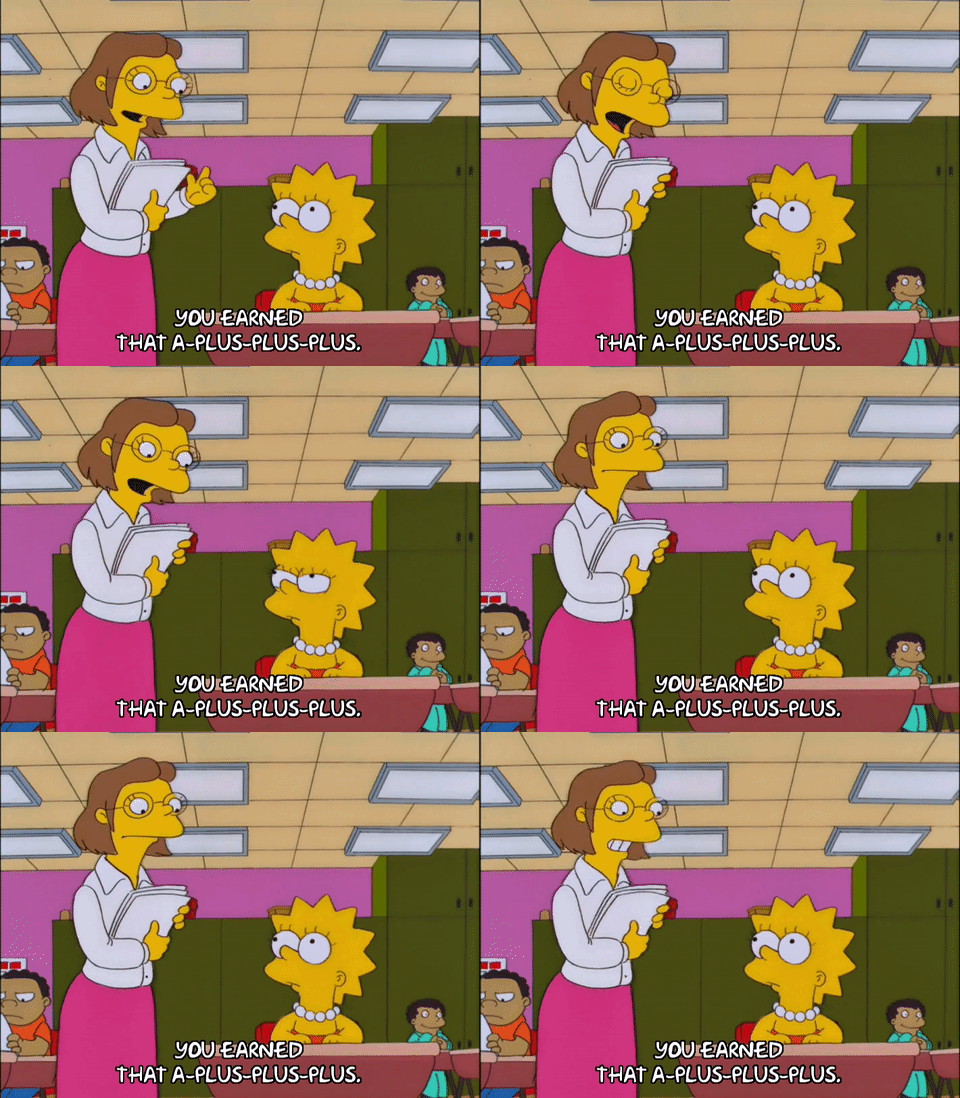
Where we’re going, we don’t need plusses.
"Wait, what’s a Gonski?"
David Gonski is the Aussie businessman who's now behind two independent reviews of Australia’s education system, commissioned by two different federal governments.
His latest report dropped this morning, just in time for Term Two, and it didn’t pull any punches, saying, "declining academic performance" in reading, science and mathematics since the year 2000 has resulted in "a generation of Australian school children falling short of their full learning potential".

"What does the report recommend (and skip to the stuff that's only likely to affect me)?"
You don’t want to hear about the suggested rewards for high-performing teachers? Fine.
The report has called for the introduction of a new online assessment tool "to help diagnose a student’s current level of knowledge, skill and understanding, to identify the next steps in learning to achieve the next stage in growth, and to track student progress over time against a typical development trajectory." Sounds like a pretty nifty tool. (NB: No such tool exists yet.)
The report also noted the "limitations" of the Australian Tertiary Admission Rank (ATAR) and National Assessment Program – Literacy and Numeracy (NAPLAN) to evaluate student performance, citing the way in which universities look beyond ATAR when selecting applicants. Instead, the report is recommending "personalised" learning plans for students that tracks progress over the course of the year.
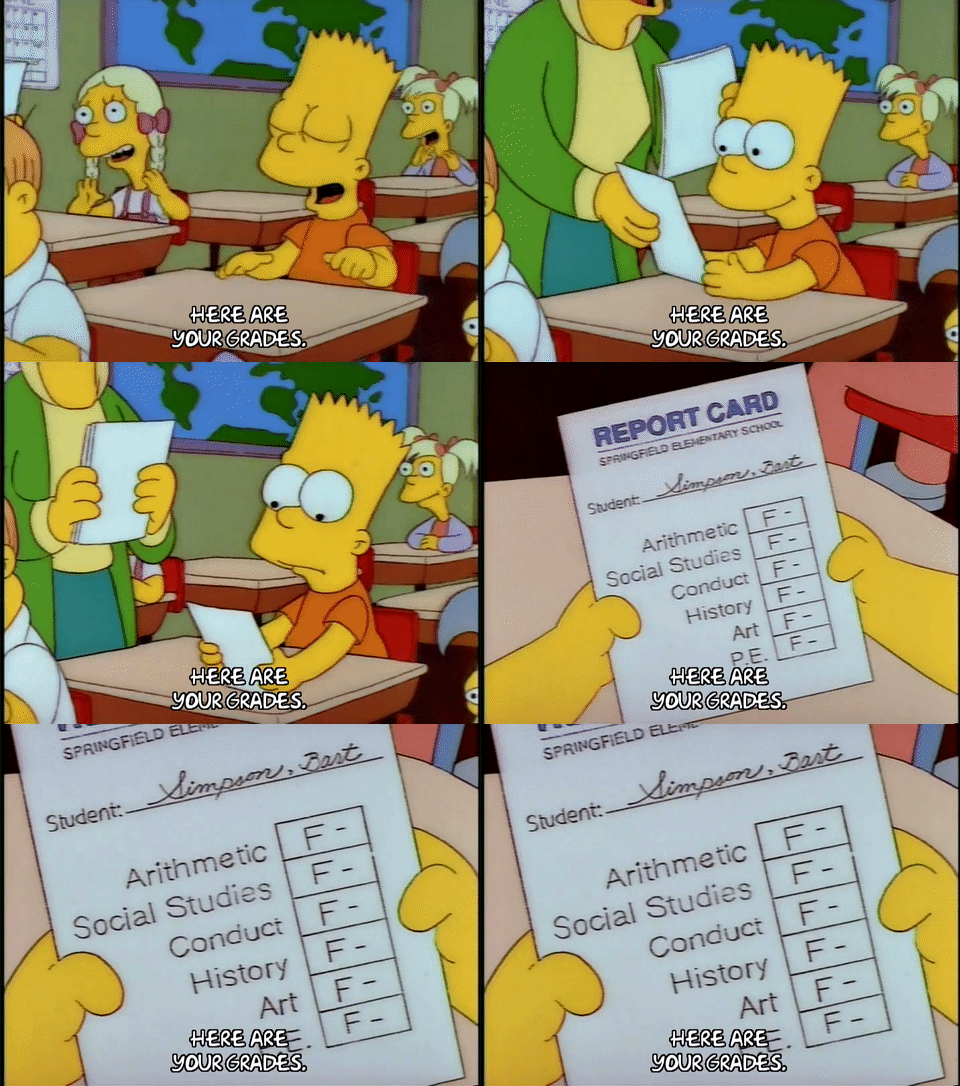
Great! So, no more NAPLAN or ATAR?
Woah, you are jumping way too far ahead.
These are just recommendations, and even though Prime Minister Turnbull is all-in, accepting all the report’s recommendations, Education Minister Simon Birmingham has the difficult task of getting the states to implement them too, or—for extra difficulty—developing a national schooling agreement.
If everyone agrees, you might see some of these changes implemented as soon as 2019.
Watch this space.
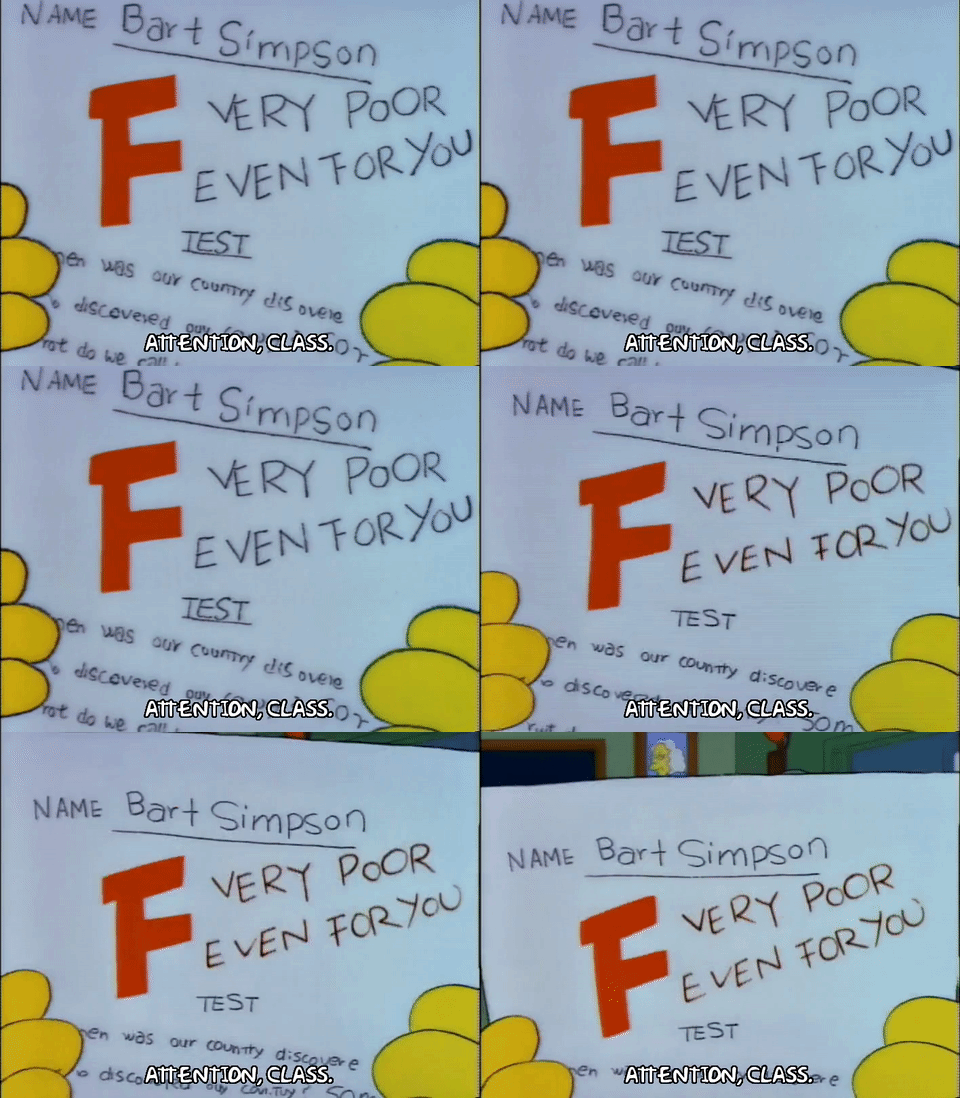
Photo: Fox
Topics
Ref: 220460e5-e49f-4bb7-8f90-a8d2009ad9c2



Comments & Feedback
Share your opinion
Emoji cheatsheet Formatting Comment guidelines