Thousands Of Civilians Evacuated From Aleppo After Ceasefire Deal
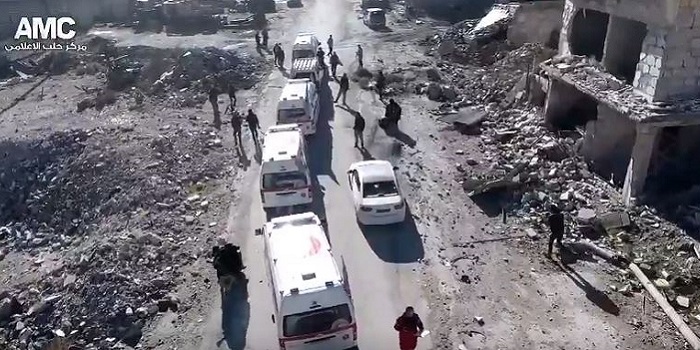
An operation to evacuate civilians and fighters from the last rebel stronghold in Aleppo has begun as part of a ceasefire deal which could end years of ongoing civil war.
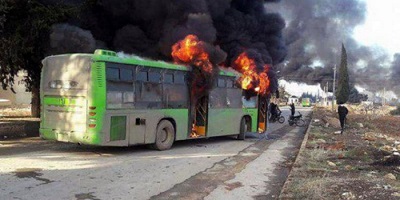
Fairfax reports a convoy of ambulances and buses holding roughly 1000 people filed out of Aleppo. The rebel held area had come under heavy bombardment for months by Syrian government forces. Now it is in shattered ruins.
According to Reuters, the International Committee of the Red Cross (ICRC) said about 3,000 civilians and more than 40 wounded people, including children, have already been evacuated.
As you read this, thousands of families are evacuating from their homes in #Aleppo. pic.twitter.com/ALMm2rC2tK
— AJ+ (@ajplus) December 16, 2016
Rebel fighters will be allowed, under the ceasefire, to leave Aleppo for other areas outside of government control. Robert Mardini, ICRC official, told Reuters there are no clear plans yet about how rebel fighters will be shipped out.
There are still thousands of people in need of evacuation. Staffan de Mistura, the U.N. special envoy for Syria, said about 50,000 people remain in the rebel-held city. It’s estimated 10,000 would be evacuated to nearby Idlib province and the rest would relocate to government-held city districts.
After years of suffering and bloodshed, this Syrian man is overwhelmed as they evacuate Aleppo. pic.twitter.com/kVyAvo0Aen
— Top Islamic Tweets (@Maestrouzy) December 16, 2016
U.S. Secretary of State John Kerry described Syrian government actions as “nothing short of a massacre”.
Where there once was a flourishing hub of commerce and community, the Aleppo of today is a wasteland of flattened buildings, rubble and bullet-thrashed walls.
Reuters reports the Syrian civil war has resulted in the deaths of more than 300,000 people, causing the world’s worst refugee crisis and giving rise to the Islamic State.
#Aleppo #Syria kids in an orphanage pleading to be rescued! #Obama? Nothing in 5 years of conflict in Syria to save humanity! @ofirzarfati pic.twitter.com/ivpb8QyA6b
— Michael Harris (@michaelharrisdr) December 15, 2016
An English teacher in Aleppo said most people were happy to be leaving safely, but for others it’s bittersweet.
“Some of them are angry they are leaving the city,” he said. “I saw some of them crying. This is almost my feeling in a way.”
Photo: Twitter (@Conflicts)




Comments & Feedback
Share your opinion
Emoji cheatsheet Formatting Comment guidelines