Sydney Woman’s Petition Reveals Over 2,000 Alleged Sexual Assaults in Australian Schools
Trigger Warning: This article discusses sexual assault.
Over the weekend, former Kambala School student Chanel Contos posted a poll to her Instagram account, asking her followers this question: "If you live in Sydney: have you or has anyone close to you ever experienced sexual assault from someone who went to an all-boys school?"
In just a few hours, Contos received over 300 responses to the poll, with a staggering 72 per cent of replies answering "yes".
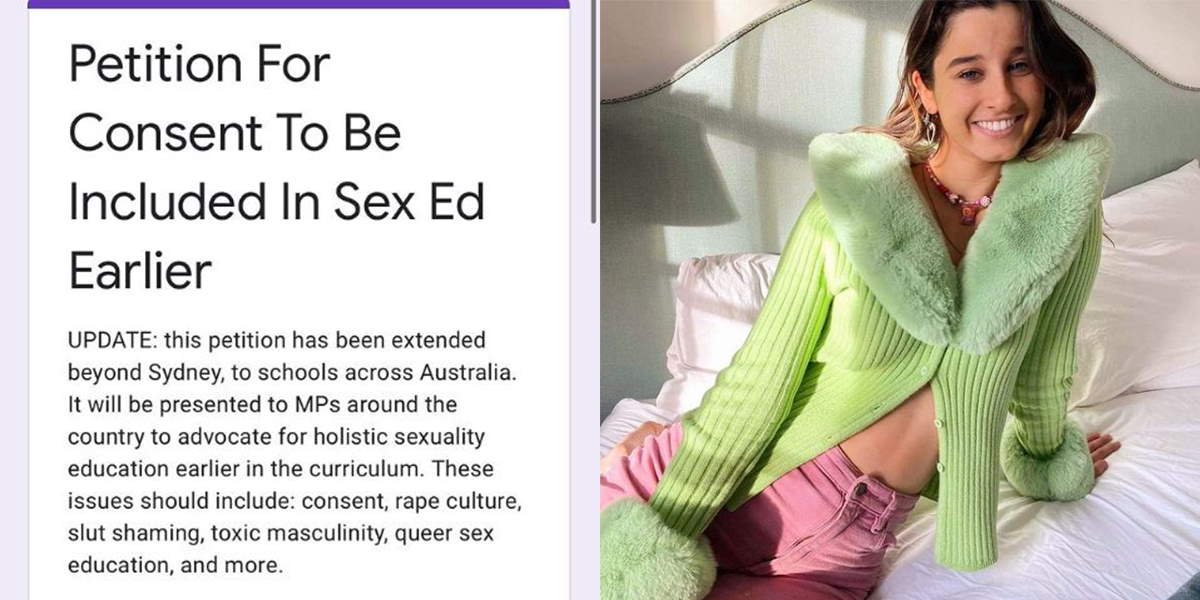
This response prompted her to start a petition calling for consent in sex education classes to be introduced to students from a younger age.
"Kambala provided me with life-changing education on consent for the first time in Year 10. However, it happened too late and came with the tough realisation that amongst my friends, almost half of us had already been raped or sexually assaulted by boys from neighbouring schools," she wrote in the petition.
"As a collective, we call for sexual consent to be at the forefront of educational issues in your school, from a young age."
At the bottom of the petition page, there is a section where individuals can anonymously share their personal accounts of alleged sexual assault and/or rape that they have experienced during high school.
The petition now has over 14,000 signatures and over 2000 testimonies—some from girls as young as 13. With permission, Contos has shared some of the anonymous testimonies that have been submitted.
"Those who have signed this petition have done so because they are sad and angry that they did not receive an adequate education regarding what amounts to sexual assault and what to do when it happens," Contos said in an Instagram post.
"These are uncomfortable conversations to have with young teenagers, but it is far more uncomfortable to live knowing that something happened to you, or a friend, or perhaps that you were even the perpetrator of it, and it could have been avoided."
The news of the petition comes just a week after a former Liberal Party staffer, Brittany Higgins, publicly alleged that she was raped at Parliament House in Defense Minister Linda Reynolds’ ministerial office by a colleague in March 2019.
In a report by news.com.au, Higgins tells the story of her alleged assault that has since sparked outrage about the treatment of women in parliament. Australian Prime Minister Scott Morrison has been heavily criticised for his response to Higgins' rape allegations.
Since the allegation was made on Monday, another three women have come forward to make a complaint about the man who allegedly raped Higgins.
So, what is sex-ed in Australia like?
Although Australia has a national curriculum for all schools, education and the delivery of that curriculum remains a state responsibility, and the states and territories often deliver the national curriculum in different ways.
This means that the type and quality of sex education that a student recieves could vary depending on the their state, territory, school or even teacher.
The NSW Government Education Department states: "Students learn about many aspects of relationships, sexuality and sexual health. This includes learning about body parts and puberty in primary school, to rights and responsibilities in sexual relationships and planning and managing sexual health in high school."
"Students learn about the qualities of caring and respectful relationships, recognising abuse and protective strategies."
While the NSW governement appears to have a comprehensive approach to sexual education, there is no explicit mention of consent and what it means.
Additionally, there also seems to be a lack of education around sex positivity, LGBTQI+ relationships and intimacy, which is commonly being requested by some Australian students.
What if you're still not sure what consent is?
If you’re still a bit confused about what constitutes consent and you're no longer in high school, don't stress. There are heaps of online resources that you can use to broaden your understanding.
According to ReachOut.com, sexual consent must be explicit. It's vital to check in with your partner because you can't just assume they're as into it as you are.
Additionally, your partner is always free to change their mind. Even if they originally said "yes", both people should stop if someone is uncomfortable.
Drinks and drugs also affect consent. If your sexual partner is drunk or under the influence of drugs and isn't sure what's going on, they cannot give informed consent.
Both Ms Contos’ petition and Ms Higgins' story contribute to an ongoing and highly important discussion around sexual assault, consent education and the treatment of women in Australian schools and workplaces.
If you would like to sign Ms Contos’ petition and/or make a testimony, you can find it here.
Are you experiencing suicidal thoughts, sexual assault or domestic and family violence? Seeking to support someone who is? Call Lifeline on 131 114 or Kids Helpline on 1800 551 800.
Visit ReachOut to get support to help you with everything from everyday issues through to tough times.
Header Image: Instagram (@chanelc)
Topics
Ref: 895e5396-c028-4198-aa34-acd700796cd9






Comments & Feedback
Share your opinion
Emoji cheatsheet Formatting Comment guidelines