The Truth About Relationships: A Sexologist Debunks the Myths Around Valentine’s Day & Self Love
Navigating the world of love, identity and relationships can be strange at the best of times, and you’re not on your own if Valentine’s Day confuses or stresses you out.
Perhaps you’re feeling the pressure to get swept off your feet, or you’re still figuring out who you are, and who you want to be with.
We’re here to let you know that’s okay — there are totally valid reasons you feel this way, and there are things available in your life to help you understand it.
We sat down with counsellor and sexologist, Erika Shaw, to share some hard, important truths we all need around this time of year, as part of our February Series on Relationships.
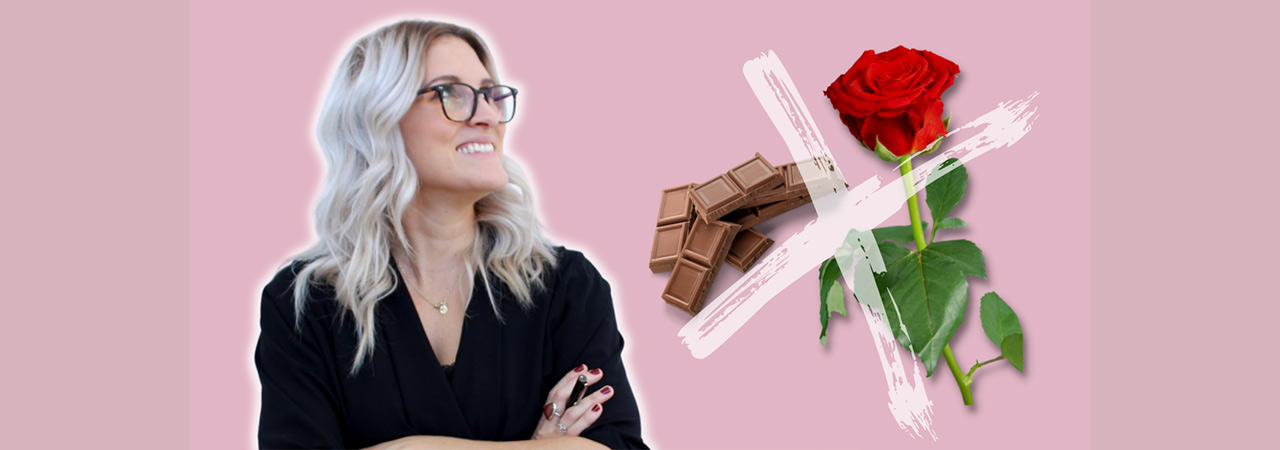
 Meet Erika. Image: supplied
“The generation that raised us caters a little bit more to the white picket fence.”
Erika says most of us have been shown how to love by a generation that communicates differently to us.
“We’re sort of up against this romanticised ideal of the white-picket-fence love, whereas now there’s a lot more expectation to know who we are, and what we want.”
It’s what happens from generation to generation, but our jump has been a little more significant.
We’ve heard it all before, but social media has played a big part in how we perceive relationships with partners, friends and ourselves.
“We're kind of navigating this whole world on our own, and the instant-ness of social media can cause issues,” Erika says.
She adds that it’s super common to feel like you don’t connect with what you see online, and why you might not feel represented. But that's completely normal and valid.
All relationships are hard work, and there’s a spectrum.
Let’s be real, you’d probably feel less inclined to hit like on a social post that shows a couple arguing with each other as they work through their issues. But in reality, this is what happens every single day.
“I promise you what you're seeing on a movie or social media is the tip of the iceberg, you have no idea what those people are dealing with and what they're going through,” Erika says.
She says commitment and relationships can sometimes feel like lonely, hard work.
“What one person and relationship stays through, you might not be able to, but also what you accept in your relationship might be something somebody else couldn't accept.”

Nurture your friendships.
This might all seem a little dim so far, but it doesn’t have to be! There is love beyond traditions, and the foundations of friendship are similar and applicable to romantic relationships too.
Erika encourages taking moments to show gratitude for how you’re already being loved by the different people in your life. Spoiler alert: they’re doing it all the time.
She says even though romantic relationships and friendships are seen differently, “we can actually apply a lot of the same principles across both, and deepen both sets of relationships.”
She says by nurturing your relationships with friends, you’re also forming your own views from real people who love you, rather than from movies or social media.
“Instead of looking at what you feel you might not be getting, i.e. presents, roses, someone running through the airport to tell you they love you, or ‘movie love’, consider ‘well, wait, how does my best mate show me they love me?’”
So, why not see what your best pals are doing this V-day instead?
Self Love vs Self Acceptance
It’s in our nature to look to other people for love, but Erika says there’s nothing more important than “spending whatever time you can nurturing the relationship with yourself.”
And no, she doesn’t mean the often “over-the-top, inaccessible” self-love movement. Erika prefers the term “self-acceptance”.
She says it’s a constant work in progress, and it’s a give-and-take.
“There’s this idea that you have to love yourself in order to love other people or be loved,” she says.
“We should always be working on loving ourselves, don't get me wrong, but it's not like you get to a certain place and then suddenly you're able to have a relationship that's romantic or good friendships.”

Here’s the kicker, too: you are not failing if you don’t love yourself yet.
“Sometimes it's a little bit liberating to go ‘oh, great. I don't have to think I'm awesome all the time. I can actually, you know, be realistic and accept that I’m just human.’”
Erika says this takes time, and it’s a lot easier said than done because “it's easy to go and watch Instagram reels or do something that distracts you, rather than sit in any discomfort.”
But whatever stage of the journey you’re at, she says “you have to try to find that acceptance for yourself. You can’t rush it, and it’s a constant work in progress.”
Header Image: Supplied