Roots & Shoots: How Young Australians Are Stealing Back Nature’s Future One Shoot at a Time
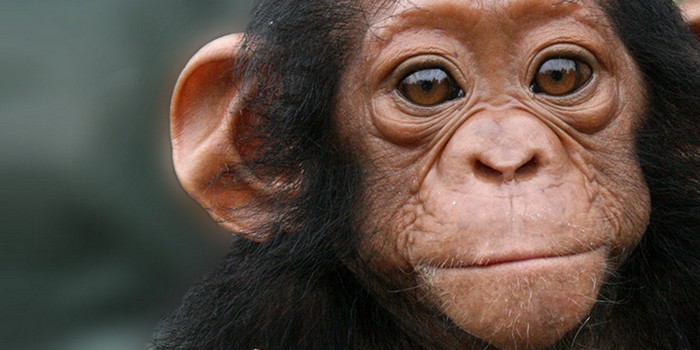
Saving the world’s animals from the adverse effects of humanity sounds like one of those impossibly colossal tasks, alongside ending world poverty and stopping climate change.
For the world-famous conservationist Dr. Jane Goodall, however, it's all just part of her day job.
Since 1960, when she first found herself in Tanzania’s Gombe Stream National Park, Dr. Jane has been championing the conservation of animals and their natural habitat around the world. Seventeen years after her first encounter with the chimpanzees of Tanzania, she founded the Jane Goodall Institute, which aimed to address some of the issues many of the world’s species were facing: illegal hunting, trafficking and habitat destruction.
But this story starts a few decades later, with the Roots & Shoots organisation, which first opened its doors in Tanzania in 1991 and has spread to more than 140 countries, including Australia.
It focuses on empowering youth to get involved in animal and habitat conservation and starts small with local projects, so that kids from anywhere can get involved, regardless of whether they live in the city, country or somewhere in-between.
If you want to save the world's most precious animal species, you don't have to be the next Dr. Jane. Through the Roots & Shoots organisation, you can help to make change while still attending your history and mathematics classes.
Natasha Coutts, National Roots & Shoots Coordinator in Australia, told Student Edge it’s a great way to get young people motivated to make a change.
"The whole idea is to give youth the power and the motivation to take on projects or challenges that they identify need to be addressed," she said.
So, how do school-aged children in Australia stop animals from getting hunted to extinction on the other side of the world?
Natasha explained that they help to contribute to projects run by people who have the ability to do things on the ground in affected areas. Roots & Shoots runs campaigns based on school semesters, so that students can focus on hitting achievable targets.
"Every young person wants to create change because it creates change for their future," 17-year-old Claire, from Roots & Shoots' National Youth Leadership Council, told Student Edge.
The council puts young Roots & Shoots members in youth leadership roles, to help drive the conservation message home to their peers.
Here's the #NYLC that runs the @janegoodallau #socialmedia. Just wanna say #thankyou for following and supporting. Love you all ❤️ pic.twitter.com/fWSxSvuUkz
— Roots & Shoots AU (@Roots_Shoots) July 12, 2017
Some of Roots & Shoots' biggest campaigns include: mobile phone recycling, where the funds are sent to a chimpanzee sanctuary in the Republic of the Congo called Tchimpounga; campaigning for palm oil labelling; as well as a design-your-own campaign for the final semester.
"We have kids who have identified drops in populations of pollinators in their areas, so they’ve established native pollinator gardens to try and help bring those back," Natasha added.
"We've [also] had a group in Victoria who identified a local reserve that had become quite degraded, so they all worked together to regenerate it. They planted trees, they cleared out all the rubbish and now it looks like it’s doing quite well.
"These things are small, but they do have a big ripple effect."
There wasn’t always a push towards educating young people about conservation. When Dr. Jane Goodall first started interacting with the chimpanzees in Tanzania in the '60s, people were only just starting to understand the horrific nature of human impact on animal populations and their habitats.
"I think the general consensus on conservation and our need for action has definitely improved [since Jane Goodall started in the 1960s]," Natasha admitted, optimistically.
"It’s definitely on the minds of a lot more people than it was 20, 30, 40 years ago."
Despite conservation efforts coming to the forefront of zoos and wildlife parks, there is still quite a way to go.
"We’re seeing, in a lot of circumstances, failure of government to take up the call-to-action and make the large-scale changes that need to happen in order to make a real effect on conservation of species both locally and internationally," Natasha said.
One of those conservation initiatives that Australia's government has failed to act on is the labelling of palm oil. Palm oil is the most produced vegetable oil in the world and has already destroyed about 80 per cent of the orangutan's natural habitat in South East Asia.
The Jane Goodall Institute has been pushing to clearly label products containing palm oil; that will go to a vote again in Parliament in October this year, Natasha explained. (It has already been voted on twice in Australia's parliament and failed. The initiative is solely just to label products containing that ingredient, not ban it.)
Claire believes social media is the best way to make these messages hit home for young people, and this is where organisations that aren't youth-focused falter.
"Even though it’s sitting on a computer and not planting trees or anything, I really think [social media] is the best way for people to get involved, engaged and aware," she said.
If you're reading this from your computer screen now and aren't sure where to start, Natasha has some recommendations (including joining Roots & Shoots).
"Find some like-minded friends at school and brainstorm some ideas about things that you’re passionate about and what you can identify in your local community," she said.
Happy #SocialMediaDay! #DYK #SocialMedia is one of Dr Jane's reasons for hope? We can all use social media to create positive change 🙂 pic.twitter.com/6AluWUNdVI
— Jane Goodall AU (@janegoodallau) June 30, 2017
Photo: Roots & Shoots
Topics
Ref: 204c1deb-b061-4e71-92f5-a7ac005cee55





Comments & Feedback
Share your opinion
Emoji cheatsheet Formatting Comment guidelines