Safe Space? How an Aussie University Is Trying to Protect Students With Trigger Warnings
The issue of trigger warnings has come under fire recently, with some academics and right wing think-tanks warning that they could lead to the censorship of free speech and literature.
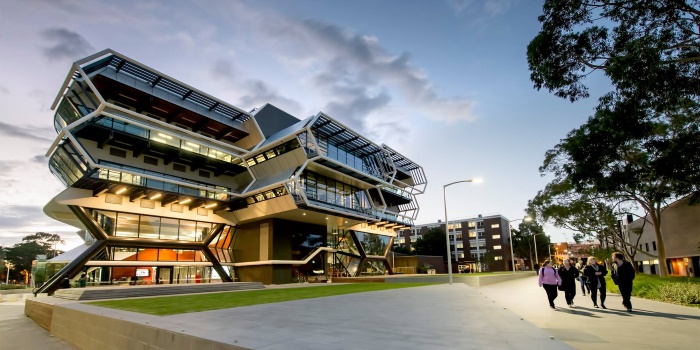
Just last week, Melbourne’s Monash University announced they would develop a trigger warning policy for its units, becoming the first Australian university to do so.
The university, which will trial 15 of its units under this system, has stressed that the decision was not made due to political correctness.
Dr. Ika Willis, a senior lecturer in English at University of Wollongong, agrees that a formal policy would be useful and beneficial to students.
“It means that students aren’t trying to navigate an inconsistent system,” she explained to Student Edge.
Matilda Grey, current president of Monash Student Association, spoke to the ABC to explain that the trigger warning system will simply give students a content warning and the adequate time to prepare and manage their response to the information.
The critics, however, have argued that this is just a ruse for students wanting to shield themselves from difficult conversations.
Last year, Matthew Lesh of the Institute of Public Affairs wrote in The Spectator criticising the implementation of trigger warnings in the university sphere.
“The warnings change understanding, damage student mental health, and contradict the entire purpose of higher education: to challenge, not coddle, students,” he said.
Wait a second, what even is a trigger warning?
Trigger warnings, while not always called that, have been around for some time. Its earliest rumblings began in the late 1960s, when soldiers were returning from the Vietnam War.
People were beginning to understand the far-reaching effects of post-traumatic stress disorder (more commonly referred to as PTSD) and veterans, desperate to talk with other veterans about their experiences, created discussion groups.
Jeet Heer of New Republic spoke to a former Marine who explained, “We were trying to understand what we were feeling about the war... [the discussion group] was a safe place to talk.”
The decades since the Vietnam War have seen a slow but concerted push towards a better understanding of how to appropriately address the needs of victims of traumatic experiences.
In the late 1990s, readers of online feminist magazines and blogs began warning one another of potentially triggering content such as sexual assault in their community forums.
Though the specific phrase ‘trigger warning’ wasn’t always present, readers were warned of storylines that included rape or incest, and few could argue with this line of thinking.

Okay, seems fair. Now, what’s the issue?
This is where things start to get slightly tricky. With the rise of the internet and, ultimately, social media in everyday life, younger people have taken to platforms such as Tumblr and Twitter to express their views.
These mediums tend to harbour more users of left wing ideologies, who are often among the first to call out and expose any politically incorrect opinions or statements.
Now, this is a generalisation, of course, but to its critics, 'trigger warnings' are all coming from the same place. The critics see this as a furthering of a new style of leftist politics that aims to return social power to the marginalised by changing the language, in this case, towards certain students who may be suffering from PTSD or have experienced distressing incidents which can be prompted by certain media.
The word 'trigger' seems to have become a sticking point, but if you replace it with ‘sexual assault’ or ‘extreme violence’, it becomes a lot harder to argue against the sentiment.
So, why all the fuss about censorship?
It mostly comes down to a debate over ideology. While the argument is divided between the right and left wings of politics, even some academics—such as Marguerite Johnson, an associate professor at University of Newcastle—have warned of censorship.
She told the ABC that once you begin to hand over the power regarding what’s included in course material, you allow for potential censorship over questionable texts. "It could lead to certain courses being deemed by an advisory board as being too potentially traumatic to remain on the syllabus,” she said.
But Dr. Willis told us this is a non-issue. “I think the fact that we need to put trigger warnings on things really clearly demonstrates that there is no censorship going on,” she explained.
“[Trigger warnings] have nothing to do with censorship. They’re there to support the students and help to teach a much wider range of courses.”
Where to from here?
Regardless of the criticism, the trigger warning policy will soon be implemented in Monash University, and other universities are looking to do the same, urged by their student unions.
Dr. Willis explained that she didn’t think there’d be any nationwide trigger warning policy, but believed that it would become a lot more common in the future.
Whether you’re on board or not, the push by university students both in Australia and abroad is undeniable, and is looking to continue the role of universities as ideological battlefields.
What do you think? Would you like to see trigger warnings used at your school or uni?
Photo: Facebook (Monash University)
Topics
Ref: 39c6714c-24ee-4da9-b834-a74a005d51ab

Comments & Feedback
Share your opinion
Emoji cheatsheet Formatting Comment guidelines